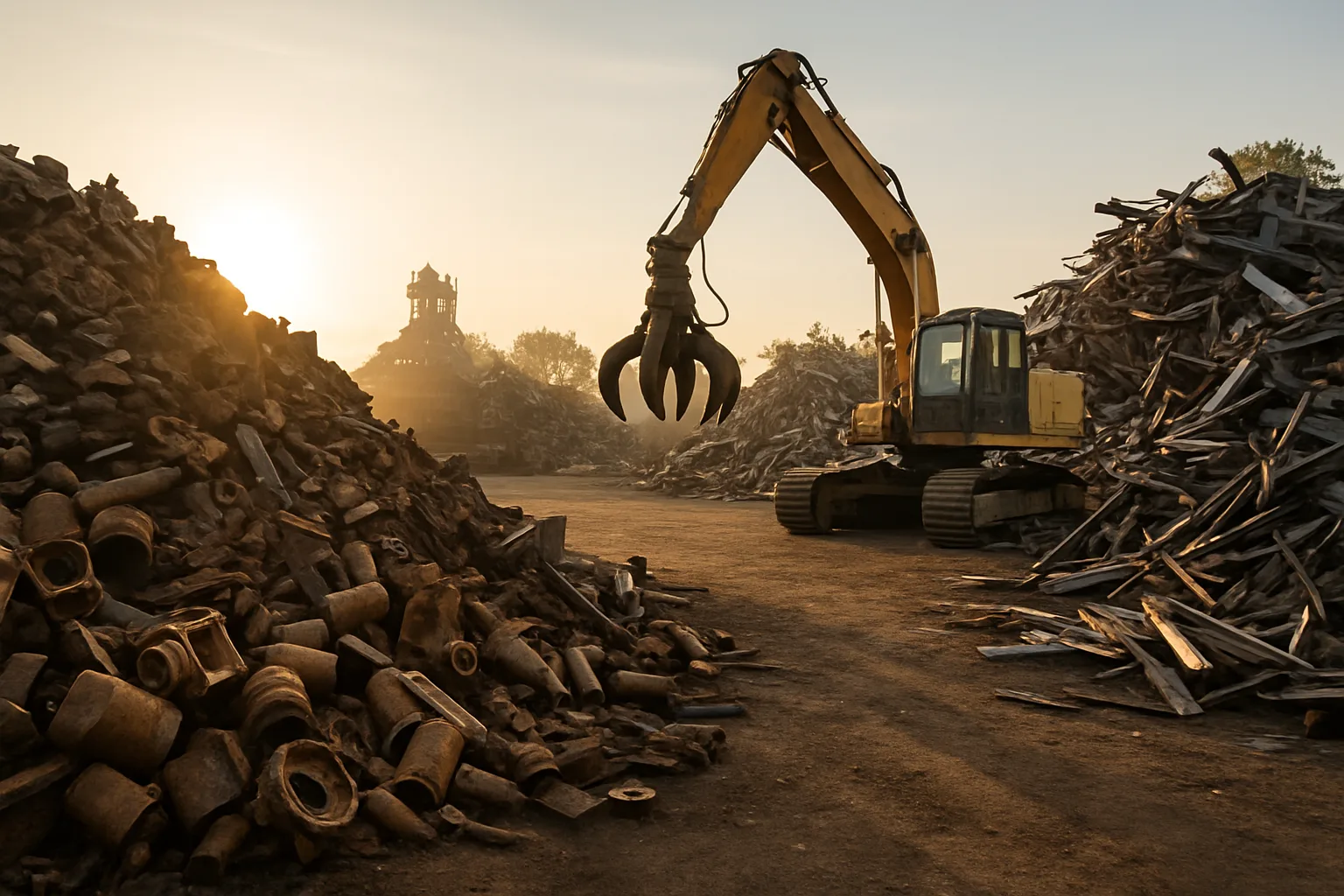
Steel vs. Iron Scrap: Why the Price Gap Matters When You Sell Scrap Metal in Nashville
Most sellers throw steel and iron in the same mental bucket. That's a mistake that costs money every single time. Steel and iron are not the same material, they don't behave the same in a mill, and they don't pay the same at the scale. If you're trying to sell scrap metal Nashville and you're not separating these two, you're likely leaving dollars on the table — or worse, getting docked without knowing why.
This isn't a chemistry lecture. It's a practical breakdown of how these two materials differ, why buyers price them differently, and how to use that knowledge to get a better return on your loads — whether you're a residential scrapper, a shop clearing out equipment, or a yard moving bulk tonnage across Tennessee.
Steel vs. Iron: The Basic Difference That Drives the Price Gap
At the molecular level, the distinction comes down to carbon content. Cast iron typically contains over 2% carbon. Steel sits below that threshold — usually well under 1% for structural grades. That difference in carbon content changes how each material behaves when remelted and reprocessed.
Steel is more workable. Mills can reprocess it into a wider range of end products — rebar, beams, sheet metal, pipe. That flexibility makes it more valuable and more in demand from electric arc furnace (EAF) operators. Cast iron, on the other hand, requires more energy to process, is more brittle, and has a narrower range of reuse applications. That's why the scrap value of cast iron — think old radiators, engine blocks, and bathtubs — typically trades at a discount to heavy melting steel (HMS).
Key distinctions buyers look at:
- Carbon content — higher in iron, lower in steel
- Density and weight — cast iron is heavier per volume than most steel grades
- Mill demand — steel scrap (especially HMS #1 and #2) moves more freely
- Processing cost — iron requires more heat and handling at the furnace
- Contamination risk — painted, coated, or mixed loads get penalized
When you show up to a yard in Nashville with a mixed load and can't tell the buyer what's iron and what's steel, expect them to price the whole thing at the lower rate. Separation is profit.
Current Steel Scrap Price Trends — What's Driving the Market in 2026
Steel scrap prices in 2026 have been moving in response to a few converging forces: ongoing infrastructure spending across the U.S., shifting trade flows following new tariff adjustments, and tightening scrap supply in certain domestic regions. Scrap metal prices today reflect real-time tension between mill demand and available supply — and that tension is real right now.
Heavy melting steel (HMS #1) generally commands a premium over HMS #2 due to its lower residual content and cleaner profile. Shredded steel, which comes largely from auto bodies, trades on its own index and often at a separate price from structural grades. If you're in Tennessee and moving any volume, knowing which grade you have matters more than most sellers realize.
Cast iron continues to lag behind steel on most regional price sheets. That said, specific forms — like clean, uncontaminated cast iron machine parts or automotive components — can sometimes attract better pricing when demand from foundries picks up. Foundry-grade iron and lower-grade scrap iron are not priced the same. Check today's scrap metal prices to see where the spread sits in your area before you haul anything.
What to watch in the current market:
- Steel scrap price fluctuations tied to EAF mill utilization rates
- Export demand from overseas buyers — affects domestic price floors
- Fuel and freight costs that squeeze margins at the yard level
- The aluminum scrap price today as a benchmark — when non-ferrous moves, ferrous often follows with a lag
How Iron and Steel Are Actually Graded at the Yard
Scrap grading isn't arbitrary. The Institute of Scrap Recycling Industries (ISRI) publishes commodity specifications that most North American yards use as a baseline. These grades define acceptable sizes, thicknesses, and contamination levels for each category. Understanding them helps you present your material in the best possible light.
Common steel scrap grades you'll encounter:
- HMS #1 (Heavy Melting Steel #1) — Wrought iron and steel, minimum 1/4 inch thick. No autos, sealed containers, or cast material.
- HMS #2 — Similar but allows thinner gauge material. Typically prices lower than #1.
- Shredded scrap — Auto bodies and similar material run through a shredder. Consistent density, popular with mills.
- Busheling — Clean steel punchings and stampings. High-quality, high-demand from mills.
- Plate and structural — Beams, plates, and structural steel over certain thickness thresholds.
Iron grades are simpler but still separated:
- Cast iron — Engine blocks, radiators, old cookware, machine bases. Priced below HMS #1 in most markets.
- Malleable iron — Slightly more workable than cast. Occasionally segregated by foundry buyers.
- Wrought iron — Older, lower-carbon iron used in fences and ornamental work. Rare in modern scrap streams.
If you're selling Nashville scrap metal services, getting familiar with these grades before you show up at the gate saves time and negotiation friction.
Why Separation Strategy Changes Your Payout
Here's the practical reality: a single load of unsorted ferrous material gets priced at the lowest grade present. That's not a yard policy quirk — it's basic risk management for the buyer. They can't afford to guess on chemistry when they're committing to a price on thousands of pounds.
If your load is 80% HMS #1 steel and 20% cast iron, and you haven't separated it, you may get priced as a mixed load or straight cast iron. That gap in per-ton pricing can be significant, especially when you're moving volume. The solution is mechanical and physical: separate at the source, use separate containers, and know what you have before you load the truck.
Platforms like North America's B2B scrap metal auction platform SMASH are built around this exact principle. When you document your inventory accurately — material type, grade, estimated weight, condition — vetted buyers bid on what they're actually getting. No guessing. No blanket discounts for ambiguity. More buyers competing on real information means better scrap metal prices and actual price discovery instead of a take-it-or-leave-it phone call.
SMASH also supports photo documentation and serial tracking for higher-value loads, which matters when you're moving motors, cores, or specialty ferrous. The inventory tool lets you build a clear picture of your load before it ever hits the auction.
Selling Ferrous Scrap in Nashville — What Local Sellers Need to Know
Nashville's industrial base — manufacturing, construction, automotive services — generates a steady stream of ferrous scrap. Tennessee's infrastructure activity in 2026 continues to push construction demolition material into the recycling stream. That means more competition at local yards, but also more buyers interested in moving volume.
If you're a small seller in the Nashville area trying to sell scrap metal near me for cash, a few yard-level realities apply:
- Most yards post daily or weekly price sheets — call ahead or read the latest scrap metal market updates before you haul
- Minimum weights may apply for certain grades — showing up with 50 lbs of cast iron may not move the needle
- Photo ID is required at most licensed facilities in Tennessee for cash transactions
- Clean, sorted material almost always gets better treatment at the gate than mixed loads
- Timing matters — end of month and quarter can shift pricing at the buyer level
For commercial generators moving larger loads, the conversation shifts from walk-up cash prices to negotiated contracts or competitive bids. That's where auction-based platforms change the dynamic entirely. One call to one buyer is no longer the only option.
Non-Ferrous Context: Why Aluminum and Copper Prices Matter to Iron and Steel Sellers
Ferrous and non-ferrous markets don't exist in silos. When copper scrap price and aluminum scrap price spike, it's often a signal that industrial activity is heating up — and mill demand for steel scrap tends to follow. Watching the non-ferrous market gives you a useful leading indicator for ferrous pricing cycles.
If you're a mixed-load seller in Nashville, you already know that separating aluminum, copper, and brass from your ferrous pile is standard practice. Each material needs to go to the right buyer at the right time. Find current scrap metal prices near you to track all of these simultaneously, so you're not flying blind on any grade in your yard.
The broader point: scrap metal pricing is a connected system. Steel, iron, aluminum, copper — they respond to shared macro signals like manufacturing output, energy costs, and export demand. Understanding those connections makes you a more effective seller, regardless of what you're moving.
Scrap metal prices fluctuate daily based on market conditions, mill demand, and regional supply. Always verify current rates before transporting material. This article is for informational purposes only and does not guarantee specific pricing at any facility.
Before your next load moves, check today's scrap metal prices and get current rates at scrap-metal-prices.com — it takes two minutes and could change how you sort, stage, and sell.
Frequently Asked Questions
Q: How do I tell the difference between cast iron and steel scrap?
Cast iron is typically heavier, more brittle, and will shatter rather than bend when struck. It's often found in engine blocks, radiators, old pipes, and cookware. Steel will flex or deform before breaking. When in doubt, a magnet test won't distinguish them — both are magnetic — but a grinder test will: steel throws long orange sparks, cast iron throws short, dense white sparks.
Q: Why does cast iron scrap pay less than steel at Nashville yards?
Cast iron requires more energy to melt and has fewer reprocessing applications compared to steel grades like HMS #1 or shredded steel. Electric arc furnace operators generally prefer steel scrap for its workability and cleaner chemistry. That lower mill demand translates directly to a lower price per ton at the yard.
Q: What's the best way to sell scrap metal in Nashville for cash?
Sort your material before you go — separate ferrous from non-ferrous, and steel from iron where possible. Call ahead or check current price sheets online before hauling. Bring valid ID, as Tennessee regulations require it for most cash transactions. Volume and cleanliness both improve your negotiating position at the gate.
Q: Does the aluminum scrap price affect what I get for steel and iron?
Not directly, but non-ferrous price movements are a useful market signal. When aluminum and copper prices rise, it often reflects increased industrial demand — which can push steel scrap prices higher with a short lag. Watching the full price sheet gives you a better read on where ferrous markets may be heading.
Q: Can I use an auction platform to sell ferrous scrap, or is that only for non-ferrous?
Auction platforms like SMASH handle ferrous loads including steel and iron scrap. The key is accurate documentation — grade, weight, photos, and material condition. When vetted buyers can see exactly what they're bidding on, competition increases and price discovery improves. That's true for iron and steel just as much as copper or aluminum.
Stay sharp on where the market is moving — follow SMASH on LinkedIn for regular scrap metal market insights, pricing updates, and industry news across North America.