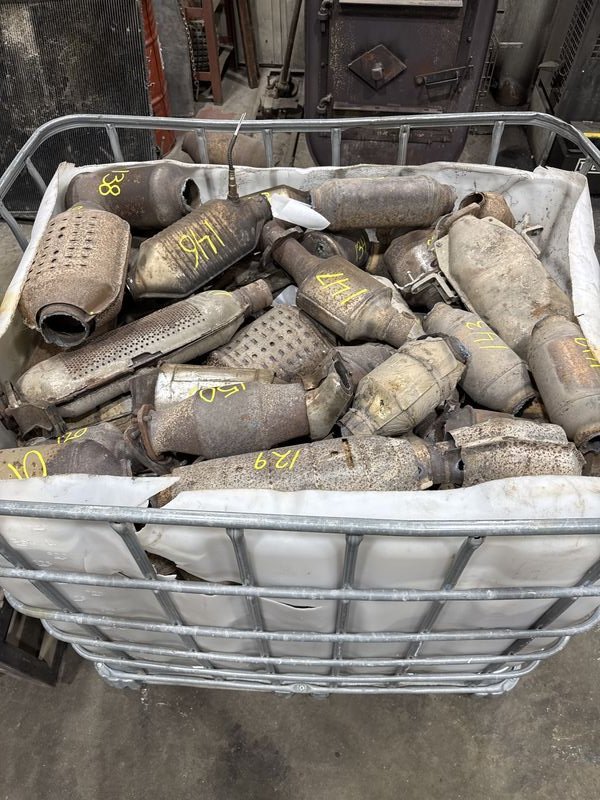
Your catalytic converter could be worth more than you think — or a lot less than the guy at the yard told you. Here's how to know the difference.
Catalytic converter recycling is one of the most misunderstood corners of the scrap metal market. Prices swing wildly. The same unit can fetch drastically different quotes from different buyers on the same day. And unless you know what's inside that canister, you're negotiating blind. If you're in Phoenix trying to get a fair price for your cats, this guide breaks down exactly how the process works and why the copper scrap price today — along with platinum, palladium, and rhodium — all play into what ends up in your pocket.
What's Actually Inside a Catalytic Converter
Most people think catalytic converters are just exhaust parts. They're not — they're mobile precious metal deposits. Inside each unit sits a ceramic or metallic substrate coated with a combination of platinum group metals (PGMs): platinum, palladium, and rhodium. These metals trigger the chemical reactions that convert harmful engine emissions into less toxic gases.
The type and quantity of PGMs varies significantly depending on the vehicle make, model, year, and engine size. A domestic truck cat from a late-model V8 carries a very different PGM load than a small four-cylinder import cat. That's why two converters that look nearly identical from the outside can be worth wildly different amounts at the recycling stage.
- Platinum: Used in diesel catalytic converters; pricing tracks global commodity markets
- Palladium: Common in gasoline engine cats; historically more volatile in price
- Rhodium: The rarest and often the most valuable PGM per ounce
- Ceramic substrate: The carrier material — has some scrap value but far less than the PGMs
There's no copper in significant quantities inside a catalytic converter, but the copper scrap price today still matters to Phoenix sellers. If you're bringing in a load that includes cats alongside copper wire, copper pipe, or non-ferrous material, the overall value of your haul depends on knowing the going rate for every metal in that pile — not just the cats.
How Catalytic Converter Recycling Actually Works
Once a converter leaves your hands at the scrap yard, it enters a processing chain that most sellers never see. Understanding that chain explains why prices vary so much — and why transparency in this market is rare unless you push for it.
Here's how the process typically unfolds:
- Collection: Converters are bought from auto dismantlers, mechanics, yards, and individuals
- Sorting and identification: Units are identified by serial number, make, model, or a physical database match
- Decanning: The ceramic honeycomb substrate is removed from the steel shell
- Processing (assay): The substrate is crushed, sampled, and chemically analyzed to determine actual PGM content
- Smelting and refining: The PGMs are extracted and sold to industrial buyers or manufacturers
The gap between what you get paid at the yard and what those PGMs eventually fetch on the open market is where the real money lives. Most sellers have no visibility into steps three through five. That's the problem. North America's B2B scrap metal auction platform, SMASH, is built around closing exactly that kind of information gap — putting competitive pressure on buyers and giving sellers a clearer picture of what their material is actually worth.
Why Catalytic Converter Prices Vary So Much — and What Drives the Market
Walk into three different yards in Phoenix on the same Tuesday and you might get three completely different quotes for the same converter. That's not a glitch. It's how the market works when pricing is opaque and buyers control the information.
Several factors drive price variation:
- PGM spot prices: Platinum, palladium, and rhodium trade on global commodity markets and can shift significantly week to week
- Converter type and grade: High-grade, mid-grade, and low-grade cats are priced differently — and misidentification happens
- Volume: Yards that move large quantities negotiate better downstream deals; smaller sellers often absorb that margin
- Market timing: Like scrap metal prices today, cat prices reflect current demand from refiners and manufacturers
- Buyer relationships: Who your yard sells to upstream affects what they can pay you downstream
The Arizona market has its own dynamics. Phoenix sits in a major vehicle corridor — high car ownership, a large population, and a steady supply of end-of-life vehicles moving through auto recyclers and dismantlers. That creates consistent local supply, but it doesn't automatically mean local prices are competitive. Supply and buyer competition are two different things.
If you're regularly recycling cats in Phoenix and you're not shopping your load to more than one buyer, you're almost certainly leaving money on the table. More buyers means better price discovery — full stop. To understand what your full load is worth, check today's scrap metal prices before you pull into any yard.
Copper and Non-Ferrous Prices — Why They Matter Even for Cat Sellers
Most sellers who bring in catalytic converters also carry mixed loads — copper wire, aluminum rims, steel cores, or other non-ferrous material. The copper scrap price today directly affects the total value of those loads, and ignoring it means you're pricing your haul in the dark.
Copper in particular is a benchmark metal. It's used as a broad indicator of industrial demand across the entire economy. When copper prices move, it usually signals broader shifts in scrap metal prices today across most categories. Phoenix sellers dealing in mixed non-ferrous loads should be tracking copper alongside their PGM markets.
Here's what typically makes up a strong mixed scrap load alongside cats:
- Bare bright copper wire (highest copper grade)
- #1 copper pipe and tubing
- Aluminum wheels and extrusions
- Stainless steel (especially from exhaust systems paired with the cat)
- Clean steel from the converter shell itself
Knowing your grades and separating material before you hit the yard gives you real leverage. Yards price mixed loads conservatively — they have to account for sorting time and uncertainty. Show up with pre-sorted, identified material and you're negotiating from a stronger position. Platforms like SMASH take that logic further, connecting sellers with vetted buyers who compete for well-documented loads. That competition can help reveal the actual market value for your material.
How to Maximize Your Catalytic Converter Scrap Value in Phoenix
Getting a fair price for catalytic converters in Phoenix isn't complicated, but it requires some preparation and market awareness. The sellers who get the best prices aren't the ones who got lucky — they're the ones who showed up informed.
Here's what makes the difference:
- Identify your converters before selling: Use serial numbers or VIN-linked databases to understand what you have. Many buyers use these same tools — you should too.
- Get multiple quotes: Never accept the first offer. Phoenix has multiple scrap yards and buyers. Competition between them directly benefits you.
- Document your material: Photos, serial numbers, and a clear packing list give buyers more confidence — and confident buyers make better offers.
- Time your sale: PGM prices are volatile. If you can hold a load while prices climb, that flexibility has real value.
- Understand the full load value: If you're bringing cats plus copper or aluminum, know the current rate for every material. Read the latest scrap metal market updates before you load your truck.
For high-volume sellers running consistent loads of cats through Arizona, the math on getting even a slightly better per-unit price adds up fast. A few extra dollars per converter across a hundred units is real money. That's where a platform like SMASH — built specifically for competitive, transparent scrap transactions — starts to pay for itself immediately.
Whether you're a Phoenix dismantler running dozens of cats a week or an individual seller with a single converter off a junk vehicle, the principle is the same: more buyer competition, better documentation, and real market data get you closer to a fair price. You can explore Phoenix scrap metal services to find options in your area and start making more informed decisions about where and how you sell.
Using SMASH to Sell Catalytic Converters and Scrap Metal Competitively
The old model of scrap selling is one phone call, one buyer, one price — take it or leave it. That model exists because buyers benefit from it, not sellers. SMASH is built on a different logic: vetted buyers compete in an auction format, and sellers get to see what the market actually says their material is worth.
For catalytic converter sellers in Phoenix, that means your load isn't going to one buyer who sets the price in a vacuum. It goes to a pool of buyers who have to compete to win it. Documentation tools, serial tracking, and photo upload capabilities give buyers the confidence to bid aggressively on well-presented material. Auto-invoicing handles the paperwork. No subscription fees mean you're not paying to access the platform before you've sold a single unit.
SMASH only wins when you win. That's the model. If your load doesn't sell, neither do they. Find current scrap metal prices near you and use that data as a baseline when you bring your material to market.
Disclaimer: Scrap metal prices — including catalytic converter values and copper rates — fluctuate daily based on global commodity markets, local supply and demand, and buyer conditions. Always verify current rates before selling. The prices and trends referenced in this article are for general educational purposes and may not reflect real-time market conditions.
If you're ready to stop guessing and start selling with real price visibility, check today's scrap metal prices and get current rates at scrap-metal-prices.com — it's the fastest way to know what your load is actually worth before you commit to a buyer.
Frequently Asked Questions
Q: How do I know what my catalytic converter is worth before I sell it?
Start by identifying the converter using its serial number or the VIN of the vehicle it came from. Many online databases and buyer platforms can give you a general value range based on make, model, and year. Checking current PGM spot prices alongside the copper scrap price today gives you a complete picture of overall non-ferrous market conditions before you negotiate.
Q: Why do scrap yards in Phoenix quote such different prices for the same converter?
Price variation comes down to the buyer's downstream relationships, their assessment of the unit's grade, and how competitive their market is. A yard with a single refiner relationship has less flexibility than one with multiple upstream options. Getting quotes from several Phoenix buyers before committing is the single most effective way to find the real market price.
Q: Does the copper scrap price today affect catalytic converter prices?
Not directly — catalytic converters are priced based on platinum, palladium, and rhodium content, not copper. However, if you're selling a mixed load that includes copper wire or pipe alongside your cats, current copper scrap prices significantly affect your total payout. Always know the going rate for every metal type in your haul.
Q: Are there regulations around selling catalytic converters in Arizona?
Yes. Arizona has laws governing the sale of catalytic converters to scrap yards, including identification and documentation requirements designed to deter theft. Sellers are typically required to provide proof of ownership or a signed declaration. Always check with your local Phoenix yard or consult current Arizona statutes before selling, as regulations can change.
Q: How does SMASH work for catalytic converter sellers?
SMASH is a B2B auction platform where vetted buyers compete for scrap loads — including catalytic converters — rather than the seller accepting a single take-it-or-leave-it quote. Sellers document their material with photos and serial data, buyers bid competitively, and the auction format creates genuine price discovery. There are no subscription fees; SMASH earns when the transaction closes.
Follow SMASH on LinkedIn for ongoing scrap metal market insights, pricing trends, and updates from across the North American recycling industry.