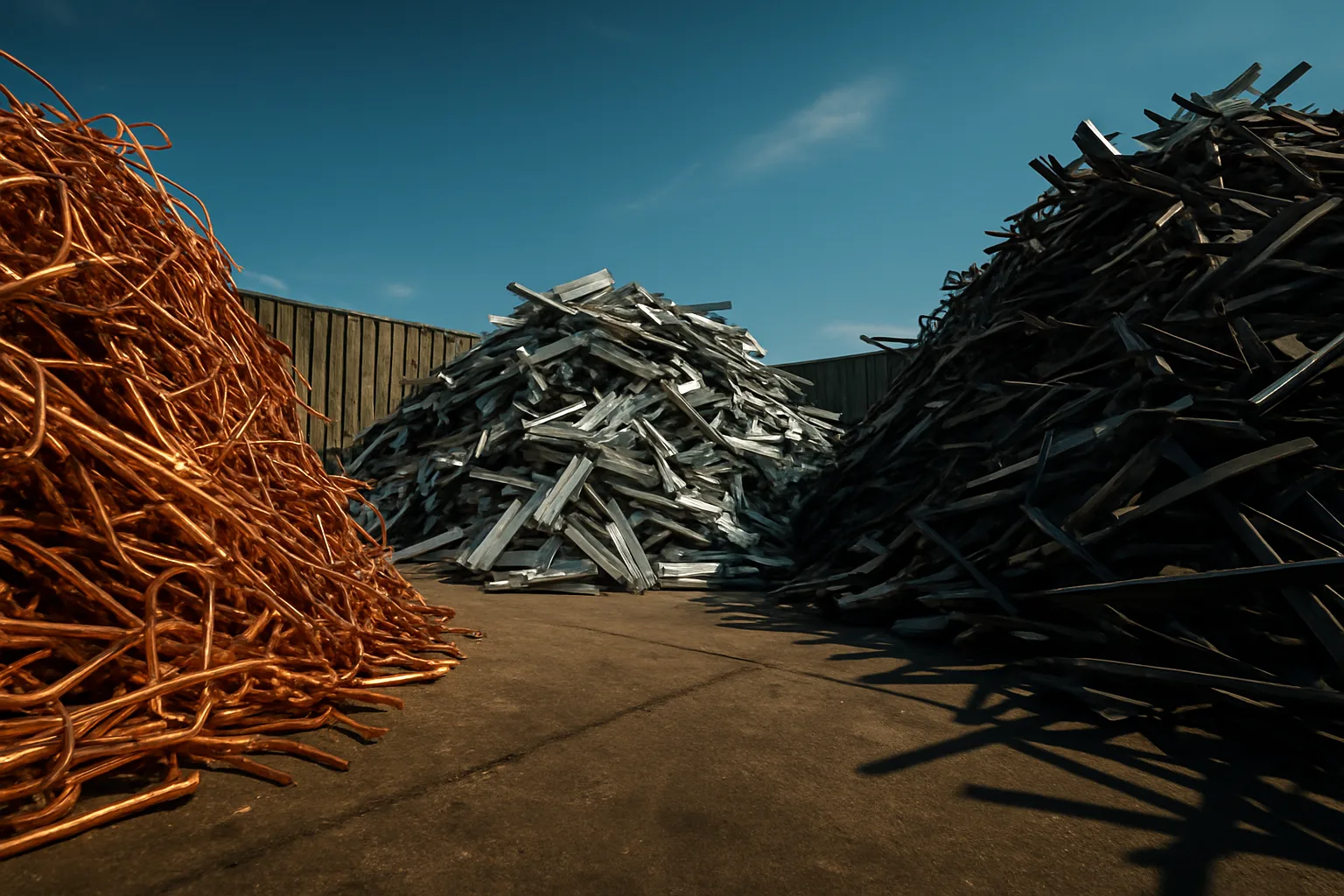
Why Metal Identification Directly Affects What You Get Paid
Most sellers leave money on the table — not because they have bad metal, but because they can't sort it. A mixed load of copper and aluminum gets priced like a mixed load of copper and aluminum. That means the yard discounts for the uncertainty. Know what you have before you pull up to the scale, and you price like someone who knows what they're doing.
If you're chasing copper scrap prices Milwaukee — or any strong scrap metal prices today — the first skill you need isn't negotiating. It's identifying. A magnet, a file, and your eyes are worth more than any price sheet if you don't know how to use them. This guide gives you a practical, no-guesswork system for telling your metals apart so you show up to any Milwaukee yard sorted, confident, and ready to get paid.
Before we get into the tests, check today's scrap metal prices so you know exactly what each metal is worth right now in your area.
The Magnet Test: Your First Line of Metal Identification
Start here. Every time. A simple refrigerator magnet or a cheap neodymium magnet from a hardware store tells you more in two seconds than most sellers learn in a year. The rule is straightforward: ferrous metals stick, non-ferrous metals don't.
Ferrous metals — steel, iron, and their alloys — contain iron and respond to magnets. These are your lower-value scrap metals by weight. Non-ferrous metals — copper, aluminum, brass, stainless steel, lead, zinc — don't respond. These command higher prices per pound. The gap between the two categories can be significant, especially for copper scrap price today versus a steel scrap price for the same weight.
Here's how to read your magnet results:
- Strong pull: Carbon steel, cast iron, regular steel pipe or sheet. Ferrous. Lower value.
- Weak or no pull: Could be aluminum, copper, brass, lead, or zinc. Non-ferrous. Higher value. Needs further testing.
- Slight pull but doesn't stick firmly: Likely stainless steel (304 grade). Still non-ferrous in pricing at most yards, but confirm with the buyer.
- No pull, very light weight: Aluminum. Confirmed.
- No pull, reddish color: Copper. Likely your highest-value metal in any load.
Do this before you sort anything else. It cuts your pile in half immediately and saves time at the yard. Yards in Milwaukee and across Wisconsin run tight operations — showing up pre-sorted signals that you're a serious seller, not a first-timer dumping a truckload of mixed scrap.
Visual Identification Guide: Color, Weight, and Surface Clues
Once the magnet separates ferrous from non-ferrous, your eyes take over. Each metal has a signature look when you know what to look for. Dirt, paint, and oxidation can fool you, so scratch or file a small spot to expose the raw metal underneath. That's where the truth is.
Copper
Freshly exposed copper is unmistakable — bright reddish-orange, almost salmon-colored. Oxidized copper turns brown, then green (that's the patina on old pipes and roofing). Copper is heavy for its size. Bare bright copper wire, #1 copper pipe, and copper bus bars are your highest-value pieces. The copper scrap price per pound reflects that — it consistently outperforms aluminum scrap price and most other non-ferrous metals by a wide margin. If you're sourcing loads in the Milwaukee area, copper from HVAC systems, electrical demolition, and old plumbing is your highest-priority sort.
Aluminum
Aluminum is silver-gray and notably light — it almost floats compared to steel or copper. It doesn't rust (it oxidizes into a dull white powder instead). Aluminum scrap price varies significantly by grade: clean extrusions, cast, sheet, and wire all price differently. Don't lump them together. Rims, window frames, wire, and cast engine parts are all aluminum but different grades. Separate them if volume justifies it.
Brass
Brass is a copper-zinc alloy and looks like a dull yellow-gold. Think plumbing fittings, valves, doorknobs, and shell casings. It's heavier than aluminum, lighter than copper. Scratch a brass fitting and you'll see that consistent yellow color all the way through. The current scrap prices for brass typically sit between aluminum and copper — worth sorting out separately from both.
Stainless Steel
Stainless is silver, shiny, and doesn't rust. It's heavier than aluminum and the magnet test gives you a clue — 304 stainless weakly attracts, while 316 stainless is fully non-magnetic. It scratches with a dull, silvery finish. Common sources include kitchen equipment, automotive exhaust, and food-grade tanks. Stainless prices are solid and worth separating from regular steel at any volume.
Lead
Lead is dense, dark gray, and soft — you can scratch it with a fingernail. Old wheel weights, plumbing waste pipe, battery plates, and cable sheathing are common sources. It's one of the heaviest metals you'll handle. Lead scrap prices are stable, and lead is easy to identify once you've held it — nothing feels quite like it.
Zinc
Zinc is bluish-gray, moderately heavy, and often found as die-cast parts (carburetor bodies, old toy cars, certain hardware). It's brittle. Scratch it and the surface appears grainy. Old roofing material and galvanized steel coatings are zinc-adjacent — don't confuse galvanized steel for pure zinc.
The File and Spark Tests for Harder-to-Identify Metals
Some metals need more than eyes and a magnet. A metal file and a grinding wheel extend your identification capability significantly. These aren't required for every load, but for high-value or ambiguous pieces, they're worth the 30 seconds.
The file test: Draw a metal file across the surface of your piece. Soft metals like lead and aluminum file easily and feel almost greasy. Harder metals like steel resist and leave cleaner filings. Copper files with moderate resistance and leaves reddish filings. Brass files easily and leaves golden filings. This is a quick secondary check when color alone is ambiguous.
The spark test (grinder required): Hold your piece against a grinding wheel briefly and observe the sparks.
- Long, white-yellow sparks with bursts: High-carbon steel.
- Short, reddish sparks with few bursts: Cast iron.
- Few sparks, orange-red and short: Wrought iron or mild steel.
- No sparks or minimal sparks: Non-ferrous metals (aluminum, copper, brass, stainless).
The spark test matters most when you're sorting mixed ferrous scrap or trying to identify mystery steel grades. For commercial loads in a B2B scrap metal marketplace transaction, knowing your alloys gives buyers more confidence — and that confidence shows up in what they're willing to bid.
How Proper Sorting Affects Scrap Metal Prices in Milwaukee
This isn't abstract. Walk into any yard offering scrap metal prices Milwaukee buyers and sellers rely on, and ask the buyer what they pay for clean #1 copper versus a mixed copper load. The gap is real. Sorting pays. Identification is just sorting done before you leave your facility.
For yards running higher volumes — auto recyclers, demolition contractors, industrial surplus operations in Wisconsin — the economics of identification compound fast. If you're consistently bringing sorted, documented loads, you're a preferred seller. Preferred sellers get better conversations about price, faster settlement, and less friction at the scale.
That's where platforms like the SMASH scrap metal auction marketplace change the game. Instead of calling one buyer and guessing whether you got a fair price, SMASH puts your documented load in front of vetted buyers who compete. A sorted, well-documented copper load doesn't just get one offer — it gets competitive ones. More buyers means better price discovery. That principle applies whether you're selling a single load of copper pipe or a container of mixed non-ferrous.
For sellers working Milwaukee scrap metal services, having your load pre-identified and documented with photos before you list gives buyers the confidence to bid higher — not lower. That's the difference between letting the buyer price for uncertainty and letting competition reveal the actual market.
You can also read the latest scrap metal market updates to track how current conditions are affecting copper, aluminum, and steel prices in real time before you sell.
Quick Reference: Metal Identification Cheat Sheet
Print this, tape it to your wall, or screenshot it. This is the fast-reference version of everything above for use on the floor.
- Copper: Reddish-orange, heavy, non-magnetic, high value — top priority sort
- Aluminum: Silver-gray, very light, non-magnetic, oxidizes white
- Brass: Yellow-gold, moderate weight, non-magnetic, common in plumbing and hardware
- Stainless Steel: Bright silver, non-rusting, weak magnetic pull (304) or none (316)
- Lead: Dark gray, extremely heavy, very soft, non-magnetic
- Zinc: Bluish-gray, brittle, moderate weight, non-magnetic
- Carbon Steel: Gray, strong magnetic pull, rusts, spark test shows bursts
- Cast Iron: Dark gray, heavy, strong magnetic pull, brittle — short red sparks
Use the magnet first. Use your eyes second. Use the file or grinder when you're still not sure. This sequence works every time and takes under two minutes per piece once you've done it a few times.
The metal market rewards sellers who show up prepared. If you want to know what your sorted load is worth right now, find current scrap metal prices near you and compare before you commit to any single buyer or drop your load at one yard without knowing your options.
Knowing what you have is step one. Getting paid what it's actually worth is step two — and that's where competition and transparency do the work for you.
Frequently Asked Questions
Q: How do I identify copper scrap to get the best copper scrap prices in Milwaukee?
Look for a reddish-orange color on freshly exposed metal — scratch off any tarnish or oxidation first. Copper doesn't respond to a magnet and is notably heavy for its size. Clean, uncoated copper (bare bright wire, #1 pipe) commands the highest copper scrap price, so sort by cleanliness and grade before heading to any Milwaukee yard.
Q: What is the magnet test and why does it matter for scrap metal prices?
The magnet test separates ferrous metals (steel, iron) from non-ferrous metals (copper, aluminum, brass). Ferrous metals stick to a magnet and carry lower scrap metal prices by weight. Non-ferrous metals don't stick and price significantly higher. Running this test before you sort saves time and ensures you're not pricing a load below what it's worth.
Q: Does sorting my metals before selling affect what I get paid?
Yes — directly. Yards price mixed or unsorted loads with a discount to account for the work of separating them. A clean, sorted load of #1 copper prices better than a mixed copper load every time. In a competitive marketplace like SMASH, a documented, sorted load gives buyers the confidence to bid higher rather than bid for uncertainty.
Q: How often do scrap metal prices in Milwaukee change?
Scrap metal prices today can shift daily based on commodity markets, demand from mills and foundries, and regional supply. Copper scrap price is particularly volatile and tracks closely with the global copper futures market. Always check current rates before you sell — prices posted last week may not reflect what you'll be offered at the scale today.
Q: What's the difference between #1 copper and #2 copper for scrap pricing?
#1 copper is clean, uncoated, unalloyed copper with no solder or attached fittings — bare bright wire and clean pipe fall into this category. #2 copper has light coatings, some corrosion, or minor contamination. The price difference between grades can be meaningful per pound, so stripping wire and cleaning fittings before you sell is often worth the labor at higher volumes.
Whether you're hauling loads out of a Milwaukee industrial site or sourcing non-ferrous from demolition work across Wisconsin, knowing your metal is what separates a good payday from a mediocre one. Check today's scrap metal prices and track the market at scrap-metal-prices.com — current rates, no guessing.
Follow SMASH on LinkedIn for ongoing scrap metal market insights, price trends, and industry updates delivered straight to your feed.
Disclaimer: Scrap metal prices fluctuate based on market conditions, metal grade, quantity, and buyer demand. All prices referenced are general in nature. Always verify current rates directly with your buyer or at scrap-metal-prices.com before selling.
```