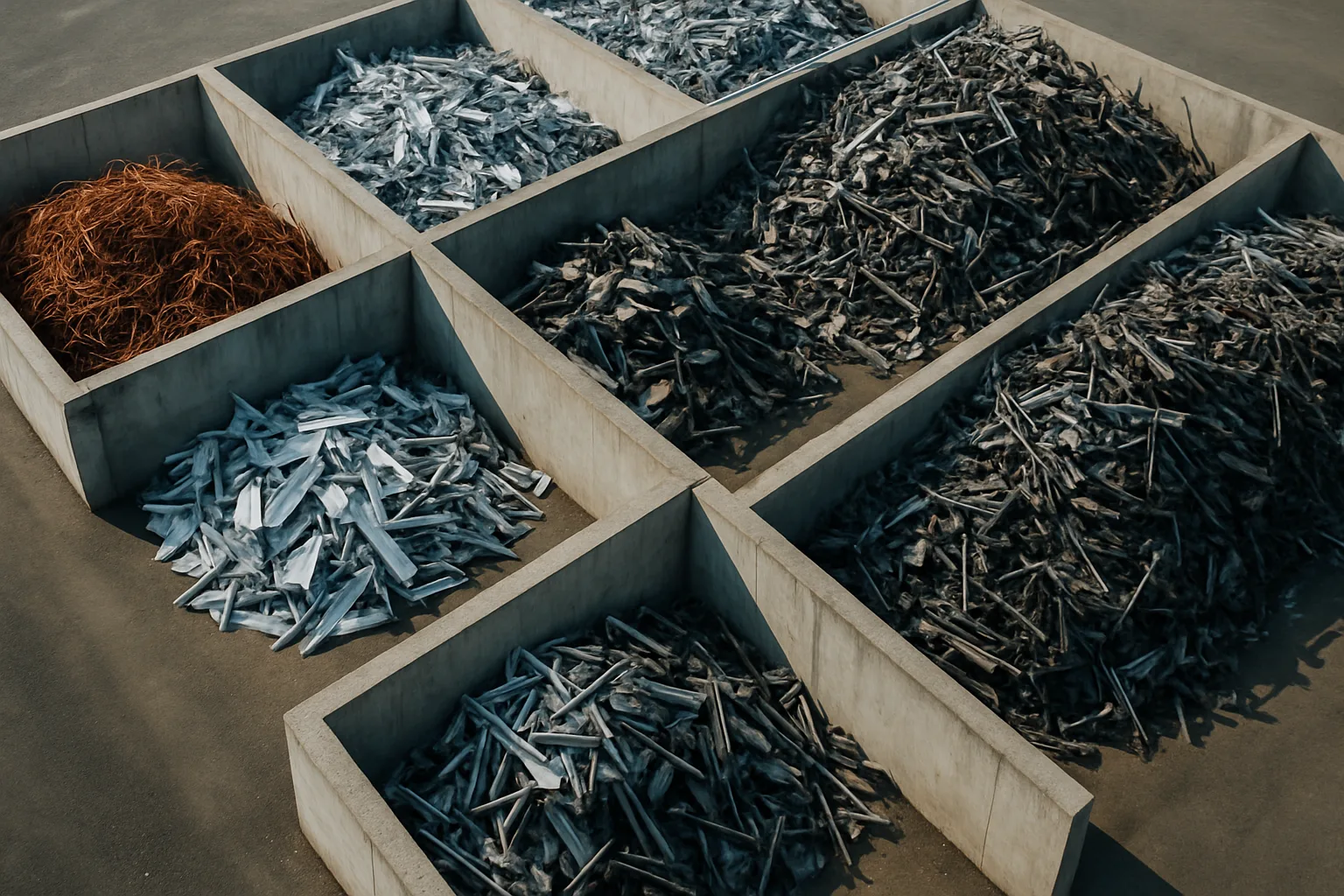
Know What You're Holding Before You Sell: A Metal Identification Guide for Scrap Sellers
Most scrap sellers leave money on the table — not because they have bad material, but because they don't know what they have. Showing up at a yard in New York with a mixed load and no idea what's copper versus brass versus aluminum means the buyer controls the conversation. You don't want that. Knowing your metals before you sell puts the leverage back in your hands.
This guide walks you through two proven, low-tech methods — visual inspection and the magnet test — that experienced recyclers use every day. No lab equipment. No special training. Just your eyes, a magnet, and a little know-how. By the end, you'll have a clearer picture of what's in your pile, what it's worth, and how to check today's scrap metal prices before you make a move.
Why Metal Identification Directly Affects Your Sell Scrap Metal Price
Scrap yards price by metal type and grade. Copper scrap price is not the same as brass scrap price. Aluminum scrap price varies dramatically between clean clips and painted extrusions. Steel scrap price is far lower per pound than most non-ferrous metals. If you mix everything into one bin and call it "misc metal," you'll get paid for the lowest-value item in the pile — or close to it.
Separating your material before you go is one of the simplest ways to improve your payout. A load of clean bare bright copper commands a premium. That same copper mixed with steel hardware drops to a lower-grade category instantly. Identification isn't just a curiosity — it's a pricing tool. Sellers who compare scrap metal bids from verified buyers on competitive platforms report better price discovery precisely because they can describe their material accurately.
Here's what's at stake by metal type:
- Copper: One of the highest-value scrap metals per pound. Grade matters — bare bright, #1, #2, and insulated wire all price differently.
- Aluminum: Lightweight and abundant, but price varies widely by alloy and condition.
- Brass: Often mistaken for copper or gold-toned aluminum. Heavier than aluminum, worth more per pound.
- Stainless steel: Non-magnetic or weakly magnetic. Worth significantly more than regular steel.
- Carbon steel / iron: Magnetic, low value per pound, but heavy loads add up.
The Magnet Test: Your First Move on Any Unknown Metal
Grab a strong rare-earth magnet — the kind you can find at any hardware store. This is your most reliable first pass. The rule is simple: ferrous metals stick to magnets. Non-ferrous metals don't.
Ferrous metals contain iron. That includes carbon steel, cast iron, and most structural steel. These are your lower-value scrap metals. Non-ferrous — copper, aluminum, brass, zinc, lead, nickel — don't respond to a magnet at all. If your magnet pulls hard to a piece, it's almost certainly ferrous. If nothing happens, you're likely holding something more valuable.
But the magnet test has nuances worth knowing:
- Stainless steel: Some grades (304, 316) are weakly magnetic or non-magnetic. If a shiny silver metal barely responds to your magnet, stainless steel is a strong candidate.
- Plated metals: A steel item coated in copper or brass will still stick to a magnet. Don't assume a copper-colored piece is solid copper — test it.
- Cast iron vs. steel: Both are magnetic. Cast iron is brittle and often has a rough, granular surface. Steel is smoother and more ductile.
- Aluminum and copper: Neither responds to a magnet. You'll need visual cues to tell them apart.
Once you've sorted your magnetics from your non-magnetics, move to the visual check.
Visual Identification: What to Look For by Metal Type
Your eyes are more useful than most people realize. Color, weight, surface texture, and oxidation patterns all tell a story. Here's a practical breakdown of the most common metals you'll encounter when you're trying to sell scrap metal near me New York yards or anywhere across the region.
Copper
Fresh copper is a warm reddish-orange — hard to mistake when clean. Oxidized copper turns brown, then develops a green patina (verdigris) over time. It's dense and heavy for its size. Copper wire, plumbing pipe, and motor windings are the most common forms. Bare bright copper is the top grade — no solder, no insulation, no corrosion.
Aluminum
Silver-gray with a lighter feel. Aluminum is noticeably light — if a piece looks like it should weigh more than it does, that's a signal. It doesn't rust, but it does oxidize with a dull, chalky surface. Common forms: window frames, cans, automotive parts, siding, and extrusions. Aluminum wheels and cast aluminum look different from sheet aluminum — yards price them separately.
Brass
Yellow-gold color with a warm tone. Heavier than aluminum, lighter than copper. Brass is an alloy of copper and zinc, and it shows up in plumbing fittings, valves, musical instruments, and decorative hardware. Don't confuse it with gold-anodized aluminum — brass is much heavier and will have a deeper yellow tone.
Stainless Steel
Bright, reflective silver surface. Doesn't rust. Doesn't respond strongly to magnets (depending on grade). Kitchen appliances, food service equipment, and certain automotive exhaust components are common stainless sources. Stainless steel scrap price runs well above regular steel.
Lead
Very heavy, soft, and dull gray. Easy to scratch with a fingernail. Found in old pipe, wheel weights, and battery terminals. Lead scrap prices are moderate, but its weight adds up quickly.
Zinc
Bluish-gray, relatively lightweight. Often found as die-cast components — old carburetors, toy cars, and hardware fixtures. It has a grainy texture and can be brittle.
How to Sort Your Load Before Heading to a New York Scrap Yard
Preparation pays. New York scrap yards handle enormous volume, and a pre-sorted, well-documented load is faster to process and easier to price accurately. Sellers who walk in with mixed, unsorted material often wait longer and receive broader-category pricing that averages down their best metals.
Here's a practical sorting workflow:
- Run the magnet test first. Separate all ferrous material from non-ferrous. Keep them in different containers.
- Sort non-ferrous by visual ID. Separate copper, aluminum, brass, and stainless into their own piles.
- Grade within categories. Bare bright copper separate from insulated wire. Clean aluminum extrusion separate from painted or mixed aluminum.
- Remove contaminants. Strip insulation from wire where practical. Remove steel hardware from copper pipe. Yards discount heavily for contamination.
- Document with photos. If you're selling through a platform like SMASH, photo documentation gives remote buyers confidence in what they're bidding on — that directly supports better price discovery.
Before you load the truck, find current scrap metal prices near you so you walk in with a realistic baseline. Copper scrap price, aluminum scrap price, and steel scrap price all move with the market. Knowing today's range means you can recognize a fair offer when you see one — and push back when you don't.
How SMASH and Competitive Auctions Change the Selling Dynamic
Here's the old way: you call one buyer, they tell you a price, you take it or leave it. You have no idea if that number reflects the market or their margin. That's been standard practice in scrap for decades — and it's a disadvantage for sellers.
SMASH runs it differently. The scrap metal auction format puts your documented load in front of multiple vetted buyers at once. Competition can help reveal the market. More buyers means better price discovery. When you've properly identified and sorted your material — and documented it with photos — buyers bid with confidence. That translates to stronger, more accurate offers.
Whether you're selling a single load of clean copper wire or a mixed non-ferrous lot from a demolition job, having your material properly identified is step one. SMASH handles the rest: vetted buyers, transparent bidding, auto-invoicing, and no subscription fees. You can read the latest scrap metal market updates to stay current on pricing trends before you list.
For sellers across New York — from the five boroughs to upstate — the combination of knowing your material and using a competitive platform removes two of the biggest disadvantages in the traditional scrap sale process.
If you're looking for New York scrap metal services, knowing exactly what you're bringing to the table gives you a real edge in any negotiation or auction.
Disclaimer: Scrap metal prices fluctuate daily based on commodity markets, location, grade, and buyer demand. Always verify current rates before selling.
Frequently Asked Questions
Q: How do I know if what I have is worth selling as scrap metal in New York?
Start with the magnet test to separate ferrous from non-ferrous metals. Non-ferrous metals like copper, aluminum, and brass are generally worth more per pound. Once sorted, check current scrap metal prices today for your metal types — small loads can still be worth a trip if you have dense, high-value material like copper or brass.
Q: What's the easiest metal to identify for a first-time scrap seller?
Copper is usually the easiest — its reddish-orange color is distinctive when clean. Aluminum is easy to spot by its light weight. Steel and iron snap straight to a magnet, which makes sorting fast even for beginners. Start with those three and you'll have the bulk of most loads covered.
Q: Does sorting my scrap metal actually affect the sell scrap metal price I receive?
Yes — significantly. Yards price mixed loads at the lowest common denominator. Separating your copper from aluminum from steel means each metal gets priced at its own rate. Removing contamination (insulation, fasteners, coatings) can move your material into higher-grade pricing categories that pay more per pound.
Q: How do I sell scrap metal near me in New York using an online platform?
Platforms like SMASH let you document your load with photos and descriptions, then put it in front of multiple vetted buyers through a scrap metal auction format. This is especially useful for larger loads where competitive bidding can help surface the real market rate. No subscription fees — the platform only earns when you sell.
Q: Why do copper scrap prices vary so much between yards?
Copper scrap price varies by grade (bare bright, #1, #2, insulated wire), by current commodity market conditions, and by individual buyer margins and demand. Different yards in New York may also serve different downstream buyers, which affects what they can offer. Comparing bids — rather than taking the first offer — helps reveal the real market rate for your material.
Ready to sell smarter? Check today's scrap metal prices and get current rates at scrap-metal-prices.com before your next yard run. Knowing what you have — and what it's worth — is the only edge you need.
Stay current on market moves and platform updates by following SMASH on LinkedIn for scrap metal market insights and industry news.