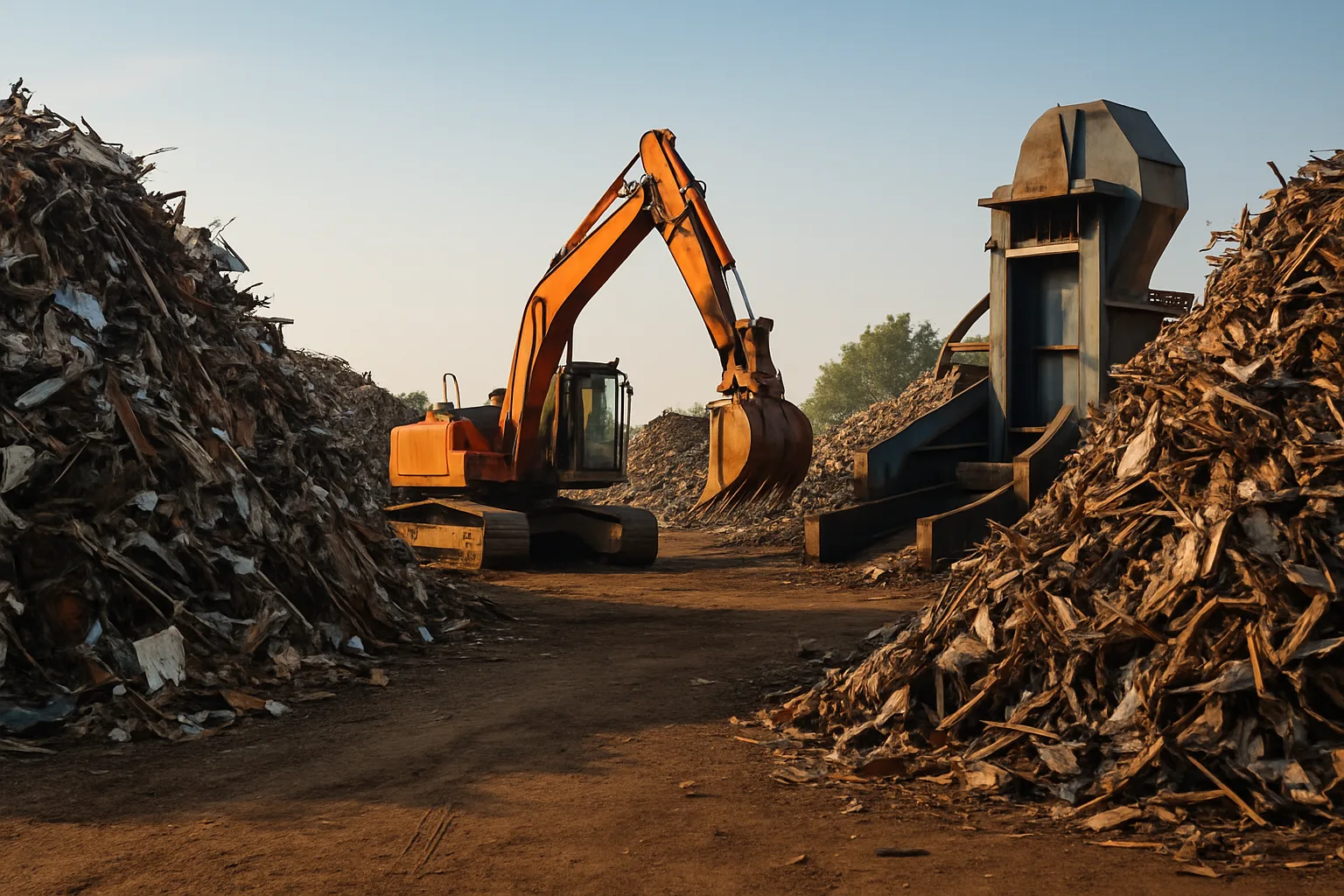
Why Sorting Your Scrap Before You Sell Changes Everything
Most yards won't tell you this upfront: a mixed, unsorted load is the fastest way to leave money on the table. If a buyer can't identify what they're looking at, they'll price it at the lowest common denominator — or pass entirely. Sorting your scrap before a scrap metal auction or yard drop-off isn't busywork. It's the difference between a fair price and a lowball offer.
In Sacramento, where construction activity, demolition work, and industrial recycling generate serious scrap volume, knowing how to prep a load correctly gives you a real edge. Whether you're moving a few hundred pounds from a cleanout or staging a full commercial load, the prep work pays for itself. Let's break down exactly how to do it right.
Know What You Have: The Metal Identification Basics
Before you sort anything, you need to identify what you're working with. Not all metal is equal — and not all metal looks obviously different to the untrained eye. The copper scrap price, aluminum scrap price, and steel scrap price today all sit at very different levels. Mixing them into one bin loses you money on every metal in the pile.
Start with these field tests:
- Magnet test: If it sticks, it's ferrous (steel or iron). If it doesn't, you're likely looking at aluminum, copper, stainless, brass, or another non-ferrous metal.
- Color check: Copper is reddish-orange. Brass is yellow-gold. Aluminum is light grey and lightweight. Stainless steel has a bright, bluish-silver finish.
- Weight test: Aluminum is dramatically lighter than steel. If a large piece feels surprisingly light, it's likely aluminum.
- Sound test: Drop a piece of brass or copper — it has a distinct dull ring. Aluminum has a lighter, thinner sound.
Take the time to separate your metals before you show up to a yard or list a load through the SMASH scrap metal auction marketplace. Buyers bid with more confidence on loads that are clearly identified and documented. That confidence shows up in the offers you receive.
How to Sort Scrap Metal by Grade and Condition
Identification is step one. Grading is step two — and it matters just as much for getting the best scrap metal prices California sellers can access. Yards and buyers don't just care about what metal you have. They care about its condition, contamination level, and prep grade.
Here's a practical sorting framework for common metals:
Copper
- #1 Bare Bright Copper: Clean, uncoated, unalloyed copper wire. No insulation, no solder, no corrosion. Highest copper scrap price tier.
- #1 Copper: Clean copper pipe or bus bar. May have small amounts of solder. Still high value.
- #2 Copper: Dirty copper — painted, coated, or lightly corroded. Lower price than #1 but still non-ferrous value.
- Insulated wire: Separated from bare copper. Price depends on insulation type and copper recovery percentage.
Aluminum
- Clean aluminum: Extrusions, siding, or sheet with no steel attachments. Commands top aluminum scrap price.
- Mixed/dirty aluminum: Rivets, steel bolts, paint, or rubber still attached. Worth less per pound.
- Aluminum cans: Usually lower price per pound but high volume. Separate from structural aluminum.
- Cast aluminum: Engine blocks, wheels. Separate from sheet — different price tier.
Steel and Iron
- Prepared steel: Cut to size (typically under 5 feet), no excessive contamination. Better steel scrap price today than unprepared material.
- Heavy melt: Thick gauge steel, beams, plate. High value per ton.
- Light iron: Thin gauge, appliances, mixed light steel. Lower price tier.
- Stainless steel: Keep completely separate — it's non-ferrous and commands a significant premium over carbon steel.
Sacramento scrap sellers who take the time to grade their loads — especially on non-ferrous metals — regularly see better price discovery when they sell scrap metal online through competitive channels. Documented grades give buyers the information they need to bid aggressively.
Prep Work That Directly Affects Your Payout
Sorting is only part of the equation. Physical preparation affects the price you get just as much as the grade. Yards and buyers discount loads that require extra processing work on their end — and they'll pass that cost directly onto you.
Do these things before your load goes anywhere:
- Strip insulation where practical. Copper wire with insulation removed goes to a higher price tier. It's labor-intensive, but on large volumes, it's worth calculating whether the time pays off.
- Remove steel attachments from aluminum. Steel bolts, hinges, and brackets on aluminum framing drop the load's grade. Remove what you can with basic hand tools.
- Cut steel to spec. Many yards and buyers require steel cut to lengths under 4-5 feet for "prepared" pricing. A cutting torch or angle grinder pays dividends here.
- Drain fluids from equipment. Radiators, motors, and other components with oils or coolants need to be drained before most buyers will accept them. This is especially true on loads going through a scrap metal auction — documentation of prep matters.
- Remove non-metal attachments. Rubber, plastic, insulation foam, and wood all contaminate a load. Strip them off before weighing.
- Clean is not the same as polished. You don't need to sand blast anything. But visible contamination — dirt-packed copper, rusty mixed loads — signals to buyers that they need to look harder at what they're buying. Clean loads build confidence.
If you're unsure where to start or want to find current scrap metal prices near you before prepping, get the pricing data first. Knowing today's copper scrap price vs. aluminum scrap price tells you where to invest your prep time for the best return on your load.
Documentation: The Step Most Sacramento Sellers Skip
This one is underused — especially by smaller sellers who think documentation is only for big commercial loads. It isn't. Proper documentation protects you, speeds up transactions, and directly supports better pricing when you sell scrap metal for cash through competitive platforms.
What to document before you sell:
- Photos of the load by metal type. Clear photos of each sorted category give buyers confidence in what they're bidding on — no guesswork, no discount for uncertainty.
- Estimated weights by category. Weigh each sorted group if you have a scale. Even rough estimates help buyers price accurately.
- Source documentation. For larger loads — demolition material, commercial cleanouts — a brief note on where the material came from adds legitimacy and can help move loads faster.
- Serial numbers and VINs where applicable. On catalytic converters, motors, and other high-value components, serial tracking helps establish grade and supports compliance requirements.
SMASH builds documentation directly into the selling process. Photo documentation, inventory tools, and serial tracking aren't add-ons — they're part of how loads get listed and how vetted buyers engage with them. For Sacramento sellers moving volume, that structure means fewer back-and-forth questions and more competitive bidding. Read the latest scrap metal market updates to stay informed on what buyers are watching right now.
Selling Sorted Scrap: Why Auctions Beat the Single-Buyer Phone Call
You sorted, graded, prepped, and documented your load. Now you need to sell it. The old way — call your one buyer, take whatever they offer — doesn't reflect what that load is actually worth in today's market. A single offer is a single data point. It's not a price. It's a guess that favors the buyer.
A scrap metal auction format changes that dynamic entirely. When multiple vetted buyers see your documented, sorted load and compete for it, the price discovery process works the way it's supposed to. You find out what the market actually values your material at — not what one buyer decided to offer on a Tuesday morning.
SMASH connects sellers with vetted buyers across North America. No subscription fees. No cold calls. You only win when the sale closes at a price that makes sense. For Sacramento yards and independent sellers looking to sell scrap metal online without leaving money behind, that model is a direct upgrade from the phone-call-and-hope approach. Check today's scrap metal prices to benchmark your load before you list it.
Accessing Sacramento scrap metal services through a platform with competitive bidding means your prep work actually gets rewarded. A clean, documented load in a single-buyer scenario might earn you a marginal bump. The same load in a competitive auction has buyers pricing against each other — and you benefit from that competition directly.
Whether you're moving non-ferrous loads from a construction site in Natomas or clearing commercial steel from a facility near the Port of Sacramento, the combination of sorted material and competitive selling is the smartest play for getting the best scrap metal prices California has to offer in 2026.
Before you move your next load, check today's scrap metal prices — knowing current rates for copper, aluminum, and steel puts you in a stronger position before you ever get to the yard or the auction listing.
Frequently Asked Questions
Q: How does a scrap metal auction work for individual sellers in Sacramento?
A scrap metal auction lets you list your sorted load where multiple vetted buyers can compete for it. Platforms like SMASH handle the buyer vetting, documentation support, and transaction process — you list the load, buyers bid, and you accept or decline. No subscription fees, and no obligation to take a price that doesn't work for you.
Q: What scrap metals are worth the most money right now?
Non-ferrous metals consistently sit at the top of the value ladder — copper, brass, aluminum, and stainless steel all outprice carbon steel and iron by a significant margin. Copper scrap price, in particular, tends to lead the market. Always check today's scrap metal prices before selling, since rates fluctuate with global commodity markets.
Q: Does separating my scrap actually change what I get paid?
Yes — significantly. Mixed loads get priced at the lowest-value material in the pile to account for buyer risk and processing cost. Separating copper from aluminum from steel means each metal gets evaluated at its actual grade. That sorting work can translate to meaningfully better returns, especially on larger loads or high-value non-ferrous material.
Q: Can I sell scrap metal online from Sacramento without a commercial account?
Yes. Platforms like SMASH are accessible to individual sellers, not just large recycling yards. You don't need a commercial account or a minimum volume to list a load. Sorted, documented material from a residential cleanout or small commercial job is a valid load to bring to market.
Q: How often do scrap metal prices change in California?
Scrap metal prices fluctuate regularly — sometimes daily — based on commodity markets, demand from steel mills and smelters, and global supply conditions. California sellers should treat any price quote as time-sensitive. Checking current rates at scrap-metal-prices.com before selling gives you an accurate benchmark for today's market, not last week's.
Disclaimer: Scrap metal prices fluctuate based on market conditions, location, and material grade. All prices referenced are directional only. Always verify current rates before selling.
Stay current on market moves and industry news — follow SMASH on LinkedIn for regular scrap metal market insights and platform updates.