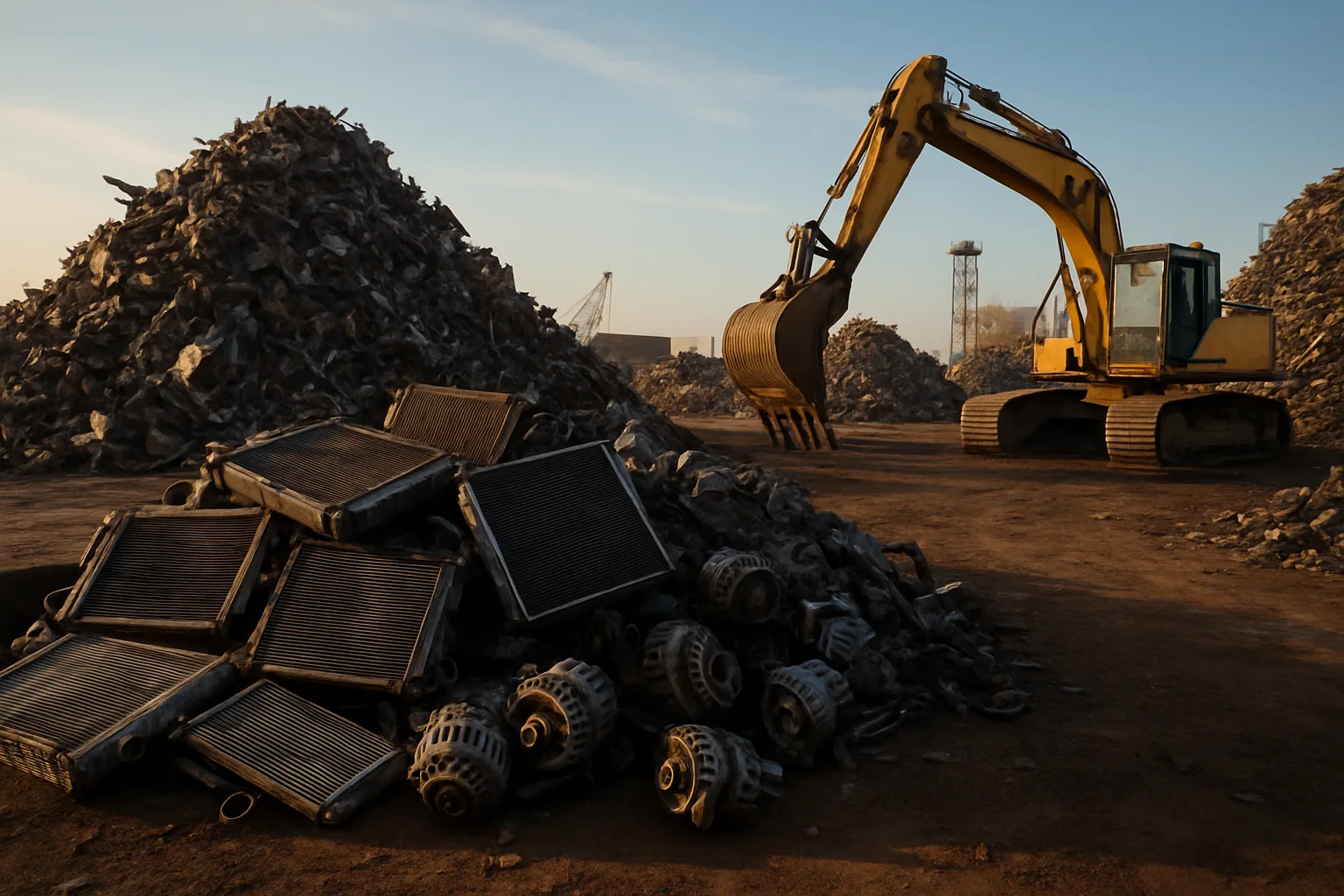
What Radiators and Alternators Are Actually Worth at the Scrap Yard
Most people tossing old auto parts into a pile have no idea what's sitting in those cores. A single radiator can carry a meaningful amount of copper and aluminum. An alternator hides copper windings inside a steel housing. If you're selling these parts as mixed metal — or worse, not selling them at all — you're leaving real money on the table. Scrap metal recycling Detroit yards see this every week.
This week's market recap breaks down exactly how common auto parts get recycled for metal, what materials they contain, and why understanding that breakdown matters when you're trying to get the best scrap metal prices Michigan has to offer.
Why Auto Parts Are a Serious Source of Non-Ferrous Metal
Auto parts recycling isn't a side hustle for most Michigan yards — it's a core revenue stream. Vehicles are essentially rolling collections of copper, aluminum, steel, and precious metals. When a car hits end-of-life, those materials don't disappear. They move through a recycling chain that starts at your yard and ends at a smelter or refiner.
The key is knowing which parts carry which metals. Not all auto scrap is created equal. Here's a quick breakdown of the most common parts and what they actually contain:
- Radiators: Typically copper-brass or aluminum construction. Copper-brass radiators carry the highest value per pound.
- Alternators: Steel housing with internal copper windings. Whole units sell lower than if the copper is separated — but most yards buy them whole.
- Starters: Similar to alternators — copper windings inside, steel or aluminum casing outside.
- Electric motors (from power windows, fans, A/C): Copper-heavy. Often overlooked.
- Wiring harnesses: Pure copper. One of the highest-value items by weight in any vehicle.
- Catalytic converters: Platinum group metals (PGMs). Entirely different pricing category — not scrap by the pound, priced by the unit and the specific substrate.
Each of these materials trades at a different price. Check today's scrap metal prices before you load the truck — knowing the spread between copper, aluminum, and steel helps you sort smarter and negotiate better.
How Radiators Get Recycled — And Why Copper-Brass Still Commands a Premium
A radiator's job is heat transfer. That requires materials with high thermal conductivity — which is exactly why copper and aluminum dominate radiator construction. Older vehicles (pre-1990s mostly, but some into the 2000s) used copper-brass radiators. Newer vehicles almost universally use aluminum with plastic end tanks.
At the yard, a copper-brass radiator gets processed differently than an aluminum unit. Copper-brass radiators are typically crushed, shredded, and sent to a copper smelter where the alloys are separated. Aluminum radiators get shredded and baled for aluminum smelters. The plastic end tanks on aluminum radiators reduce the overall value — yards will often discount "dirty" aluminum radiators compared to clean units.
Here's what affects your payout on radiators:
- Material type: Copper-brass versus aluminum is the single biggest price driver.
- Condition: Coolant residue, plastic attachments, and rubber hoses all count as contamination.
- Volume: Bringing in a load of radiators versus a single unit changes how a buyer prices the ticket.
- Current copper scrap prices: Copper scrap prices Detroit yards pay on radiators move with the LME copper price. When copper runs high, copper-brass radiators pay significantly more.
If you're holding inventory and watching the market, read the latest scrap metal market updates to time your sale when copper pricing is favorable.
Alternators, Starters, and Electric Motors — The Hidden Copper Inside Steel
Most sellers see an alternator and think "steel scrap." That's a mistake. The copper windings inside an alternator are what give it value above straight steel pricing. A whole alternator typically pays somewhere between steel and copper pricing — yards factor in the labor to process the unit and price accordingly.
You have two realistic options with alternators and starters:
- Sell them whole: Fastest and easiest. You take a blended price that reflects the mixed materials. Most small sellers go this route.
- Break them down yourself: If you have the time and the tools, stripping copper windings from the housing gets you separate pricing on copper and on the steel shell. More work, more return.
Electric motors from HVAC systems, industrial equipment, and vehicles follow the same logic. A pile of electric motors sold as whole units nets a different price than the same motors broken down into copper and steel. Detroit scrap yards process enormous volumes of motors — it's one of the region's advantages given Michigan's deep manufacturing base. If you're dealing in volume, separating materials before you sell is worth the effort.
The same principle applies to wiring harnesses. Bare bright copper is top-tier pricing. Insulated wire pays less because the yield after processing is lower. Strip it yourself or expect a discount. Platforms like SMASH help you get competitive bids for your scrap metal regardless of material grade — vetted buyers bid on what you actually have, not what a single buyer tells you it's worth.
Catalytic Converters: A Different Game Entirely
Catalytic converters sit in their own category. You can't price them the same way you price copper or aluminum scrap. They contain platinum, palladium, and rhodium — platinum group metals (PGMs) — and the pricing is unit-specific based on make, model, year, and the specific substrate inside the can.
If you're trying to sell catalytic converters online, generic scrap pricing won't cut it. You need either a specialized buyer who assays or uses VIN-based pricing data, or you need an auction format where multiple buyers compete on the actual value of your specific units. Guessing on cats — or taking the first offer from one buyer — is how sellers consistently under-price some of their highest-value inventory.
Documentation matters here too. Serial numbers, photos, and clear identification of each unit protects you legally and gets you better pricing. SMASH's platform supports serial tracking and photo documentation specifically because catalytic converter sales require that level of documentation to attract serious, vetted buyers.
Detroit-area yards and sellers handling cats should know: Michigan has active enforcement around catalytic converter theft and documentation requirements. Keep clean records. Buyers who operate above-board will expect it.
What Drives Scrap Metal Prices Right Now — June 2026 Market Snapshot
This week's market conditions matter when you're deciding whether to hold inventory or move it. A few factors shaping current pricing across North American scrap markets:
- Copper: Demand from EV manufacturing, grid infrastructure buildout, and data center construction continues to support copper pricing. Auto parts with copper content — radiators, alternators, wiring — benefit directly.
- Aluminum: Automotive aluminum demand remains strong. Aluminum radiators and engine components are steady movers. Cleaner material commands better premiums.
- Steel/ferrous: Steel pricing remains tied to mill demand and export dynamics. Alternator and starter housings in the steel category reflect broader ferrous market conditions.
- PGMs (catalytic converters): Platinum, palladium, and rhodium pricing fluctuates with automotive production and emissions regulations. Check current assay-based pricing before selling any cats.
Prices shift week to week. What a Detroit yard paid last month isn't necessarily what they'll pay today. Find current scrap metal prices near you before you commit to a sale — especially on higher-value non-ferrous material.
The single biggest mistake sellers make is calling one buyer and taking the number. That's not price discovery. That's hoping the person you called is being fair. Competition reveals the market. That's the whole premise behind SMASH — bring vetted buyers to your load, let them bid, and see what the material is actually worth. No subscription fees. The platform only earns when you do.
How to Prepare Auto Parts for Scrap Metal Recycling in Detroit
Preparation directly affects your payout. Yards and buyers price for processing time. The cleaner and better-sorted your load, the less they discount for their labor. Here's a practical checklist before you bring in auto parts for scrap metal recycling Detroit yards will pay top rates on:
- Drain coolant from radiators. Coolant contamination can disqualify copper-brass units from premium pricing.
- Remove rubber hoses and plastic end tanks if possible. Especially on aluminum radiators.
- Separate copper-brass radiators from aluminum radiators. Never mix them in the same pile.
- Document catalytic converters by serial number and photograph both ends before selling.
- Strip insulated wire if you have the time — bare copper pays more than insulated.
- Label your loads. Bring a packing list. Buyers who know exactly what they're bidding on bid higher.
This prep work is especially worth it when you're moving volume. A hundred pounds of mixed auto parts processes differently than a hundred pounds of sorted, clean copper-brass radiators. The difference in price per pound adds up fast.
If you're selling regularly, staying current on scrap metal prices today — copper, aluminum, steel, and PGMs — is part of doing this right. The market moves. Your timing should too.
Whether you're in Detroit, across Michigan, or anywhere in North America, the gap between the price one buyer offers and what a competitive auction reveals can be significant. Check current rates, prepare your load, and let the market work in your favor. Head to scrap-metal-prices.com to see where prices stand today before your next sale.
Frequently Asked Questions
Q: What is a copper-brass radiator worth at a Detroit scrap yard?
The price varies based on current copper market conditions and the condition of the radiator. Copper-brass radiators trade at a premium over aluminum units because of their higher copper content. Always check current copper scrap prices Detroit yards are posting before you sell — prices shift week to week based on LME copper pricing.
Q: Can I sell alternators and starters for scrap in Detroit?
Yes. Most Detroit-area scrap yards buy whole alternators and starters. They pay a blended rate that reflects the mixed copper and steel content. If you want maximum return, you can strip the copper windings yourself and sell copper and steel separately — but whole unit sales are faster and easier for most sellers.
Q: How do I sell catalytic converters for scrap metal recycling near me?
Catalytic converters require more documentation than standard scrap. You'll need to identify the unit by make, model, and ideally serial number, and photograph both ends before selling. Look for buyers who use assay-based or VIN-based pricing — not generic pound pricing. Platforms like SMASH connect sellers with vetted buyers who price cats accurately.
Q: What affects scrap metal prices in Michigan?
Michigan scrap metal prices follow national and international commodity markets — LME copper, aluminum spot prices, and steel mill demand all factor in. Local supply and demand also matters. Detroit's manufacturing history means the region has high volumes of industrial and automotive scrap moving through the market, which affects competitive pricing at local yards.
Q: Is it worth sorting auto parts before bringing them to a scrap yard?
Almost always yes — especially for non-ferrous materials like copper and aluminum. Yards discount mixed or contaminated loads to cover their processing costs. Sorting copper-brass radiators from aluminum, removing plastic and rubber, and separating copper wire from insulation all improve your price per pound. For larger loads, the sorting effort pays for itself quickly.
Stay current on the market — follow SMASH on LinkedIn for weekly scrap metal market insights, pricing updates, and industry news straight from the yard floor.