What a Portland Yard Learned About Lead-Acid Batteries (And Why the Numbers Surprised Them)
Most scrap yards treat lead-acid batteries like an afterthought. They pile up near the fence, get sold in bulk whenever the phone rings, and nobody really knows if they got a fair price. One Oregon recycling operation decided to stop guessing — and what they found changed how they handle every load of battery scrap that comes through the gate.
This isn't a story about copper scrap prices Portland yards chase every morning. It's about a metal that doesn't get nearly enough attention: lead. Specifically, the lead sitting inside the dead batteries stacked in your yard right now. If you've been treating those batteries as a low-priority commodity, keep reading. The math might change your mind.
Lead-Acid Batteries: More Value Than Most Yards Realize
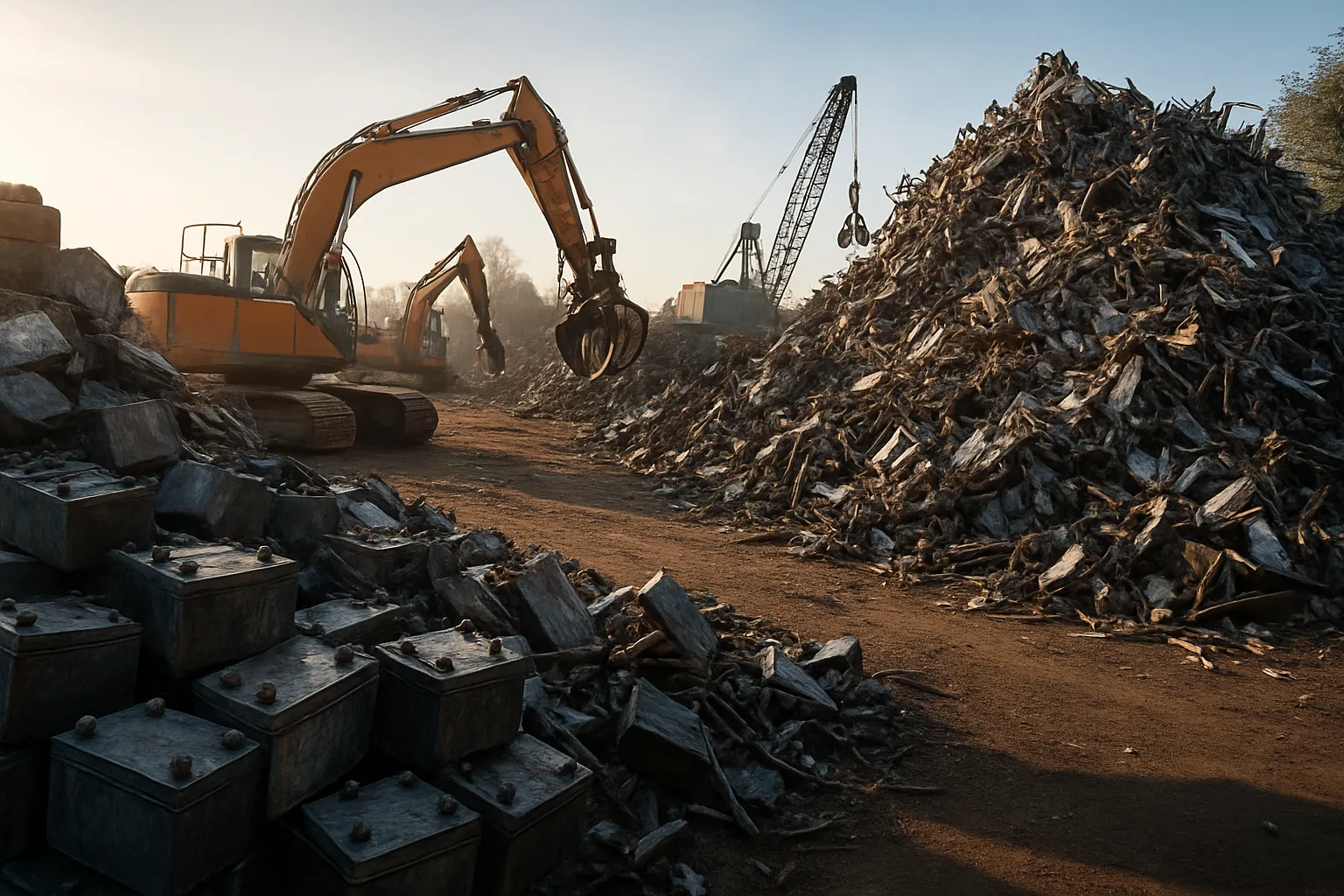
A standard automotive lead-acid battery weighs between 30 and 50 pounds. Roughly 60 to 70 percent of that weight is recoverable lead. Do the math on a pallet of 40 batteries and you're looking at 700 to 1,400 pounds of lead before you've even opened a single cell.
Lead scrap prices fluctuate with the market — just like scrap metal prices Portland sellers track daily for copper and aluminum. But lead tends to get quoted without much scrutiny. One buyer, one number, take it or leave it. That's the old way. And it's exactly the kind of single-buyer dynamic that leaves money on the table.
Here's what the Oregon yard in this story discovered: they were selling their battery scrap to the same regional buyer they'd used for years. Comfortable relationship. Predictable pickup. Zero price competition. When they ran the same inventory through a competitive auction format, they found the market had a different opinion of what that lead was worth.
- Battery lead (whole batteries): Prices vary by market — always check today's scrap metal prices before you commit to a number
- Soft lead scrap: Typically trades at a premium over hard lead
- Wheel weights and cable sheathing: Often lumped in with battery lead, but can grade differently
- Drained vs. undrained batteries: Buyers care about this — it affects handling, shipping, and compliance costs
The yard had been quoting everything at one flat rate. Buyers in a competitive environment graded it differently — and bid accordingly.
The Inventory Problem Nobody Talks About
Before this Portland yard could put their battery scrap into any kind of competitive process, they had a more fundamental problem: they didn't actually know what they had.
Batteries were mixed. Some were automotive. Some were heavy equipment. A few were industrial UPS units, which carry significantly more lead per unit. Nobody had counted them, photographed them, or documented condition. When a buyer called, the yard gave a rough estimate. Sometimes that estimate was close. Often it wasn't.
This is where scrap metal inventory management stops being a back-office concept and starts being a revenue problem. Buyers price uncertainty into their offers. If they can't verify what you have, they assume the worst-case scenario — or they just pass. Either way, you lose.
The yard started using SMASH's inventory tools to document each load before it hit the market. Photos. Battery count. Estimated weight per category. Condition notes. Suddenly, buyers had something concrete to bid on. And when buyers have confidence in what they're buying, competition gets real.
You can read the latest scrap metal market updates to understand how documentation is reshaping how serious buyers evaluate loads across every metal category — not just lead.
How the Auction Format Changed the Outcome for Lead Scrap
Here's the core shift this Oregon yard made: they stopped accepting the first number they heard and started letting buyers compete for the load.
That sounds simple. It's not, if you're doing it manually. Cold-calling four or five lead buyers, coordinating pickup windows, managing back-and-forth on pricing — it's a part-time job. Most yard operators don't have that kind of bandwidth. So they default to whoever picks up the phone first.
SMASH is built for exactly this scenario. List the load. Vetted buyers see it. They bid. You see what the market actually thinks your scrap is worth. No subscription fees. The platform only wins when you win.
For this Portland yard, the result wasn't a dramatic windfall — we won't invent numbers that don't belong to your situation. But the principle held: more buyers means better price discovery. Competition can help reveal the market. That's true whether you're selling battery lead, copper wire, or a load of aluminum extrusion.
If you want to see what competitive buyers are willing to pay for your scrap, sell your scrap metal on the SMASH marketplace and let the auction do the work.
Lead Scrap Compliance: Oregon Yards Need to Know This
Lead-acid batteries aren't just a pricing question. They're a regulated material. In Oregon, batteries fall under universal waste rules, which affect how you store them, how long you can hold them, and what documentation you need when they leave your yard.
This matters for pricing because compliance costs are real — and buyers factor them in. A yard that can show proper storage, intact batteries with no leaking acid, and clean documentation is a better counterparty than one that can't. That confidence translates into stronger bids.
Key compliance points Portland yards should stay current on:
- Storage limits: Universal waste rules cap how long you can accumulate batteries on-site before they need to move
- Container integrity: Cracked cases or leaking batteries change the handling classification
- Manifests and records: Know where your batteries go and keep documentation on file
- Acid neutralization: If batteries are drained on-site, that process has its own requirements
None of this is legal advice — regulations change, and your situation may differ. But yards that treat compliance as a selling point, not just a cost, tend to attract more serious buyers. Documented inventory gives buyers more confidence. That's not a slogan. It's how procurement teams actually evaluate loads.
What This Means for Your Scrap Metal Pricing Strategy in Portland
The lesson from this Oregon yard isn't specific to lead. It applies across every metal category you handle — from the copper wire you're tracking against copper scrap prices Portland benchmarks every morning, to the aluminum radiators stacked by the scale, to the HMS steel you're moving by the ton.
The pattern is always the same: single buyer, no competition, opaque pricing. You accept the number because it's easier than running a full market process manually. And over time, that convenience has a cost.
Platforms like SMASH make it practical to run a competitive process on loads you'd otherwise just call one buyer about. You document the inventory, list it, and let vetted buyers do the work. Auto-invoicing handles the paperwork. You don't need a subscription to start — you pay when a deal closes.
For Portland yards specifically, the local buyer pool is real but finite. SMASH opens that circle to qualified buyers across North America who are actively looking for what you have. That's a bigger market. And bigger markets tend to produce better price discovery than a single relationship built on habit.
Find current scrap metal prices near you to benchmark what your lead, copper, and aluminum should be fetching before your next load goes out the door.
Whether you're a large Portland recycler or a smaller Oregon yard moving a few pallets of batteries a month, the fundamentals are the same: know your inventory, know your market, and don't let one buyer set your price unchallenged. For more on local options and current market conditions, explore Portland scrap metal services to see what's available in your area.
Disclaimer: Scrap metal prices fluctuate daily based on market conditions, grade, volume, and buyer demand. Always verify current rates before selling any material. The prices referenced in this article are general in nature and should not be used as the basis for any transaction.
Frequently Asked Questions
Q: How much is a lead-acid battery worth as scrap in Portland right now?
Lead-acid battery scrap prices change with the lead market, which moves daily. The weight, condition, and volume of your load all affect what buyers will pay. Your best move is to check today's scrap metal prices for a current benchmark, then get competitive bids rather than accepting the first number you hear.
Q: Do scrap metal prices Portland yards offer for batteries differ from what a national buyer pays?
Yes, and sometimes significantly. Local buyers factor in their own logistics, processing costs, and current inventory levels. A national buyer with different throughput needs may price the same load differently. Running your load through a competitive process exposes you to both, which is the point.
Q: How does scrap metal inventory management affect what I get paid for lead scrap?
Directly. Buyers price uncertainty into their offers — if they can't verify count, weight, or condition, they discount the bid to protect themselves. Documented inventory with photos and category breakdowns gives buyers confidence, and confident buyers bid more competitively. SMASH's inventory tools are built to make this documentation fast and practical.
Q: Are lead-acid batteries regulated differently than other scrap in Oregon?
Yes. Lead-acid batteries fall under universal waste rules in Oregon, which govern storage duration, container integrity, and transfer documentation. Check current Oregon DEQ guidelines for specifics — regulations update, and your classification may depend on your volume and facility type.
Q: Can small yards in Portland use SMASH, or is it only for large recyclers?
SMASH works for any yard with scrap to move. There are no subscription fees — you only pay when a deal closes. Whether you're moving one pallet of batteries or a truckload of mixed non-ferrous, the process is the same: document your load, list it, and let vetted buyers compete. Email jeff@smashscrap.com to get started.
Check today's scrap metal prices and stay ahead of where the market is heading — current rates are available at scrap-metal-prices.com, so you're never walking into a sale without a benchmark in hand.
Stay current on scrap metal market trends and industry news by following SMASH on LinkedIn — it's where yard operators and buyers track what's moving in the market.