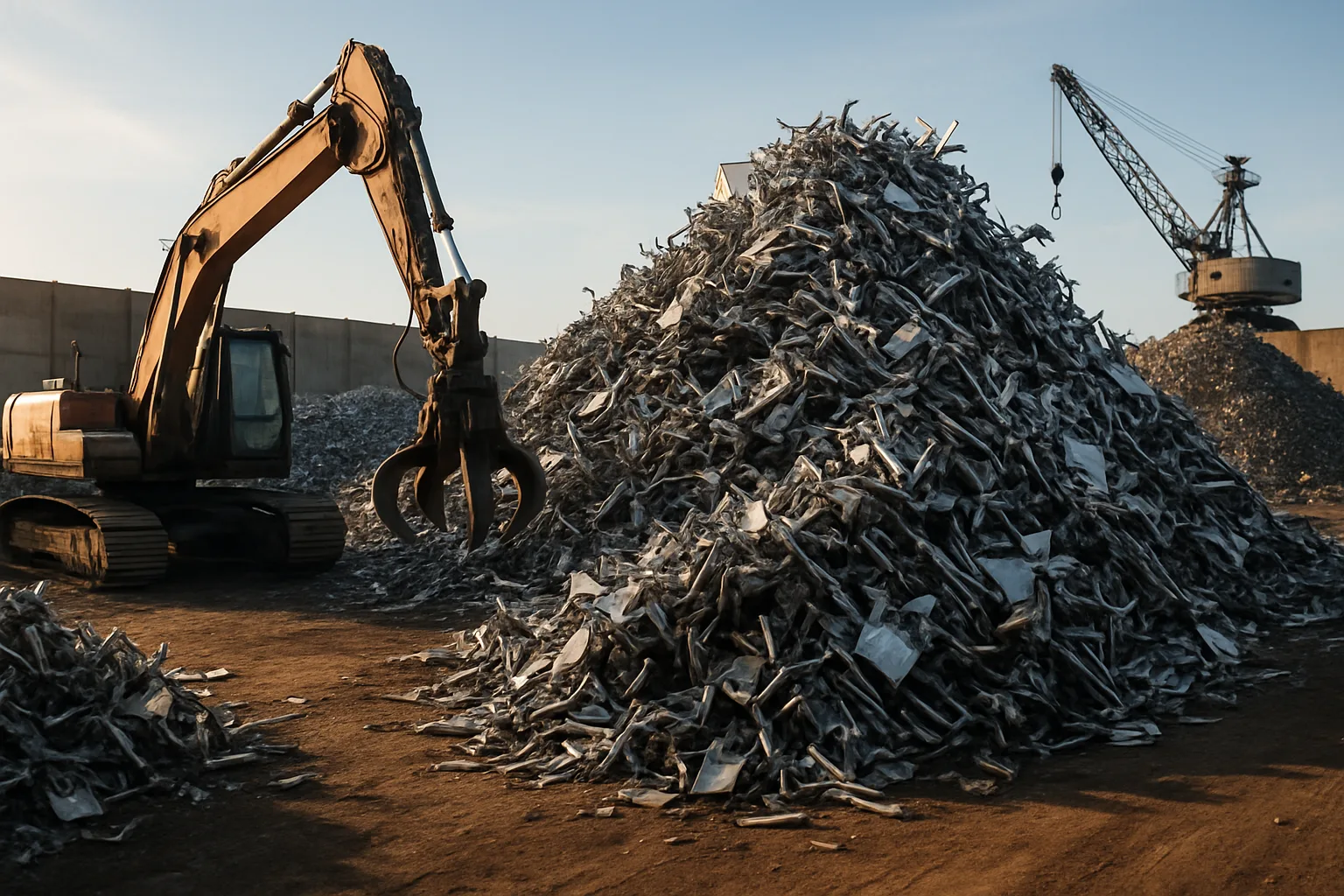
Stainless Steel Scrap Grades Explained: What You're Actually Holding and What It's Worth
Most scrap yards will pay you something for stainless steel. But "something" can mean wildly different numbers depending on what grade you're sitting on. A pallet of 316L surgical tubing is not the same as a box of mystery flatware — and the price gap between them can be significant. If you're trying to make sense of scrap metal prices today, stainless steel is one of the most misunderstood categories in the yard.
This guide breaks down the major stainless steel scrap grades, what separates them, and how to figure out what you've got before you haul it anywhere. Whether you're cleaning out a commercial kitchen in South Philly or pulling industrial equipment from a Pennsylvania manufacturing facility, knowing your grades puts money back in your pocket.
Disclaimer: Scrap metal prices fluctuate daily based on commodity markets, regional demand, and material condition. Always check today's scrap metal prices before you sell.
Why Stainless Steel Grades Matter for Scrap Metal Prices Today
Stainless steel isn't one material. It's a family of alloys, and the differences between them are chemical. The nickel content, molybdenum content, and chromium ratios all affect the melt value — which is what drives the scrap price. A yard that can verify the grade will pay more confidently. A yard that can't will average down to protect themselves.
The three most common grades you'll encounter in scrap:
- 304 Stainless Steel — The workhorse. Found in kitchen equipment, sinks, appliances, food processing machinery, and architectural trim. Contains roughly 18% chromium and 8% nickel. This is the most traded grade in the scrap market.
- 316 Stainless Steel — The premium grade. Adds molybdenum (typically 2–3%), which makes it corrosion-resistant in marine and chemical environments. Found in pharmaceutical equipment, marine hardware, and medical devices. It pays more than 304 because of the moly content.
- 430 Stainless Steel — The low-payer. A ferritic grade with no nickel. Found in dishwasher panels, cheap cookware, and automotive trim. It's magnetic, and it pays significantly less than the austenitic grades above.
There are also less common grades — 201, 410, 17-4PH, duplex stainless — but 304, 316, and 430 cover the majority of what most sellers encounter. Knowing which one you have before you walk into a yard in Philadelphia or anywhere else in Pennsylvania is the difference between taking what they offer and negotiating from a position of knowledge.
How to Identify Your Stainless Steel Grade Before You Sell
You don't need a lab to make a reasonable identification. You need a magnet and a few minutes.
- Magnet test first. 304 and 316 are austenitic — mostly non-magnetic. 430 is ferritic — strongly magnetic. If your stainless sticks hard to a magnet, you're likely looking at 430 or a similar lower-value grade. If it sticks weakly or not at all, you're likely in 304/316 territory.
- Check markings. Commercial and industrial equipment often stamps or etches the grade on the material. Look at welds, end caps, spec plates, and flanges. Pipe fittings, tanks, and food-grade equipment are commonly marked.
- Consider the source. Kitchen equipment, food processing lines, and restaurant supply — almost always 304. Medical and pharmaceutical equipment, marine hardware — often 316. Appliance panels, cheap cookware, automotive trim — frequently 430.
- XRF analysis. A handheld XRF gun gives you a near-instant elemental breakdown. Many larger scrap yards use them, and some will grade your material on the spot if you ask. If you're moving a significant tonnage, it's worth requesting one.
Getting the grade right matters more when you're selling volume. A few pounds of mystery stainless isn't worth the argument. A full skid or a truckload absolutely is. Document what you have, photograph it, and if you're selling through a platform like SMASH, that documentation helps buyers bid with confidence — which is how you get real price discovery instead of a lowball.
Current Stainless Steel Scrap Price Ranges and What Moves the Market
Stainless steel scrap prices are driven primarily by the London Metal Exchange nickel price and, to a lesser extent, chromium and molybdenum markets. When nickel runs hot, 304 and 316 scrap follows. When nickel drops, the whole category softens. This is why scrap metal prices today for stainless can shift meaningfully week to week.
General price relationships to understand (not current quotes — always find current scrap metal prices near you before you sell):
- 316 stainless commands the highest per-pound price due to molybdenum content
- 304 stainless sits in the mid-range — the most liquid grade with the most buyers
- 430 stainless pays the least — often trades closer to heavy melt steel than true stainless premiums
- Mixed or unidentified stainless gets averaged down — expect the yard to penalize uncertainty
Other factors that affect the price you actually receive: material cleanliness (contamination with rubber gaskets, plastic insulation, or painted steel lowers value), form factor (turnings and shavings trade differently than solid pieces), and regional demand. In Philadelphia and across Pennsylvania, industrial demand from manufacturing, food processing, and construction sectors affects local buy prices. High-volume sellers should be comparing multiple buyers — not just accepting the first number they hear.
Selling Stainless Steel Scrap in Philadelphia: What the Local Market Looks Like
Philadelphia has a dense industrial and commercial base — restaurants, hospitals, pharmaceutical manufacturers, and food processing facilities all generate stainless steel scrap regularly. That means local yards are generally familiar with grading it, and there's real competition among buyers for clean, identified material.
That said, "familiar with grading it" doesn't mean every yard pays the same. The difference between a yard that actively buys 316 and one that treats everything as generic stainless can be meaningful per hundredweight. If you're sourcing from commercial demolition, hospital equipment decommissioning, or industrial cleanouts anywhere in the greater Philadelphia area, it pays to know which yards are actively moving the grades you have.
For Philadelphia scrap metal services, understanding your material type before you call gives you a baseline to compare against. Don't let uncertainty work against you. Grade it, document it, and price it accordingly.
Platforms like sell your scrap metal on the SMASH marketplace take this further — putting vetted buyers in competition for your load rather than leaving you dependent on a single yard's daily buy price. More buyers means better price discovery, especially for higher-value grades like 316 where the premium over 304 is real money on a significant load.
Common Mistakes Sellers Make with Stainless Scrap — and How to Avoid Them
Selling stainless steel scrap isn't complicated, but there are a few avoidable mistakes that consistently cost sellers money. Getting these right is straightforward once you know what to watch for.
- Mixing grades without separation. Combining 316 with 430 and selling it as a single lot means the whole load gets priced as the lower-value material. Sort before you sell. Even rough separation by magnet test is better than nothing.
- Selling dirty material without asking about a clean premium. Stainless with significant contamination (scale, slag, coatings, attached non-ferrous hardware) gets docked. Sometimes cleaning the material yourself is worth the time; sometimes it's not. Ask the yard what the clean versus dirty spread looks like.
- Not getting multiple quotes on larger loads. A few phone calls or one listing on a marketplace can reveal what the actual market price is for your material. Single-buyer relationships are convenient but rarely optimal.
- Ignoring form factor. Turnings, shavings, and swarf from machining operations contain more surface area and often more contamination than solid scrap. They typically trade at a discount to solid 304 or 316. Know what form your material is in and price expectations accordingly.
- Assuming "stainless is stainless." This is the big one. Every point above comes back to this. Grade identification is where the money is. Don't leave it on the table.
For ongoing market context beyond stainless steel, read the latest scrap metal market updates to stay current on nickel, copper, aluminum, and steel trends that all affect what your yard is paying day to day.
Frequently Asked Questions
Q: What are scrap metal prices today for stainless steel?
Stainless steel scrap prices vary by grade, form, and daily commodity markets — primarily nickel. 316 stainless consistently commands a premium over 304, which in turn trades well above 430. Prices shift regularly, so always verify current rates before you sell. Check scrap-metal-prices.com for up-to-date pricing in your area.
Q: How do I know if my stainless steel scrap is 304 or 316?
Start with a magnet test — both 304 and 316 are weakly magnetic or non-magnetic, which separates them from 430. For a definitive answer, look for stamped grade markings on the material itself, or ask the yard to run an XRF analysis. Source context also helps: pharmaceutical and marine equipment is commonly 316; food service and general fabrication is usually 304.
Q: Where can I sell stainless steel scrap near me in Philadelphia?
Philadelphia and the surrounding Pennsylvania region have multiple scrap yards that actively buy stainless steel. For larger loads or higher-value grades, consider listing on a platform like SMASH to get competitive bids from vetted buyers rather than a single yard's take-it-or-leave-it price. You can also explore dedicated Philadelphia scrap metal services to find buyers in your area.
Q: Does the form of stainless steel scrap (solid vs. turnings) affect the price?
Yes, significantly. Solid pieces — pipe, plate, fabricated parts — generally command better prices than turnings, shavings, or swarf. Turnings are harder to process, often contain coolant or oil contamination, and have a less predictable composition. If you have turnings, expect a discount compared to solid material of the same grade.
Q: Is it worth separating stainless steel scrap by grade before selling?
Almost always yes, especially on loads of any significant size. A mixed load gets priced as the lowest-value material present. Separating 316 from 304 from 430 takes time, but the price difference — particularly between 316 and 430 — justifies the effort once you're dealing with more than a few hundred pounds.
Stainless steel is one of the more rewarding scrap categories to learn precisely because there's real money in the details. Grade it right, document it well, and put it in front of multiple buyers. If you're in the Philadelphia area or anywhere across Pennsylvania and want to see what competitive bidding actually does for your load value, SMASH is built for exactly that scenario — no subscriptions, no guesswork, vetted buyers competing for your material. Before you haul your next load, take two minutes to check today's scrap metal prices at scrap-metal-prices.com and go in knowing your number.
Follow SMASH on LinkedIn for regular scrap metal market updates, grade breakdowns, and pricing insights across steel, copper, aluminum, and more.