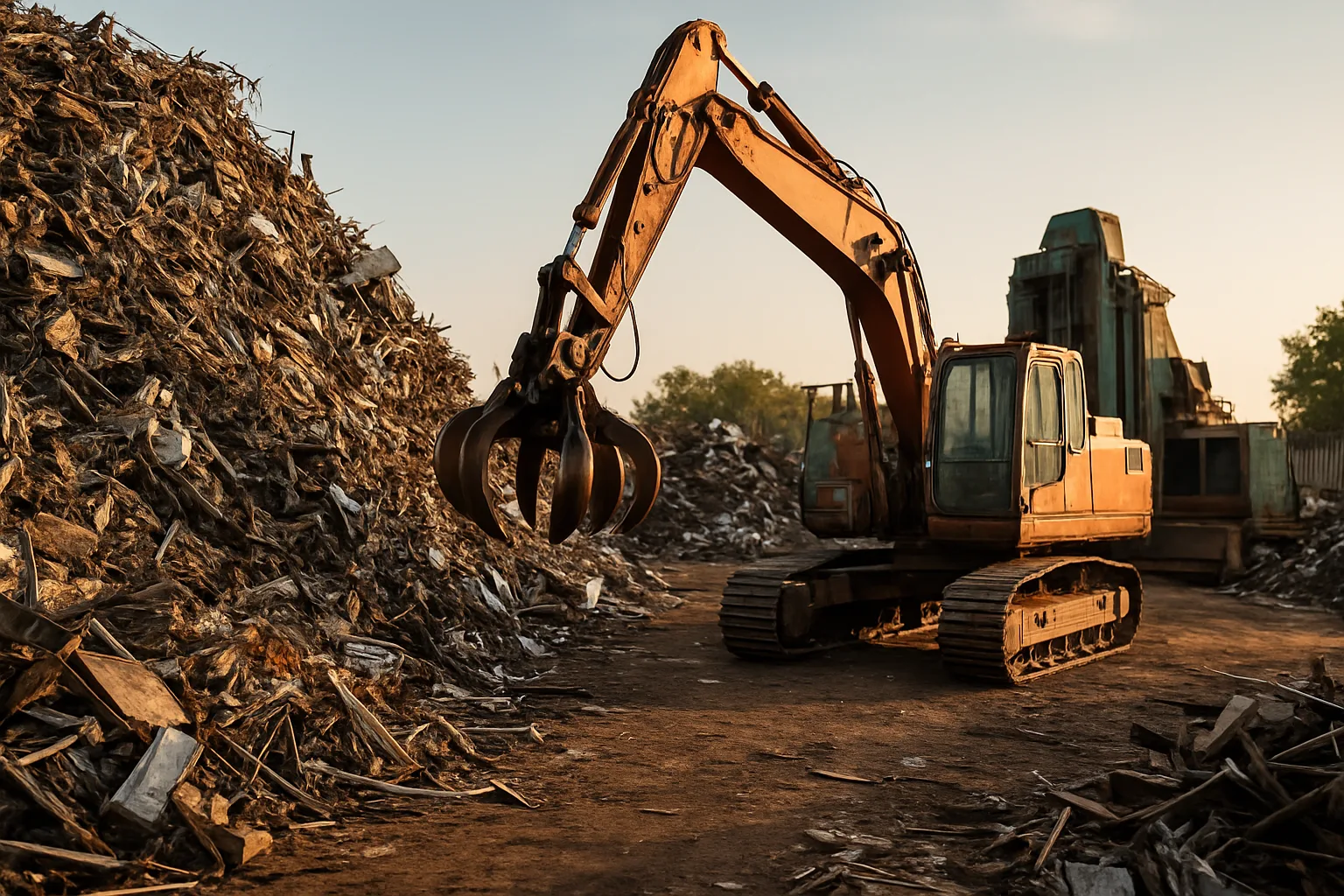
What Happens to Your Scrap After You Pull In — Weighing, Grading, and What It Means for Your Payout
Most sellers focus on the price per pound. But the number that actually determines your payout gets decided in the first five minutes after you pull onto the yard. How your load gets weighed and graded is the real game — and most people have no idea how it works.
If you want to sell scrap metal Phoenix and walk away feeling like you got a fair deal, you need to understand the process on the other side of the scale. This isn't complicated, but it matters. A lot.
The Scale Is the Starting Point — But It's Not the Whole Story
Every load starts on the drive-on scale. The yard weighs your vehicle loaded, you offload your material, and they weigh it again empty. That difference is your net weight. Simple enough. But what happens after that is where most sellers leave money on the table.
Yards aren't buying one uniform product. They're buying copper, aluminum, steel, stainless, cast iron, catalytic converters — sometimes all in the same truck. Each material carries a different copper scrap price, aluminum scrap price, or steel scrap price. The yard needs to sort, identify, and assign each material to the right grade before they can cut you a check.
That sorting process — grading — is where your payout gets built or broken. If you show up with a mixed, contaminated load, you're not getting top dollar for anything in it. The yard grades to the lowest common denominator when they can't cleanly separate materials on the spot.
How Scrap Metal Grades Actually Work — and Why They Hit Your Payout Hard
Grading is the yard's way of matching your material to the price tier it belongs in. Every metal category has multiple grades, and the spread between best and worst can be significant. Here's what that looks like in practice:
- Bare bright copper wire — clean, uncoated, unalloyed. Top of the copper price tier.
- #1 copper — clean tubing and solids, minimal oxidation, no attachments.
- #2 copper — solder joints, light coatings, mixed fittings. Lower per-pound rate.
- Insulated copper wire — graded by estimated copper content after stripping. Much lower rate.
The same logic applies to aluminum. Cast aluminum, extruded aluminum, aluminum cans, and painted aluminum all carry different rates. When you check today's scrap metal prices, you'll notice the spread between grades. That spread is real money — not a rounding error.
In a hot Arizona summer, oxidation and contamination on copper or aluminum happen faster than sellers realize. Phoenix yards deal with this constantly. Material that looked clean in your shop can arrive with surface degradation that bumps it down a grade. It pays to clean and separate your loads before you pull in.
The Grading Inspection — What Yard Staff Are Actually Looking At
When a yard employee walks your load, they're not guessing. They're running through a fast checklist built on years of handling the same materials every day. Here's what they're evaluating:
- Material identification — Is this actually copper, or is it copper-clad steel? Is this cast aluminum or sheet? A magnet test eliminates a lot of confusion fast.
- Contamination level — Plastic attachments, rubber coatings, iron bolts on aluminum motors, grease, oil, paint. All of it affects the grade.
- Preparation — Did you separate your metals? Is the copper stripped or coated? Are the cats (catalytic converters) loose or still mounted in a full pipe section?
- Quantity and consistency — A large, clean, consistent load is easier to process and often gets better treatment. Yards are businesses — they want material they can move quickly.
- Documentation — In Arizona and across the U.S., yards increasingly require documentation for certain materials, especially catalytic converters and copper wire. Serial tracking and photo documentation are becoming standard on larger transactions.
The grade your load receives directly sets the price per pound applied. There's no negotiating after the fact if your material genuinely belongs in a lower tier. That's why preparation before you arrive — separating metals, removing attachments, knowing your grades — changes your outcome.
Common Mistakes That Drop Your Grade (and Your Price)
These are the most consistent errors that cost sellers on both sides of the payout. They apply whether you're selling in Phoenix or anywhere else in North America.
- Mixing metals in one bin. If copper and aluminum touch the same container, you're making the yard's grader do extra work — and some yards will downgrade the entire bin rather than sort it at their expense.
- Leaving attachments on. Brass fittings on copper pipe, steel bolts on aluminum motors, rubber on copper wire. Every attachment that isn't yours reduces what you get for the metal that is.
- Hauling partial or light loads of high-value material. A small handful of bare bright copper mixed into a full load of #2 won't get individually priced. It gets lost in the lower-grade average.
- Not knowing what you have. Stainless steel looks like regular steel to the untrained eye. Aluminum bronze looks like brass. If you're not sure, ask — or use a resource like find current scrap metal prices near you to benchmark what you're holding before you show up.
- Ignoring moisture weight. Water adds to scale weight but can also signal a contaminated or diluted load. Some yards will estimate moisture deductions on wet material.
If you're a regular seller, these habits compound over time. Getting bumped from bare bright to #1 copper on every load isn't a minor difference — it's real money per pound, multiplied across every trip.
How SMASH Changes the Pricing Equation for Sellers
The weighing and grading process is standard across all yards. What isn't standard is how the price you receive gets set. The traditional model: you call one buyer, they give you a number, you take it or leave it. You have no idea if that number reflects the actual aluminum scrap price today or whether a yard two miles away is offering more.
That's the problem platforms like sell your scrap metal on the SMASH marketplace are built to solve. SMASH connects sellers with vetted buyers across North America, creates competitive auction conditions, and gives documented inventory — including photo documentation, serial tracking, and full packing list details — real market exposure. More buyers evaluating the same documented load means better price discovery. Competition can help reveal the market.
For sellers moving meaningful volumes — loads of non-ferrous, cores, cats, or mixed metals — having documented, graded inventory on a competitive platform is a different experience than a single cold call to one buyer. SMASH handles auto-invoicing and inventory tools that turn your documented loads into something buyers can confidently bid on. No subscription fees. They only win when you win.
Phoenix scrap sellers moving regular volume should take a hard look at what competitive buyer access actually does for their per-pound outcomes. You can also explore Phoenix scrap metal services to find resources specific to your area.
What You Can Do Right Now to Get a Better Price on Every Load
None of this requires new equipment or a different operation. It's process. Here's what separates sellers who consistently get better rates from those who don't:
- Sort before you haul. Copper with copper. Aluminum with aluminum. Stainless separate from carbon steel. Every mixed bin you hand the yard is a bin they have to sort — at your cost.
- Know your grades before you arrive. Spend five minutes on the drive over thinking about what you have. Bare bright or #1? Cast or extruded? It changes your starting position.
- Document high-value material. Cats with VIN lookup data, copper loads with photos, cores with serial numbers. Documentation builds buyer confidence — and confident buyers bid better.
- Check market rates before you commit to a buyer. Use a pricing resource. Read the latest scrap metal market updates to track where copper, aluminum, and steel rates are moving. Don't walk in blind.
- Understand the timing. Scrap metal prices today are not the same as last week or last month. The global steel market, copper demand, and aluminum flows shift constantly. A load that sat in your yard for six weeks may be hitting the market at a different point in the price cycle than when you collected it.
Arizona's heat and construction activity create consistent non-ferrous volume across Phoenix and the surrounding region. That means regular sellers here have real leverage — if they show up with clean, sorted, documented loads and access to competitive buyers.
The weighing scale is neutral. The grading process is predictable once you understand it. What you control is the preparation you do before you pull in — and the buyers you put your material in front of after the grade is set. Get both right and your payout reflects the actual market, not just whatever one buyer decided to offer that morning.
Before your next load, check today's scrap metal prices at scrap-metal-prices.com so you walk in knowing exactly where the market stands.
Frequently Asked Questions
Q: How do scrap yards weigh my metal in Phoenix?
Most Phoenix yards use a certified drive-on scale. Your vehicle is weighed loaded, then again after you offload your material. The difference is your net scrap weight. Some yards weigh bins or containers directly for smaller loads.
Q: What does "grading" mean and how does it affect my payout?
Grading is how the yard classifies your metal into price tiers. Copper, aluminum, and other metals each have multiple grades — clean versus contaminated, stripped versus insulated, cast versus extruded. Higher grades earn a higher price per pound. Separating and cleaning your material before arrival is the fastest way to protect your grade.
Q: Can I negotiate my grade at the yard?
You can ask questions and point out the quality of your material, but grades are assigned based on what's actually in front of the grader. The best negotiating tool is showing up with a clean, sorted, well-prepared load. Documentation — photos, packing lists — also helps on larger or higher-value transactions.
Q: What metals get the best prices at Phoenix scrap yards right now?
Non-ferrous metals — especially bare bright copper, #1 copper, and certain aluminum grades — typically command the highest prices per pound. Catalytic converters (cats) also carry significant value depending on the specific unit. Prices fluctuate with global markets, so always check current rates before hauling. Disclaimer: Scrap metal prices change daily based on market conditions. Always verify current rates at the yard or through a live pricing resource before selling.
Q: How does SMASH help sellers in Phoenix get better prices?
SMASH connects scrap sellers with multiple vetted buyers through a competitive auction process. Instead of accepting one buyer's offer, your documented load gets real market exposure — which means better price discovery. No subscription fees apply; SMASH earns only when the seller does. Reach out directly at jeff@smashscrap.com to get started.
Stay ahead of the market — follow SMASH on LinkedIn for industry updates, scrap metal market insights, and news from yards and buyers across North America.