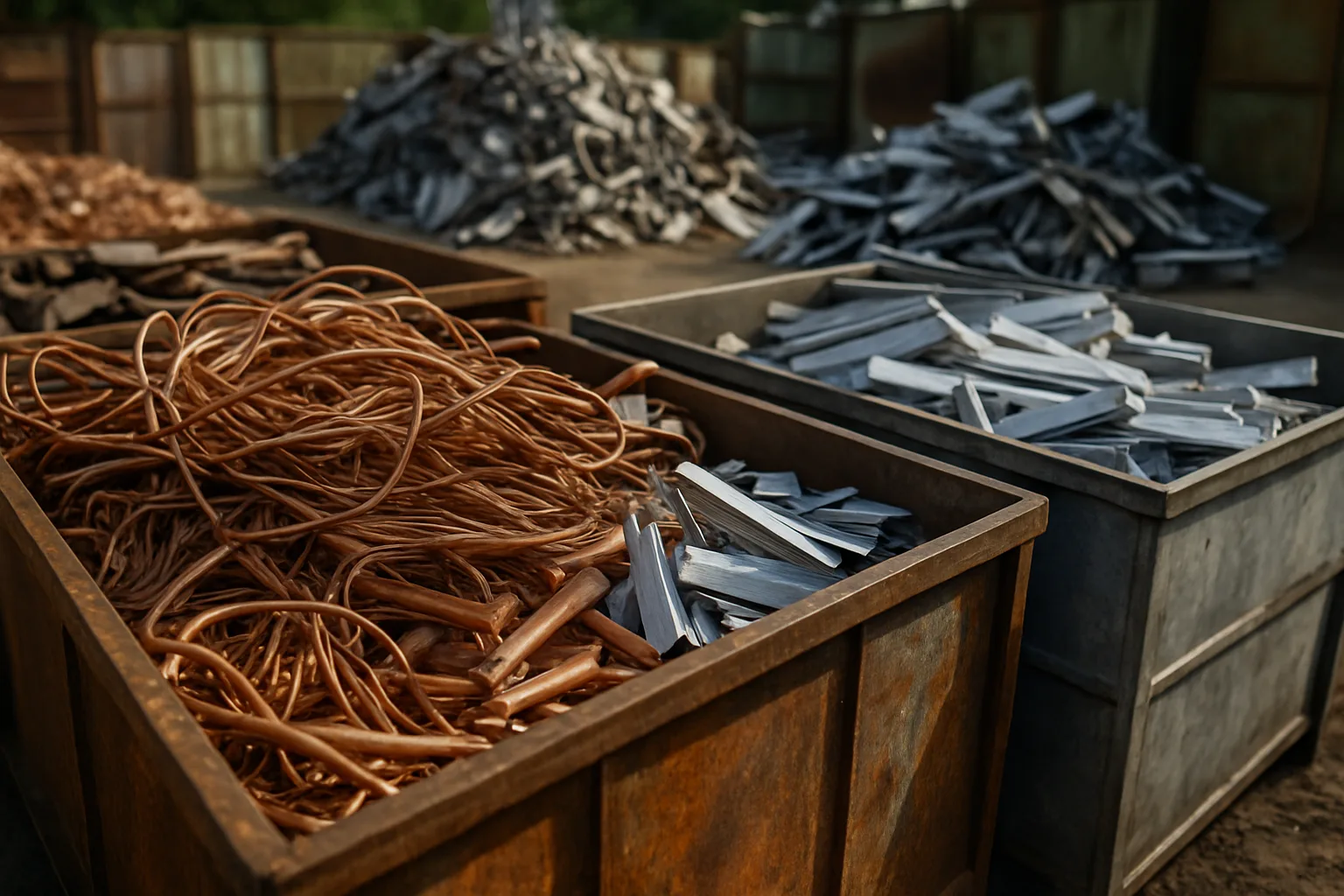
Most scrap yards pay you what they decide you're worth. Understanding how they arrive at that number changes everything.
If you've ever dropped off a load and walked away wondering whether you got a fair price, you're not alone. The weighing and grading process at recycling yards is rarely explained — and that gap costs sellers money. Whether you're moving a pallet of copper wire, a load of aluminum extrusion, or a mixed pile of ferrous scrap, every pound gets measured and every grade gets assigned. Those two steps determine your payout.
This guide breaks down exactly how that process works — and why sellers using a B2B scrap metal marketplace like SMASH are getting more out of it.
Why Weight and Grade Are the Only Two Numbers That Matter
Your scrap metal payout comes down to a simple formula: weight × price per unit. The weight comes from the scale. The price per unit comes from the grade your material is assigned. That's it. Everything else — the yard's overhead, their buyer relationships, how busy they are that day — gets baked into the grade they assign you.
This is why understanding both sides of the equation matters so much. A load of copper that gets downgraded from Bare Bright to #1 Heavy can lose significant value per pound — on a substantial load, that's real money left on the table. And if you're not watching the scale ticket, you may never even know it happened.
Yards aren't always trying to cheat you. But they are running a business. They buy low and sell high. The less you know about grading standards, the more room they have to work with.
How Recycling Yards Weigh Your Scrap Metal
Most commercial and industrial yards use certified truck scales (also called platform scales or pit scales) for large loads. For smaller quantities — a bucket of brass fittings, a bundle of wire — they use bench scales or floor scales. All certified scales are required to meet state weights and measures standards, and in Texas, those certifications are managed through the Texas Department of Agriculture.
Here's what actually happens when you pull onto a yard:
- Gross weight in: Your vehicle (or the load itself) is weighed fully loaded when you arrive.
- Material is unloaded and sorted by the yard team.
- Tare weight: Your empty vehicle is weighed again on exit.
- Net weight = Gross minus Tare. That net figure is what you get paid on.
For smaller loads brought in by hand or dolly, the material is weighed directly. You should always ask for a printed scale ticket — a physical record of the gross, tare, and net weights with a timestamp. Any reputable yard will provide one without hesitation. If they push back, that's a red flag.
One more thing: moisture matters. A load of copper pipe that sat outside in the rain is heavier than it would be dry. Some yards will discount wet material. Know what you're bringing in and how it's been stored.
How Yards Grade Scrap Metal — and What Each Grade Means for Your Price
Grading is where most sellers lose money — not because of dishonest yards, but because they don't know what standards apply to their material. Grades aren't invented by individual yards. They're based on industry standards set by the Institute of Scrap Recycling Industries (ISRI), which publishes commodity specifications for hundreds of scrap materials.
Here's a simplified breakdown for the most common categories:
Copper
- Bare Bright (#1 Copper Wire): Clean, uncoated, unalloyed copper wire — no insulation, no solder, no fittings. Highest copper scrap price.
- #1 Copper: Clean, uncoated copper pipe and bus bar. Slight surface tarnish is acceptable.
- #2 Copper: Copper with solder, paint, or minor oxidation. Significantly lower price per pound than #1.
- Insulated Copper Wire: Price depends on the percentage of copper recovery inside the insulation. Yards estimate this — sometimes with a wire stripping machine, sometimes by visual inspection.
Aluminum
- Clean Aluminum Extrusion (6061, 6063): Highest aluminium scrap value today in most markets.
- Cast Aluminum: Engines, wheels — lower value because of alloy mix.
- Mixed/Painted Aluminum: Discounted significantly for contamination.
- Aluminum Cans (UBC): Priced separately as used beverage containers — a commodity in their own right.
Steel and Ferrous
- #1 Prepared: Clean structural steel, properly cut to size (typically under 5 feet).
- #1 Unprepared: Longer pieces that require processing — lower price per ton.
- Shredded: Mixed light gauge steel, already processed.
- Cast Iron: Engines, machine bases — priced separately from steel scrap price benchmarks.
The grade a yard assigns affects your price directly. If your material is borderline — copper pipe with a small amount of solder — the yard makes a call. That call is subjective. That's where having multiple buyers competing for your load changes the dynamic entirely.
The Hidden Cost of Selling to One Buyer
Here's the problem with the traditional scrap model: you pull up to the yard, they grade your material, they name a price, and you either take it or drive somewhere else. Most people take it. The yard knows that.
When one buyer controls the grade and the price, there's no mechanism to check either. You don't know if your #2 copper should actually be #1. You don't know if the buyer across town would pay more for the same load. You're flying blind, and the yard is holding the controls.
A scrap metal auction platform like SMASH flips this. When you document your load — photos, weights, grade descriptions, certifications — and put it in front of multiple vetted buyers simultaneously, competition does the work. More buyers seeing your material means better price discovery. That's not a slogan. That's how markets are supposed to work.
Sellers in Dallas using platforms like SMASH are documenting their loads with the same care they'd use for any business transaction. Serial tracking, photo documentation, accurate packing lists. It sounds like extra work. It's actually protection — and it pays.
How to Prepare Your Load to Get the Best Grade
You can't control the buyer's market. You can control how your material shows up. These steps consistently lead to better grades and fewer disputes:
- Sort before you sell. Don't mix copper grades in the same bin. Don't throw aluminum and steel together. Mixed loads get priced at the lowest common denominator.
- Strip your wire. If you have the volume to justify it, stripping insulated copper wire before selling often yields more than the stripped wire price difference suggests. Run the math.
- Clean your material. Remove attachments, fittings, and coatings where practical. A piece of #2 copper cleaned up properly may qualify as #1.
- Document everything. Photograph your loads before drop-off. Note the weight on your own scale if you have one. Keep your scale tickets.
- Know your grade before you go. Look up ISRI specs for your material. Walk in knowing what you have.
For yards and dealers in the Dallas scrap metal services market, this level of preparation is increasingly common among volume sellers — because it directly impacts the bottom line.
Why the B2B Scrap Metal Marketplace Model Changes Price Discovery
The traditional yard relationship works fine for small loads or occasional sellers. For recycling businesses, dealers, and industrial sellers moving real volume, it leaves too much on the table.
A B2B scrap metal marketplace gives you something a single yard never can: a documented, competitive process. When you list a load on SMASH, vetted buyers across North America see your material — not just the yard down the street. They bid. The market speaks. That's how the copper scrap price today per kg becomes something you discover rather than something you're told.
SMASH handles auto-invoicing, documentation, and buyer vetting so you're not chasing paperwork or worrying about who you're dealing with. No subscription fees. The model works when the seller wins.
If you want to find the best price for your scrap on SMASH, the process starts with documenting your load accurately — which is exactly what this article is about. The yards that win in competitive markets are the ones that show up prepared.
Scrap metal prices shift constantly — copper, aluminum, steel, and everything in between move with global demand, currency, and supply chain conditions. To stay ahead, check today's scrap metal prices before you sell, and read the latest scrap metal market updates to track where prices are heading in Texas and across the country.
Want to know what your load is actually worth in today's market? Find current scrap metal prices near you and compare before you commit to a single buyer. That one step alone changes how you negotiate.
Disclaimer: Scrap metal prices fluctuate daily based on market conditions. All pricing data should be verified against current rates before any transaction.
Frequently Asked Questions
Q: How do recycling yards determine the grade of my scrap metal?
Yards grade material based on ISRI (Institute of Scrap Recycling Industries) commodity specifications, which define standards for cleanliness, alloy type, and form. The grade is typically assigned by a yard grader on visual inspection, though large volumes may involve more formal testing. Understanding these specs before you arrive gives you a basis to discuss — or dispute — a grade assignment.
Q: Can I dispute the weight or grade a scrap yard gives me?
Yes. Always ask for a printed scale ticket and confirm the gross, tare, and net weights add up correctly. If you believe your material was downgraded incorrectly, ask the grader to walk you through the reasoning — a reputable yard will explain it. If the dispute isn't resolved, getting quotes from multiple buyers (including through a scrap metal auction platform) gives you market data to reference.
Q: What's the difference between copper #1 and copper #2 in terms of price?
The price gap between #1 and #2 copper varies with the market but is consistently significant — it can represent a meaningful difference per pound. On a large load, the difference between grades can be worth hundreds of dollars. That gap is why proper cleaning and sorting before you sell always pays off.
Q: Is SMASH available for scrap sellers in Dallas, Texas?
Yes. SMASH operates as a North American B2B scrap metal marketplace, connecting vetted buyers and sellers across the U.S., including Dallas and the broader Texas market. Sellers list documented loads, buyers compete, and the platform handles invoicing and documentation — no subscription fees required.
Q: How do I know if I'm getting a fair scrap metal price in Dallas?
The most reliable way is to create competitive pressure. Getting quotes from multiple buyers — either by calling around or using a platform like SMASH — gives you real market data rather than a single yard's offer. Checking current benchmark prices at scrap-metal-prices.com before you sell also helps you walk in with realistic expectations and a stronger negotiating position.
---Follow SMASH on LinkedIn for ongoing scrap metal market insights, price trend updates, and industry news across North America.