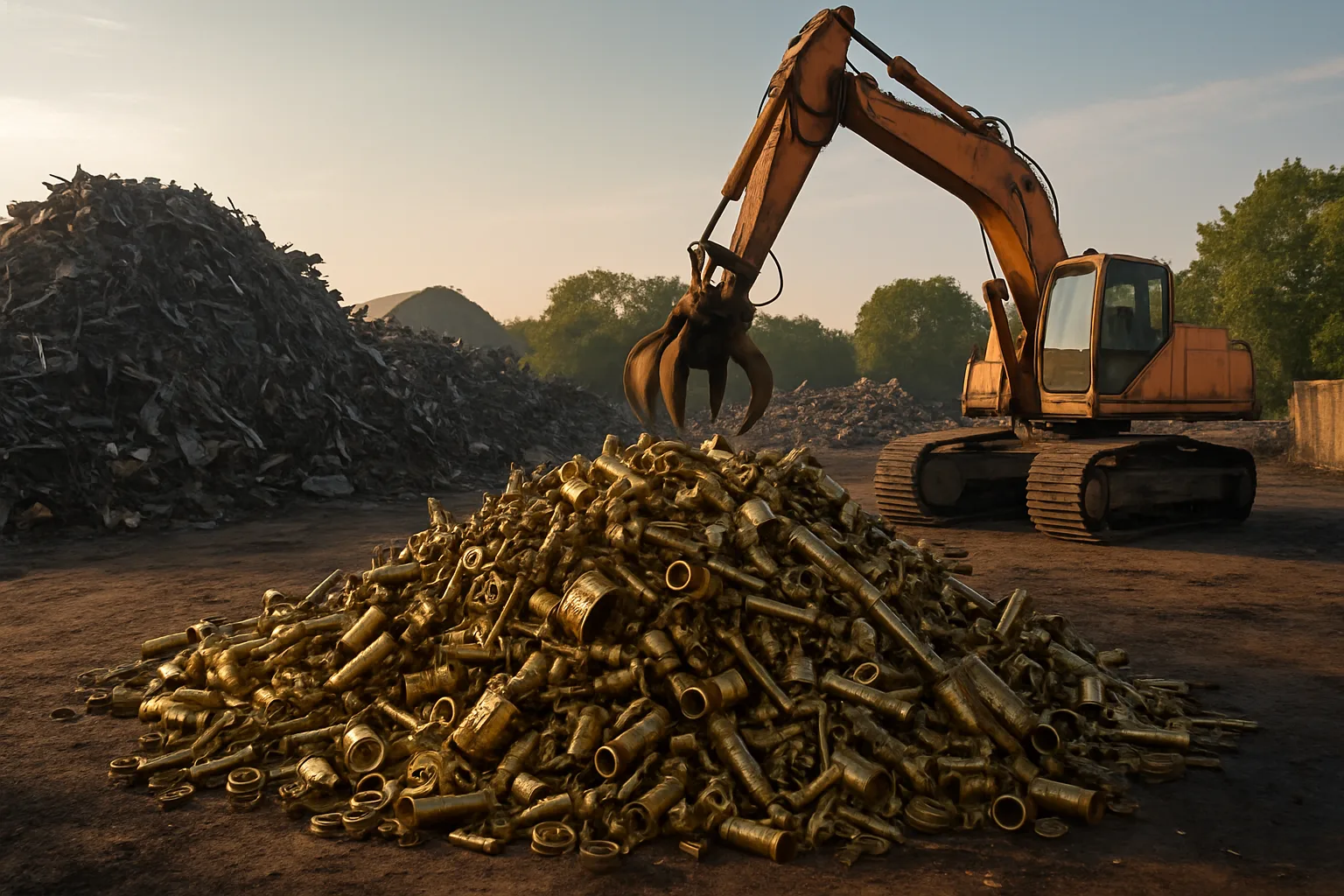
Most scrap yards will tell you brass and bronze move fast. There's a reason for that — these alloys carry real value, and sellers who know what they have consistently walk away with more cash than those who don't. If you've been lumping brass and bronze in with generic copper scrap, you're likely leaving money on the table.
Understanding the copper scrap price today is part of the equation. But knowing which copper-bearing alloys you're holding — and how to document them properly — is what separates a solid payday from a missed opportunity. This guide breaks down brass and bronze scrap: what it is, where to find it, what it's worth, and how platforms like the SMASH scrap metal auction marketplace help sellers get real market value through competition instead of guesswork.
What Are Brass and Bronze — and Why Does It Matter for Scrap Metal Prices Today?
Brass and bronze are both copper-based alloys, but they're not the same material, and scrap buyers price them differently. Knowing the difference affects your payout directly.
Brass is primarily copper and zinc. It's the yellow-gold metal you find in plumbing fittings, valves, musical instruments, ammunition casings, and decorative hardware. It machines well, resists corrosion, and shows up constantly in residential and commercial demolition work. Brass scrap typically grades out as yellow brass, red brass (higher copper content), or mixed brass depending on the source.
Bronze is copper alloyed primarily with tin, though modern formulations also include aluminum, silicon, or manganese. It's denser, harder, and slightly darker than brass. You find it in bushings, bearings, marine hardware, bells, sculptures, and industrial equipment. Bronze is less common in general scrap loads, which is part of why it commands attention when buyers spot it.
Both alloys sit well below pure copper in terms of scrap value per pound, but well above aluminum and most steel grades. That middle ground makes them worth sorting carefully. Mixing brass with lower-grade material drops your realized price. Presenting sorted, documented loads attracts more serious buyers.
Where to Find Brass and Bronze Scrap — Sourcing by Industry and Application
If you're actively sourcing scrap material in Ohio or across the Midwest, brass and bronze are hiding in more places than most people expect. The key is knowing which industries and demolition types generate the most volume.
Plumbing and construction demolition is the most consistent source. Older homes — especially pre-1980s builds common throughout Dayton and surrounding communities — used brass fittings, valves, and shut-offs throughout their plumbing systems. A full bathroom or kitchen gut frequently yields several pounds of red and yellow brass alone.
Other reliable sources include:
- HVAC and mechanical equipment — pressure valves, manifolds, and fittings are frequently brass
- Electrical components — terminals, connectors, and bus bars often contain brass
- Ammunition casings — spent brass shell casings are a clean, sortable source popular with range operators
- Industrial machinery — bearings, bushings, and wear plates in older equipment are frequently bronze
- Marine salvage and boat hardware — propellers, through-hulls, and cleats are commonly bronze alloy
- Architectural salvage — door hardware, railings, and decorative fixtures from commercial buildings
- Musical instruments — broken or worn-out brass instruments (trumpets, trombones, tubas) scrap as yellow brass
The scrap metal recycling Dayton market sees strong supply from the region's manufacturing heritage and aging housing stock. If you're hauling demolition material from Montgomery County properties, sorting your copper-bearing alloys before you pull into the yard pays off every time.
What Is Brass and Bronze Worth — Understanding Copper Scrap Price Today
Scrap values for brass and bronze track closely with copper market movement. When the copper scrap price today moves up, brass and bronze prices follow. When copper pulls back, so do the alloys.
As a general framework, brass typically prices at a significant discount to clean #1 copper, reflecting the dilution from zinc content. Red brass — higher copper percentage — commands a premium over standard yellow brass. Bronze grades vary widely depending on alloy composition, but clean sorted bronze usually sits in a similar range to red brass.
The variables that affect what you actually receive include:
- Cleanliness — attached iron, plastic inserts, or chrome plating all drop the grade
- Sorting accuracy — mixed loads of brass grades often price at the lowest common grade
- Volume — buyers pay more attention to larger loads with consistent material
- Documentation — photo documentation and inventory records increase buyer confidence
- Who's buying — a single local buyer sets the price; competitive bidding reveals the real market
That last point matters. The old way of selling scrap — one call, one buyer, one number — works in the buyer's favor. You have no idea whether you're getting a fair rate or leaving 10-15% behind. Scrap metal prices today aren't fixed. They shift by region, by buyer inventory, and by demand from downstream processors. Competition exposes that range.
To stay current on scrap metal prices today, check today's scrap metal prices before you call anyone. Walking into a negotiation with current market data puts you in a completely different position.
How to Prepare and Grade Your Brass and Bronze for Maximum Value
Preparation before you sell isn't optional if you want top dollar. Buyers grade what they see. If your material is mixed, corroded, or attached to other metals, they grade down. If it's clean, sorted, and documented, they compete for it.
Here's how to prepare brass and bronze loads properly:
- Separate by alloy type — yellow brass, red brass, and bronze should never ride in the same bin if you can avoid it
- Remove iron attachments — steel bolts, iron pipe fittings, or cast iron connected to brass valve bodies need to come off
- Strip chrome-plated fittings — chrome plating downgrades brass; buyers will either reject it or price it down sharply
- Keep ammunition brass separate — clean spent casings are a distinct grade and should be presented as such
- Document with photos — photograph each sorted bin or pallet before loading out; this protects you during disputes and builds trust with remote buyers
- Weigh before you go — know your weights before you pull in; discrepancies at the scale create unnecessary friction
Platforms like SMASH support photo documentation and inventory tools that let you attach images and notes directly to a load before it goes to auction. Buyers see what they're bidding on. That transparency leads to more confident bids — and better scrap metal prices for the seller. If you're still wondering how to sell scrap metal near me for cash, the answer increasingly involves more than just your nearest yard — it involves putting your load in front of multiple vetted buyers simultaneously.
Selling Brass and Bronze Through Competitive Auction vs. the Local Yard Walk-In
Here's the honest comparison. Walking your brass load into a single yard gets you one number. That number reflects what that buyer wants to pay on that day, not necessarily what your material is worth in a competitive market. For small loads — a few pounds of fittings from a bathroom reno — that's probably fine. For anything substantial, it's worth questioning.
Auction-based platforms change the dynamic entirely. When multiple vetted buyers see the same documented load and submit competing bids, price discovery happens naturally. You're not negotiating against one person's offer — you're watching the market tell you what your material is worth. That's a fundamentally different position for a seller to be in.
The SMASH scrap metal auction marketplace operates on exactly this model. No subscription fees. SMASH only earns when the seller successfully completes a transaction. That alignment matters — it means the platform's incentive is to get you the best possible outcome, not to clip you on a monthly fee whether you sell or not.
For yards and collectors in the Dayton, Ohio area moving regular volumes of brass and bronze, the difference between a single-buyer transaction and a competitive auction can be meaningful over the course of a year. More buyers means better price discovery. It's that straightforward.
If you want current data before you decide anything, read the latest scrap metal market updates to track where copper-bearing alloys are trending before you load out.
Tracking the Copper Market — Why Global Pricing Affects Your Local Scrap Rate
Brass and bronze scrap pricing doesn't exist in a vacuum. It's tied directly to global copper demand, and that market moves based on factors ranging from Chinese manufacturing output to U.S. infrastructure spending to energy sector investment. Sellers who track these signals make better timing decisions on when to hold and when to move material.
Copper is a bellwether metal. When construction and manufacturing activity accelerates globally, copper demand rises — and the scrap price follows. When economic uncertainty hits and industrial output contracts, copper pulls back. Brass and bronze trail these moves with slight lag but clear correlation.
One note for readers searching copper scrap price today UK — while this guide focuses on U.S. market dynamics, the global copper price is set on international exchanges and affects scrap values in all markets. The directional trends are consistent even if regional premiums and local supply conditions vary. North American yards and UK processors are all watching the same LME copper price.
Before your next load leaves the yard, take two minutes and find current scrap metal prices near you. That single step puts current market data in your hands before any conversation with a buyer starts.
Frequently Asked Questions
Q: What is the copper scrap price today for brass and bronze material?
Brass and bronze scrap prices move with the copper market and are typically priced at a discount to pure copper grades, reflecting their alloy composition. Yellow brass comes in lower than red brass due to higher zinc content. Check current rates at scrap-metal-prices.com before selling — prices shift based on market conditions, buyer demand, and material cleanliness. Never rely on a quote from a few weeks ago.
Q: Where can I sell brass and bronze scrap in Dayton, Ohio?
Dayton has a number of active scrap yards that accept non-ferrous material including brass and bronze. For larger, sorted loads, auction platforms like SMASH offer access to multiple vetted buyers simultaneously rather than a single walk-in quote. That competition generally works in the seller's favor on significant volumes of clean, documented material.
Q: How do I know if I have brass or bronze — and does it matter for pricing?
Brass is typically a bright yellow-gold color, while bronze tends toward a darker reddish-brown. Bronze is also noticeably heavier and harder. The distinction matters for pricing — bronze and red brass typically command higher rates than yellow brass due to copper content. When in doubt, sort conservatively and let a buyer confirm the grade.
Q: What lowers the scrap value of brass and bronze material?
Contamination is the primary factor. Chrome plating, attached iron or steel, plastic inserts, and mixing different alloy grades all reduce your realized price. Clean, sorted material in consistent grades prices significantly better than mixed or contaminated loads. Spend time preparing your material before you haul it — it directly affects what you get paid.
Q: Is there a difference between how brass scrap is priced in the US versus the UK?
The underlying copper benchmark is global, so directional trends are consistent. However, regional supply and demand, transportation costs, import/export dynamics, and local buyer competition all affect the local scrap rate. If you're searching for the copper scrap price today UK, you'll find different nominal rates than U.S. yards — but both markets move with the same global copper price signals.
Brass and bronze are worth finding, worth sorting, and worth selling right. Don't guess at the market — check today's scrap metal prices and go in informed. Get current rates and market data at scrap-metal-prices.com before your next load moves.
Follow SMASH on LinkedIn for ongoing scrap metal market insights, pricing updates, and industry news delivered straight to your feed.
Disclaimer: Scrap metal prices fluctuate based on market conditions, material grade, and regional buyer demand. All pricing references in this article are general in nature. Always verify current rates before selling.