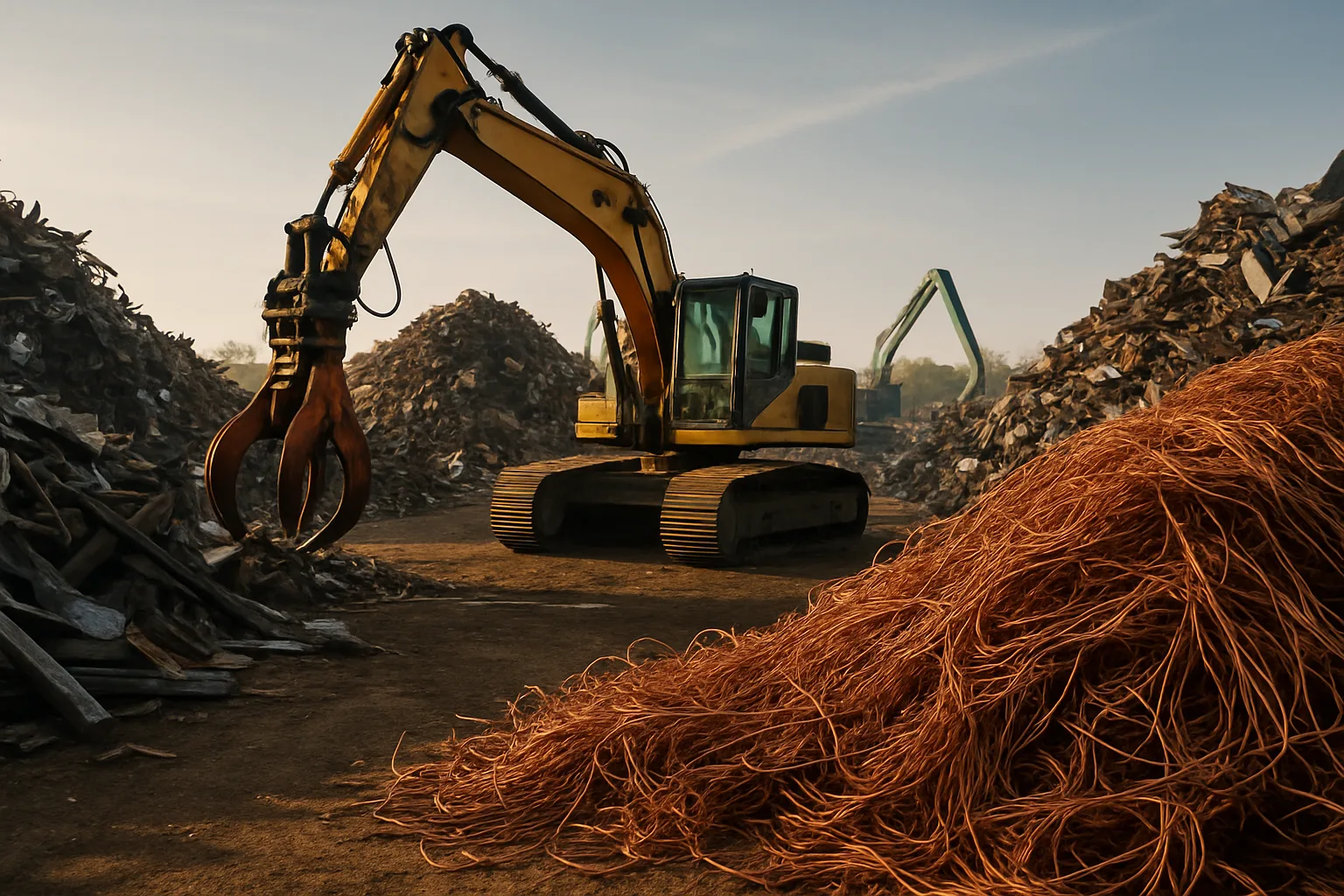
What Really Happens When You Drop Off Scrap — And Why It Affects Your Copper Scrap Price Today
Most sellers focus on the copper scrap price today before they load the truck. Fair enough. But here's what catches people off guard: the price posted on a yard's board is rarely the price you walk away with. The grade your scrap gets assigned at the scale — and how that scale reads your load — determines your actual payout. Understanding both puts more money in your pocket.
This week's market recap covers the mechanics yards use to weigh and grade your material, why those decisions move your numbers, and how platforms like SMASH are changing the game for sellers who want real price discovery instead of a single buyer's opinion.
How Scrap Yards Weigh Your Load — The Basics of the Scale House
The scale house is where your payout begins. Most recycling yards use certified truck scales — also called platform scales or pit scales — that record your gross weight (loaded vehicle), then your tare weight (empty vehicle after you unload). The difference is your net weight, which is what you get paid on.
That sounds simple. It isn't always. Here's where sellers leave money on the table:
- Moisture weight: Wet copper wire or soaking steel adds real pounds that aren't real metal. Yards factor this in — or they should. Some don't tell you they are.
- Contamination deductions: Insulated wire gets a percentage deduction based on estimated copper recovery. A yard may quote you a price per pound on copper but apply a 60% recovery factor on your wire without saying it plainly.
- Mixed loads: If you bring copper, aluminum, and ferrous in one unsorted pile, expect the yard to value the load at the lowest common denominator. Sorting before you arrive almost always pays off.
- Scale certification: Legitimate yards run certified, inspected scales. Don't hesitate to ask when theirs was last inspected. It's a fair question.
Raleigh has a strong network of active recycling yards serving the broader Triangle area — which means you have options. More options means more reason to know your material's grade before you drive anywhere. If you're new to this, Raleigh scrap metal services can help you find local buyers and understand what to expect at the drop-off.
Scrap Metal Grading — Why "Copper" Isn't Just Copper
This is where most sellers get confused. Grading is the system yards use to classify your metal's purity and condition. The grade determines the price per pound — and the difference between grades on copper alone can be significant. Knowing the categories before you arrive means you can speak the same language as the yard operator.
Here are the main copper grades you'll encounter at most U.S. yards:
- #1 Bare Bright Copper: The cleanest, highest-value grade. Uncoated, unalloyed wire or bus bar, at least 1/16 inch thick. No solder, no paint, no oxidation. This is the grade that commands the top copper scrap price today at virtually every yard in North Carolina.
- #1 Copper: Unalloyed copper pipe, bus bar, and solids — slightly lower than bare bright due to fittings or minor oxidation.
- #2 Copper: Mixed copper with some coating, solder, or oxidation. Includes thinner wire and pipe with small attachments. Expect a meaningful discount from #1 pricing.
- Insulated Copper Wire (ICW): Graded by recovery percentage — the estimated copper content once plastic jacket is removed. Grades run from low recovery (10–30%) up to high recovery (60–70%+) depending on wire gauge and insulation thickness.
- Copper Tubing: Often graded separately. Clean AC coils, refrigeration tubing, and plumbing pipe each have their own category at most yards.
The same grading logic applies across the board. Aluminum has its own classification system — sheet, cast, extrusion, MLC (mixed low-copper), 6061, etc. Steel has heavy melt, shredded, and busheling. If you're bringing a mixed load to a scrap yard near me search result you found online, call ahead and ask how they grade the specific materials you're bringing. A five-minute phone call can clarify a lot.
How Yards Assess Quality — What Buyers Actually Look For
Beyond the scale and the grade category, yard buyers make judgment calls. Experienced buyers assess your material visually and physically in seconds. Understanding what they're evaluating helps you present your load better.
What they check:
- Purity: Is this actually the metal it looks like? Plated materials, coated wire, and alloys can look like one thing and test as another. Yards use XRF analyzers (handheld metal testers) for non-ferrous material when there's doubt.
- Contamination level: Insulation, rubber, plastic, oil, and attachments all reduce the effective recovery percentage. More contamination equals a lower assigned grade or a percentage deduction on the spot.
- Sorting and preparation: Well-sorted, separated loads take less processing time for the yard. Many yards reward this — not always explicitly, but in the grade they assign and the hassle they spare you.
- Volume: Larger loads often command slightly better rates. If you're a consistent seller with volume, that relationship matters. This is also exactly why multi-buyer competition changes everything for high-volume sellers.
The problem with this system? It's subjective. One buyer at one yard decides your grade. That's one data point. It may be accurate. It may not be. find the best price for your scrap on SMASH — because competition between vetted buyers, not a single grader's call, is what reveals the real market value of your load.
Scrap Metal Prices Today — What's Moving the Market Right Now
As of June 2026, a few factors are influencing scrap metal prices today across the U.S. market. Global copper demand remains driven by electrical infrastructure buildout — EV charging networks, grid upgrades, and industrial construction. That keeps copper scrap prices elevated relative to historical averages, though day-to-day volatility is real.
Steel scrap continues to respond to domestic mill capacity and export demand. Ferrous prices have seen pressure in recent months as mill inventories fluctuate. Non-ferrous metals like aluminum and brass hold steadier because their end markets — automotive, aerospace, and packaging — are running lean on primary supply.
North Carolina's scrap market tracks closely with the Southeast region's industrial activity. The Triangle and Charlotte corridors generate significant non-ferrous material from construction and manufacturing. Raleigh-area sellers benefit from proximity to active buyers, but the yard you choose and the grade you're assigned still determines whether you get a fair price or leave value behind.
Want to know what the market is doing right now? check today's scrap metal prices before you load up — it takes two minutes and tells you whether your yard's offer is in the ballpark.
How Sellers Can Get Better Outcomes — Before and After the Scale
You can't control global commodity markets. You can control how you prepare your load and where you take it. These steps consistently improve outcomes for sellers across every material type:
- Sort before you go. Separate copper grades. Keep #1 bare bright away from insulated wire. Keep aluminum extrusion away from cast. Mixing costs you money at grading.
- Strip wire when labor makes sense. High-gauge wire with a thick insulation layer? Stripping to bare bright can jump your price per pound significantly. Low-gauge wire? The labor rarely pays off — sell it as ICW.
- Document your load. Photos, estimated weights, and grade notes. This matters especially if you're selling to multiple buyers or using an auction platform. Documented inventory gives buyers more confidence to bid higher.
- Know the posted rate before you negotiate. find current scrap metal prices near you and walk in informed. A buyer who knows you've done your homework is less likely to low-ball.
- Don't rely on one buyer. This applies whether you're in Raleigh, Phoenix, or anywhere else. One buyer's number is one data point. Competition reveals the real price.
Platforms like SMASH exist to solve exactly this. Vetted buyers, competitive auction format, photo documentation built into the process, auto-invoicing when the deal closes. No subscription fee — the model only works when sellers win. For recycling yards moving volume, or for individuals with a significant non-ferrous load, that difference in market exposure can be material.
For sellers in the Southeast, read the latest scrap metal market updates to stay current on where prices are heading week to week.
The Bottom Line on Grading, Weighing, and Getting Paid Fairly
The copper scrap price today matters. But the grade your material receives and the weight your load gets assigned matter just as much. A load graded #2 when it should be #1 costs you real money. A wet load weighed without a moisture conversation costs you more. Understanding the process from scale house to payout is how experienced sellers protect their margins.
The scrap industry rewards preparation and information. Sort your material. Know your grades. Check the market before you drive to the yard. And when you're moving volume that deserves real buyer competition, don't settle for a single phone call to a single buyer. The old way of selling — one yard, one price, take it or leave it — isn't your only option anymore.
Head to scrap-metal-prices.com to check today's scrap metal prices and get current rates before your next drop-off. It's the fastest way to walk into any yard in North Carolina — or anywhere in the country — knowing what fair looks like.
Frequently Asked Questions
Q: How do I know if a scrap yard is giving me the right grade for my copper?
Know the standard grade categories before you arrive — #1 Bare Bright, #1 Copper, #2 Copper, and insulated wire grades are the main ones. If a yard grades your clean, uncoated wire below #1 Bare Bright without explanation, ask them specifically what disqualified it. Legitimate yards will tell you. Checking the copper scrap price today on a reference site before you go also gives you a baseline to evaluate their offer.
Q: What's the difference between gross weight and net weight at a scrap yard?
Gross weight is the weight of your vehicle plus your scrap load when you drive onto the scale. Tare weight is your empty vehicle after you've unloaded. Net weight — what you're paid on — is gross minus tare. Make sure both weights are recorded on your scale ticket, and keep that ticket for your records.
Q: Where can I find the best scrap metal prices in Raleigh, NC?
Scrap metal prices vary by yard, material grade, and daily market conditions. Your best move is to check current market rates at scrap-metal-prices.com, then contact multiple yards in the Raleigh area to compare offers. For larger non-ferrous loads, competitive auction platforms give you access to multiple vetted buyers simultaneously rather than relying on a single yard's rate.
Q: Does sorting my scrap before drop-off actually make a difference in price?
Yes — consistently. Mixed loads either get graded at the lowest value in the pile or get separated by the yard at a processing cost they pass to you. Sorted material gets the grade it deserves, moves faster, and signals to buyers that the load is clean. Separation takes time on your end but almost always pays off on the scale ticket.
Q: How often do copper scrap prices change?
Copper scrap prices can shift daily based on COMEX futures, global demand signals, and local supply conditions. Most yards update their posted rates at least weekly, and many reprice daily for non-ferrous metals. If you're holding a significant load, it's worth tracking the market for a few days before selling rather than committing to the first price you see.
Disclaimer: Scrap metal prices fluctuate based on market conditions, location, material grade, and buyer demand. All prices mentioned or implied in this article are general estimates for informational purposes only. Always verify current rates directly with your local yard or at scrap-metal-prices.com before selling.
Stay ahead of the market — follow SMASH on LinkedIn for weekly scrap metal market insights, price trend updates, and industry news.
```