Catalytic Converter Recycling Explained: How It Works and Why Prices Vary So Much
Your catalytic converter could be worth anywhere from $20 to over $1,000 at scrap — and the difference has nothing to do with luck. It comes down to what's inside the unit, which vehicle it came from, and how you sell it. Most sellers leave money on the table because they don't understand what drives those numbers. This article breaks it down.
If you're sitting on a pile of cats in Erie, Pennsylvania, or you pulled one off a salvage vehicle and want to know what it's actually worth, here's what you need to know before you sell.
What Happens Inside a Catalytic Converter Recycler
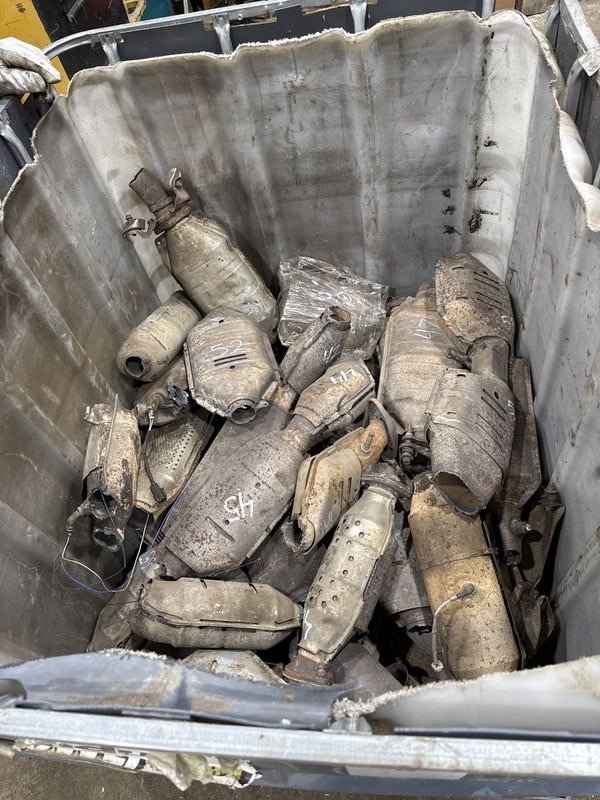
Catalytic converters contain platinum group metals — platinum, palladium, and rhodium — embedded in a ceramic or metallic substrate called the monolith. These metals act as catalysts that reduce harmful emissions from exhaust gases. When the converter is recycled, the goal is to recover those metals.
The recycling process moves through several stages:
- Collection and sorting: Converters are grouped by type — OEM (original equipment manufacturer), aftermarket, or foil-type. OEM units typically carry more precious metal content than cheap aftermarket replacements.
- Decanning: The outer steel shell is removed, exposing the monolith inside. The steel shell has its own scrap value, contributing to the check today's scrap metal prices for ferrous material.
- Sampling and assay: The monolith is crushed, blended into a homogeneous sample, and tested using X-ray fluorescence (XRF) or fire assay to determine the exact concentration of platinum, palladium, and rhodium.
- Smelting and refining: The precious metals are separated from the base material through high-temperature processing. The refined metals then re-enter the global supply chain.
That assay step is critical — and it's also why the first buyer you call may not give you the best number. The recycler running assay knows exactly what's in those units. The seller often doesn't. That information gap drives most of the price variation in this market.
5 Reasons Catalytic Converter Prices Vary So Dramatically
Not all cats are created equal. Here are the five biggest factors that move the price on any given unit:
1. Precious Metal Content
This is the biggest driver. A catalytic converter from a large V8 truck engine may contain significantly more platinum, palladium, and rhodium than one from a small four-cylinder economy car. The substrate type matters too — ceramic honeycomb substrates tend to hold more recoverable metal than older bead-type or foil-type designs. Without knowing the assay result, you're essentially guessing.
2. Live Commodity Prices
Palladium and rhodium trade on global commodity markets and can swing dramatically — sometimes hundreds of dollars per troy ounce in a single month. When rhodium peaked at historic highs in recent years, converters that once fetched modest prices became surprisingly valuable. When prices correct, that same unit is worth far less. The read the latest scrap metal market updates to stay on top of where precious metals are trading before you sell.
3. OEM vs. Aftermarket Units
An aftermarket converter installed as a cheap emissions fix may contain as little as a fraction of the precious metal content found in the original factory unit. Recyclers pay based on recoverable content, not on how the converter looks externally. If you're selling a mix, make sure you're not lumping high-value OEM units in with low-value aftermarket replacements at a blended rate.
4. Condition and Completeness
A converter that has been cracked, crushed, or thermally damaged may have lost substrate material and, with it, recoverable precious metals. Units with broken-off pipes, oil contamination, or melted substrates typically assay lower. Recyclers discount accordingly. Document the condition of your units with photos before you ship or hand them over — this protects you if a dispute arises over the assay result.
5. The Buyer You Choose
This one is entirely within your control. A local buyer offering a flat-rate price per unit based on visual inspection is not the same as a competitive auction where multiple vetted buyers bid based on actual recoverable value. The difference between your first offer and your best offer can be significant — especially on high-value OEM units from trucks, SUVs, and luxury vehicles. Platforms like get competitive bids for your scrap metal put multiple buyers in competition for your material, which is how you reveal the actual market price instead of accepting someone else's margin.
How a Scrap Metal Auction Changes the Math on Catalytic Converters
The traditional way to sell cats: call your usual buyer, get a number, take it or leave it. That buyer has overhead, margin requirements, and no reason to show you what your material is actually worth to the market. The number they quote reflects their business, not yours.
A scrap metal auction works differently. Your inventory is documented — serial numbers, photos, unit types, condition — and presented to multiple vetted buyers simultaneously. Those buyers compete. Competition drives price discovery. You see what the market actually pays, not what one buyer decides to offer.
This matters especially with catalytic converters because the spread between the lowest and highest offer on a good load of cats can be substantial. Yards and collectors in Erie and across Pennsylvania have historically relied on a handful of relationships to move this material. That's not necessarily wrong — relationships matter in this business — but it's also not the same as knowing your load went to the buyer willing to pay the most for it.
SMASH is built for exactly this. The platform connects sellers with vetted buyers through a structured auction format. No subscription fees. No guessing. Documented inventory gives buyers more confidence, which means more competitive bids. When you sell catalytic converters online through a platform like SMASH, the documentation and competition work in your favor.
What Sellers in Pennsylvania Should Know Before Moving Cats
Pennsylvania has specific regulations around catalytic converter sales — particularly for scrap dealers and recyclers. Know these before you move material:
- Identification requirements: Many Pennsylvania scrap dealers are required to record seller identification for catalytic converter transactions due to theft prevention regulations that have tightened across the state in recent years.
- Documentation best practices: Keep records of where your converters came from — VIN documentation for vehicle-sourced units is increasingly standard and protects you as a legitimate seller.
- Lot size matters: Individual converters sold one-at-a-time rarely get the same attention as a documented lot. If you're accumulating cats in Erie or elsewhere in Pennsylvania, grouping them into a well-documented load typically improves your negotiating position.
- Know your unit types: Large diesel truck cats, exotic vehicle cats, and high-end OEM units command very different prices. Don't blend them without understanding what you're mixing together.
If you're not sure what you have, use a reputable lookup tool or platform that can help identify units by make, model, and year before you price anything. SMASH's inventory tools support serial tracking and photo documentation — both of which help buyers make confident, competitive bids rather than discounting for uncertainty.
For current ferrous pricing on the steel shell material, find current scrap metal prices near you to benchmark what the decanned shells are worth separately.
The Old Way vs. The SMASH Way: A Quick Comparison
If you're evaluating how to move your catalytic converters, here's a direct comparison between the conventional approach and a competitive auction model:
- Price transparency — Old way: One offer, take it or leave it. SMASH way: Multiple buyers bid; you see what the market pays.
- Documentation — Old way: Visual estimate, your word against theirs. SMASH way: Photos, serial tracking, unit-by-unit inventory create a clear record.
- Buyer pool — Old way: One relationship, one margin. SMASH way: Vetted buyers competing for your material.
- Fee structure — Old way: Varies; often baked into a lower offer. SMASH way: No subscription fees; SMASH wins when the seller wins.
- Speed — Old way: Depends entirely on that one buyer's schedule. SMASH way: Structured auction format with defined timelines.
The gap between "one buyer, one call" and a competitive auction process is where most sellers are losing value without realizing it. More buyers means better price discovery. That's not a theory — it's how markets work.
Frequently Asked Questions
Q: How do I know what my catalytic converter is worth before selling?
The most accurate way is to have the unit identified by make, model, and year, then compare against current precious metal prices — platinum, palladium, and rhodium. Many online tools and platforms, including SMASH, support unit identification. For a real-time benchmark on broader scrap metal values, check current rates at scrap-metal-prices.com.
Q: Can I sell catalytic converters online through a scrap metal auction?
Yes. Platforms like SMASH allow you to document your cats with photos and serial information, then present them to multiple vetted buyers through a competitive auction. This is one of the most effective ways to sell catalytic converters online without accepting the first flat-rate offer you receive.
Q: Why do catalytic converter prices change so frequently?
Prices move with live commodity markets for platinum, palladium, and rhodium — all of which trade globally and can shift significantly based on supply, demand, and broader economic conditions. Prices fluctuate daily, so always check current rates before selling. The disclaimer applies: past prices are not a reliable guide to what you'll receive today.
Q: Are there specific rules for selling catalytic converters in Pennsylvania?
Yes. Pennsylvania scrap dealers are generally required to record seller identification for cat transactions, and documentation of vehicle origin (such as VIN records) is increasingly standard practice. Regulations evolve, so check with your local scrap yard or the Pennsylvania Department of Environmental Protection for the most current requirements.
Q: What's the best scrap metal auction platform for sellers in Erie, Pennsylvania?
SMASH connects sellers across North America — including Erie and the broader Pennsylvania region — with vetted buyers through a structured auction format. No subscription fees, documented inventory, and competitive bidding are the core features. Contact jeff@smashscrap.com directly if you're ready to sell.
Catalytic converters are among the most price-sensitive material in the scrap metal market. If you're selling them without understanding what drives value — or without putting them in front of competitive buyers — you're likely leaving real money behind. Before your next load moves, check today's scrap metal prices to get current rates on precious and base metals, and consider what a competitive auction could mean for your return. Prices fluctuate — always verify current market rates before you commit to any offer.
Stay sharp on market moves by following SMASH on LinkedIn for ongoing scrap metal market insights and industry updates.