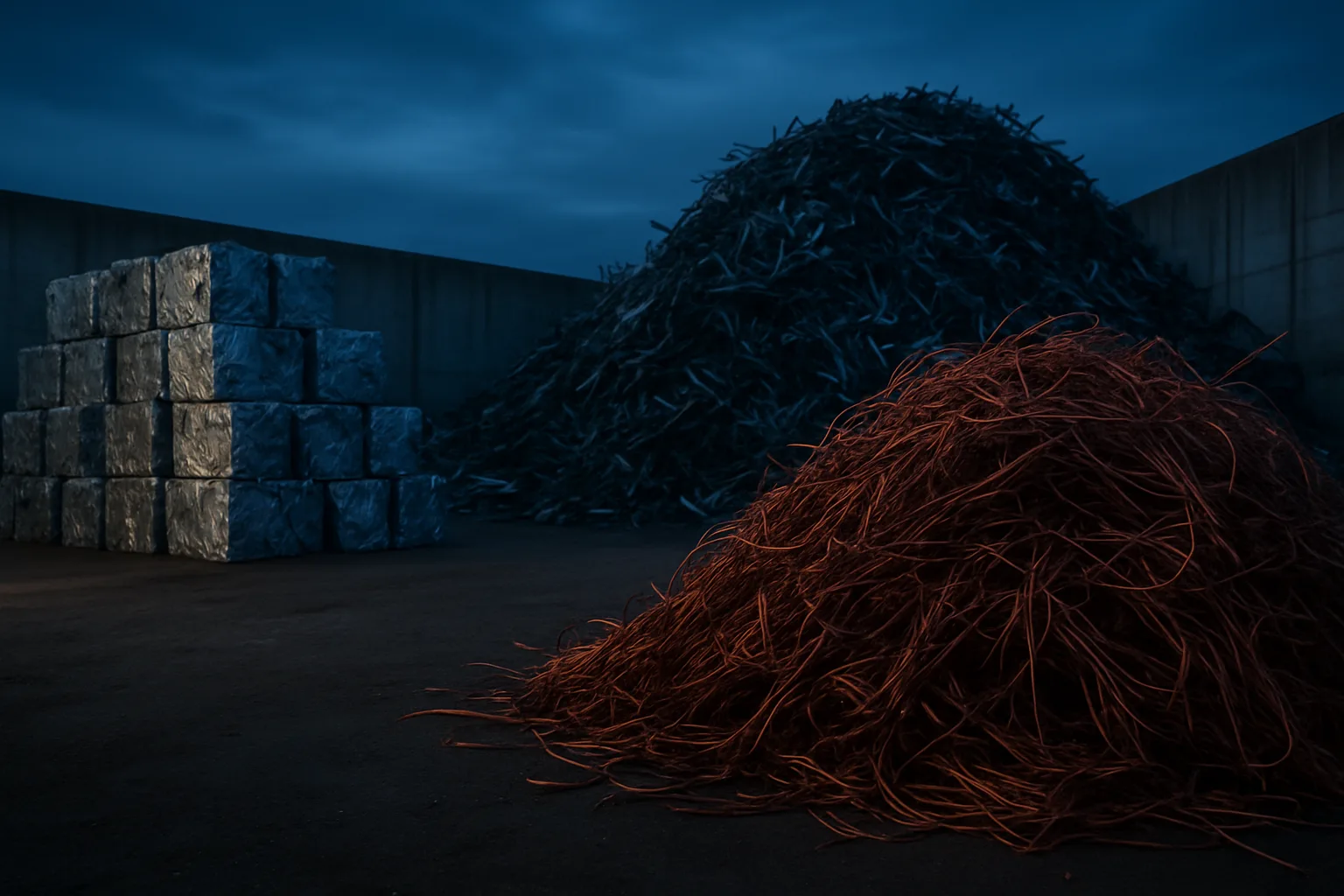
What's Driving Copper Scrap Prices in Philadelphia Right Now
Copper scrap prices in Philadelphia have been moving fast in 2026 — and if you're sitting on a pile of wire, pipe, or sheet copper without a clear read on the market, you're leaving money on the table. The gap between what a single buyer quotes you and what competitive pricing actually looks like can be significant. Understanding what's pushing prices up or pulling them down gives you real leverage when it's time to sell.
Copper remains one of the most closely watched metals in the scrap industry. It's a proxy for economic activity — when construction starts, grid upgrades, and EV charging infrastructure spending are all running hot, copper demand follows. In 2026, domestic infrastructure investment and the ongoing buildout of electric vehicle supply chains have kept copper fundamentals tight. That doesn't mean prices go straight up. It means the floor is higher than it used to be, and smart sellers are paying attention.
If you want a real-time baseline before you make any move, check today's scrap metal prices to see where copper and other metals are trading right now.
Scrap Metal Prices Philadelphia: What the Local Market Looks Like
Philadelphia sits in a strong position for scrap sellers. You've got a dense industrial corridor, active demolition and renovation activity across the metro, and proximity to major buyers and processors along the Eastern Seaboard. That geographic advantage should translate into competitive offers — but only if you're actually getting multiple buyers looking at your material.
The reality for a lot of yards and independent sellers in Pennsylvania is that they call the same buyer every time. One relationship. One quote. No way to know if it's fair. That's not a criticism — it's how the industry has worked for decades. But it's also the exact dynamic that costs sellers money over time.
Philadelphia scrap metal services have expanded meaningfully in recent years, and the buyer pool for quality loads — sorted non-ferrous, documented catalytic converters, clean copper — has grown. The sellers getting the best numbers are the ones putting their loads in front of more than one set of eyes. Competition does the work of price discovery that a single phone call never can.
Key Market Trends to Watch in August 2026
The scrap metal market in mid-2026 is being shaped by a handful of forces. You don't need to be a commodities analyst to understand them — but you do need to know they exist.
- Copper wire and bare bright demand: High-purity copper continues to attract strong buyer interest tied to electrical infrastructure projects. Insulated wire grades are more variable depending on stripping quality and insulation type.
- Aluminum scrap prices: Cast and sheet aluminum have seen activity from automotive and aerospace scrap flows. Prices are sensitive to LME movements, so checking current aluminum scrap prices before selling a large lot matters.
- Steel scrap prices: Shredded and HMS (heavy melting steel) prices are influenced by mini-mill demand and export activity. Domestic demand from manufacturers has been a stabilizing factor through the summer.
- Catalytic converter market: PGM prices (platinum, palladium, rhodium) remain volatile. Proper documentation — serial numbers, photos, VIN linkage — has become essential for serious buyers. Undocumented cats are getting discounted hard or passed on entirely.
- Tariff and trade policy effects: Trade conditions in 2026 continue to affect scrap export flows, especially for ferrous grades. Domestic processing capacity has picked up some of the slack, but regional pricing can shift when export windows open or close.
The bottom line: market conditions in August 2026 reward sellers who are prepared. Sorted loads, documented inventory, and multiple buyers at the table all point in the same direction — better price discovery. To find current scrap metal prices near you, use a live pricing resource and don't rely on last week's quote as a benchmark.
Scrap Metal Inventory Management: Why Documentation Changes Your Outcome
Here's something that doesn't get talked about enough: the way you document your scrap load directly affects the price you get for it. Buyers price uncertainty into their offers. If they can't verify what's in a load — grades, weights, condition — they assume the worst and bid accordingly. Good documentation removes that discount before the conversation even starts.
Effective scrap metal inventory management doesn't have to be complicated. It means knowing what you have, being able to prove it, and presenting it in a way that gives buyers confidence. That looks like:
- Sorted material by grade and type before listing
- Photos of the load from multiple angles
- Accurate weight estimates (or certified scale tickets where possible)
- Serial numbers and VIN data for catalytic converters and cores
- A clear description of condition — clean, contaminated, mixed, pre-processed
Platforms like SMASH make it easy to get competitive bids for your scrap metal by giving sellers structured tools to document inventory properly before it hits the auction. That documentation isn't just administrative — it's the difference between a low-ball offer and a serious buyer paying market value for what you actually have.
SMASH's platform includes photo documentation, VIN lookup for cats, serial tracking, and an inventory tool that organizes your loads before they go live to vetted buyers. That structure creates the kind of load transparency that gets real bids — not low-ball offers padded with uncertainty.
How to Recycle Scrap Metal the Right Way: A Practical Approach
If you're newer to selling scrap or scaling up your operation, the mechanics of how to recycle scrap metal efficiently matter as much as the price you get. Selling at a strong price but losing margin to poor sorting, bad logistics, or documentation gaps is a real problem — and a fixable one.
Here's a practical framework that experienced yards and collectors in the Philadelphia area use:
- Sort before you move anything. Mixing grades kills value. Copper with aluminum contamination, or ferrous with non-ferrous mixed in, forces buyers to downgrade the whole load. Sort at the source if possible.
- Know your grades. #1 copper, #2 copper, bare bright, and insulated wire are not the same thing. Neither are zorba and clean aluminum sheet. Grade knowledge directly affects what you're quoted.
- Weigh accurately. Estimates are fine for small loads. For anything significant, a certified scale ticket removes friction with buyers and processors.
- Document before you move. Photos, weights, grade notes — capture this before the load shifts or gets mixed in transit.
- Get multiple quotes. This is the step most sellers skip and the one that costs the most. A single quote is a starting point, not a market price.
- Use a vetted buyer network. Not every buyer who shows up online is legitimate. Work with platforms and contacts who have verified histories and clear payment terms.
This approach works whether you're running a full recycling yard in Pennsylvania or cleaning out a commercial property and selling the non-ferrous material from the demo. The fundamentals don't change with scale — documentation, sorting, and competition are always the levers.
For the latest on what grades are moving and at what levels, read the latest scrap metal market updates to stay ahead of price shifts before you commit a load.
How SMASH Fits Into Your Selling Strategy
SMASH is a scrap metal auction platform built for yards and sellers who are done guessing. The old model — one buyer, one phone call, one number — doesn't serve sellers. It serves buyers. SMASH flips that dynamic by putting your documented load in front of vetted buyers who are competing for it.
No subscription fees. No guessing. You only pay when a sale happens. That structure means SMASH's incentives are aligned with yours — if you don't win, they don't win.
For sellers moving copper in Philadelphia or anywhere across the Eastern Seaboard, the auction format creates the kind of price transparency that a single-buyer relationship never will. Auto-invoicing, BOL documentation, and packing list support are built in — so the back-end paperwork doesn't slow down the deal. If you're serious about getting a real market price for your loads, running them through a competitive auction process is the most direct path to finding out what they're actually worth.
The scrap market rewards preparation and competition. SMASH provides the structure for both.
Prices move fast — especially on copper. Before your next sale, check today's scrap metal prices and get current rates at scrap-metal-prices.com. Use live data, document your loads, and put them in front of more than one buyer. That's the whole game.
Disclaimer: Scrap metal prices fluctuate daily based on market conditions, grade, volume, and buyer demand. Always verify current rates before selling.
Frequently Asked Questions
Q: What is the current price for copper scrap in Philadelphia?
Copper scrap prices in Philadelphia vary by grade — bare bright, #1 copper, #2 copper, and insulated wire all trade at different levels. Prices shift daily with LME copper movements, local demand, and load quality. Check a live pricing resource like scrap-metal-prices.com for today's rates before you sell.
Q: How do I get the best scrap metal prices in Philadelphia?
Sort your material by grade, document your load with photos and accurate weights, and get quotes from more than one buyer. Single-buyer quotes are rarely the market price — competition is what reveals actual value. Platforms like SMASH connect sellers with vetted buyers in an auction format designed to drive real price discovery.
Q: What factors affect copper and aluminum scrap prices today?
LME spot prices, domestic mill demand, export activity, trade policy, and local supply all affect what you'll be quoted on any given day. Load quality and documentation also play a direct role — a well-sorted, properly documented load consistently attracts stronger bids than an undocumented mixed load.
Q: Do I need to sort my scrap before selling it in Pennsylvania?
Sorting isn't legally required, but it almost always gets you a better price. Mixed or contaminated loads force buyers to downgrade their bid to account for uncertainty. Sorting copper from aluminum, and separating grades within each metal type, is one of the highest-return things you can do before selling.
Q: How does SMASH work for scrap metal sellers?
SMASH is an auction platform where sellers list documented scrap loads and vetted buyers compete for them. There are no subscription fees — SMASH earns only when a sale completes. Sellers get access to the platform's inventory tools, photo documentation, VIN lookup for cats, and auto-invoicing. For questions about selling, reach out directly to jeff@smashscrap.com.
Stay current on scrap metal market trends and pricing shifts — follow SMASH on LinkedIn for regular industry updates and insights from inside the scrap market.