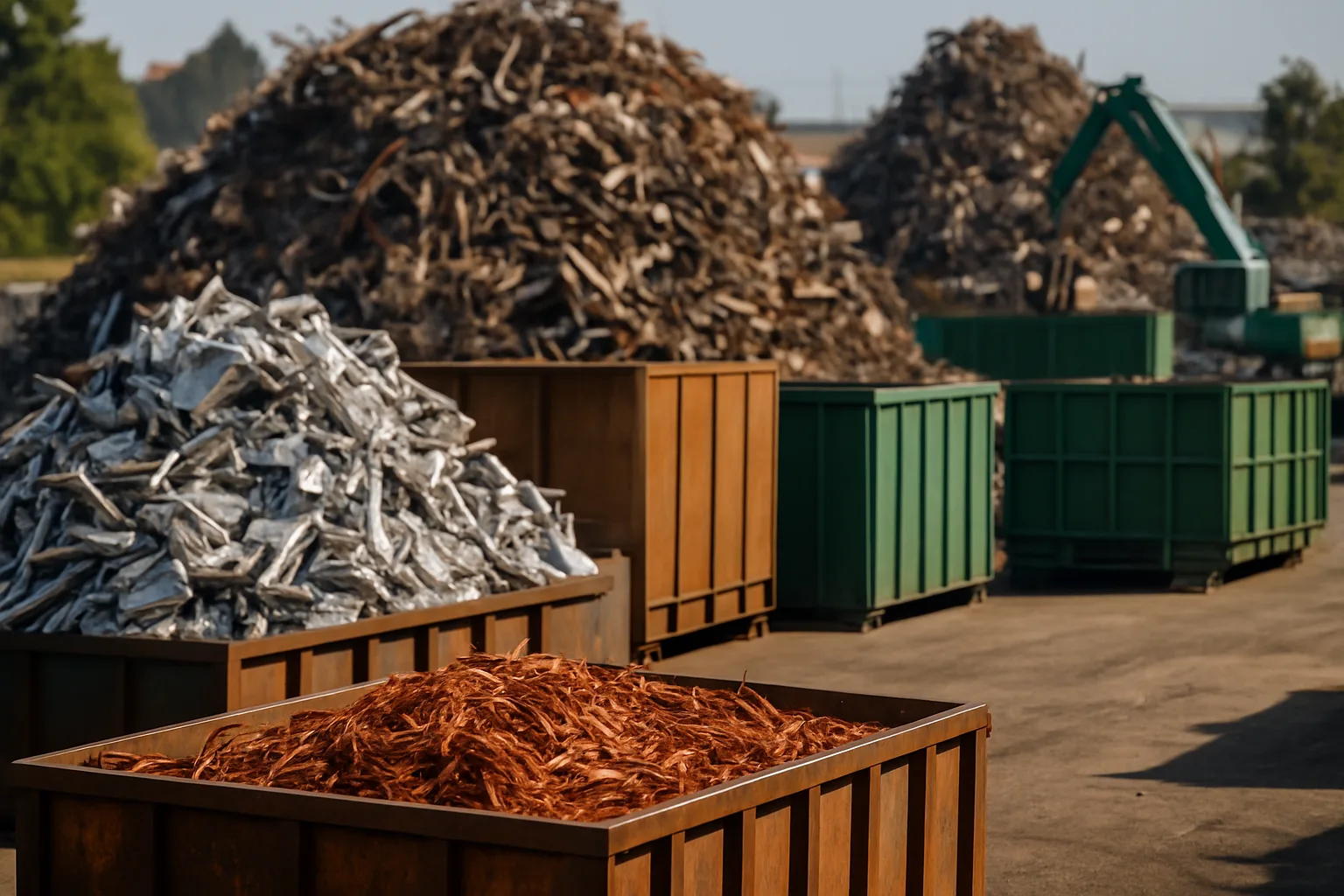
Why the Price You Get at Your Oakland Yard Is Set Thousands of Miles Away
Here's something most sellers never think about: the price you get when you sell scrap metal in Oakland isn't set by your local yard. It's shaped by foundries in South Korea, copper mines in Chile, automotive plants in Germany, and currency swings across a dozen markets. The yard down the street is reading the same global signals you've never heard of — and their offer reflects every one of them.
That's not an excuse for low offers. It's a reason to understand the system. Once you see how global forces move local scrap prices, you stop guessing and start selling smarter. This breakdown covers the five biggest macro forces hitting scrap metal prices today — and what each one means for your next load.
1. Global Manufacturing Demand Drives Scrap Metal Prices Today
Scrap metal is industrial raw material. When factories run hot, they consume more recycled feedstock. When manufacturing slows, mills buy less — and that hits prices fast. It's a direct pipeline from global output to your local yard's posted rate.
In 2026, manufacturing activity across Asia, Europe, and North America continues to be the single biggest lever on ferrous and non-ferrous prices. Chinese steel output, for example, creates ripple effects that reach the Port of Oakland within weeks. When Chinese mills ramp up production, demand for scrap steel rises globally. When they idle capacity, that surplus has nowhere to go — and prices fall across the board.
- Steel scrap price moves closely with blast furnace and electric arc furnace (EAF) utilization rates worldwide
- Aluminum scrap price today tracks closely with automotive and aerospace production schedules
- Copper scrap price today follows electrical infrastructure spending, including EV expansion and grid upgrades
- When global PMI (Purchasing Managers Index) drops, scrap demand typically follows within 30-60 days
If you're in Oakland and wondering why your HMS or zorba offer dropped this month, the answer might be in a manufacturing report out of Guangzhou — not anything that happened in California. To stay ahead of these swings, check today's scrap metal prices before you call any yard.
2. Currency Fluctuations Change What Buyers Can Afford to Pay
Scrap metal trades globally in U.S. dollars. But buyers in India, Turkey, and Southeast Asia pay in local currencies. When the dollar strengthens, American scrap becomes more expensive for foreign buyers — even if the commodity price itself hasn't moved. That reduced demand hits U.S. export yards first, and the pressure eventually reaches inland markets like Oakland.
This is why watching currency markets matters if you move serious volume. A 5% shift in the USD-to-INR rate can make the difference between an aggressive offer from an export-oriented buyer and a soft bid from a domestic mill. The copper scrap price today Mumbai comparison is a real one — buyers in Mumbai are constantly running currency-adjusted math on U.S. copper scrap versus other sources.
- Strong USD = U.S. scrap more expensive for foreign buyers = reduced export demand = softer domestic prices
- Weak USD = U.S. scrap becomes a bargain on world markets = stronger export pull = higher local bids
- The scrap metal prices London Ontario comparison matters too — Canadian yards compete with U.S. yards for the same North American export buyers, and CAD/USD swings shift that competitive balance
For Oakland sellers near one of the most active Pacific Rim export hubs on the continent, currency dynamics are not abstract. Your yard's buyers include export traders who move containers to Asia. Their math changes weekly. Yours should too. Compare scrap metal bids from verified buyers to see who's adjusting their offers in real time.
3. Energy Prices and Logistics Costs Squeeze Yard Margins — and Your Offers
Running a recycling operation is energy-intensive. Shredders, balers, cranes, diesel for trucks — it all costs money. When fuel prices spike, yards absorb higher operating costs before those costs get passed back to you as a seller. That squeeze shows up as tighter margins on both ends: lower buy prices for material, and narrower spreads at the point of sale.
Diesel prices in California have historically run among the highest in the country. Transportation costs to move material from inland collection points to Oakland's port-adjacent yards add up fast. When energy is cheap, yards can be more aggressive on buy prices. When it's expensive, they pull back — regardless of what the commodity market says.
Logistics are equally important on the outbound side. Container rates from West Coast ports like Oakland fluctuate with global shipping demand. High container costs reduce the margin available to export buyers, which softens what they'll pay for incoming scrap. Low container rates do the opposite.
- Diesel spikes compress yard margins and tighten buy prices
- Elevated container shipping rates reduce export buyer bids
- West Coast ports like Oakland are especially sensitive to transpacific shipping cost cycles
- Energy transitions (solar, EV infrastructure) are creating new demand signals for copper and aluminum that partially offset these pressures
4. Trade Policy and Tariffs Create Sudden Price Shocks
Nothing moves a scrap market faster than a tariff announcement. In 2026, North American trade policy continues to evolve, with ongoing adjustments to steel and aluminum import/export frameworks affecting how material flows between the U.S., Canada, and overseas markets. When tariffs go up on imported steel, domestic mills face less competition — which can support domestic scrap prices. When tariffs drop, the calculus reverses.
For yards and sellers in Oakland and across California, this policy environment creates real volatility. You can be holding a load of #1 copper ready to sell, and a trade announcement on the other side of the world shifts your offer by a meaningful percentage overnight. That's not hypothetical — it's happened repeatedly in recent years and continues in 2026.
The key comparison markets to watch right now:
- Aluminum scrap price today — sensitive to U.S. tariff policy on primary aluminum imports, which affects demand for secondary (scrap-based) aluminum
- Copper scrap price today — affected by export restrictions from major producing nations and ongoing electrification policy globally
- Steel scrap price — impacted by Section 232 frameworks and any bilateral trade deals affecting steel imports into the U.S.
The most practical thing you can do is stay current. Read the latest scrap metal market updates to catch policy shifts before they blindside your next transaction.
5. How Oakland Sellers Can Use Global Data to Negotiate Locally
Understanding macro forces isn't just interesting context. It gives you leverage at the scale you're actually operating. When you walk into a yard in Oakland knowing that copper futures jumped this week, that export container rates out of the Port of Oakland tightened, and that a major Asian EV manufacturer just announced a production expansion, you're not guessing at what's fair. You're negotiating from a position.
Most sellers never do this. They take the posted rate and leave. The sellers who consistently get stronger outcomes are the ones who show up informed — and who create competition among buyers rather than dealing with one contact on the phone.
This is where platforms like SMASH change the game. Instead of a single call to one buyer, SMASH puts your documented load in front of multiple vetted buyers in a competitive auction format. Competition can help reveal the market. More buyers means better price discovery. You're not betting on one person's offer — you're finding out what your material is actually worth right now.
- Document your material thoroughly — photos, weights, grades, BOLs where applicable
- Use VIN lookup and serial tracking features for high-value items like catalytic converters or cores
- Time your sales around market signals when possible — don't sell into a known pricing dip
- Get multiple bids. Always. SMASH makes this automatic.
Sellers in Oakland have a geographic advantage — proximity to one of the busiest export ports on the West Coast means more active buyers, more competition, and more price discovery potential. Use it. Find current scrap metal prices near you and go into every transaction with current data in hand.
The Bottom Line: Global Markets Move Your Local Price
If you sell scrap metal in Oakland, you're already part of a global commodity market — whether you think about it that way or not. The yard's offer on your copper, aluminum, or steel is a compressed version of everything happening in manufacturing, currency, energy, shipping, and trade policy across dozens of countries.
You don't need to become a commodity trader. You need two things: current pricing data and competitive bids. SMASH gives you the second. For the first, make it a habit to check today's scrap metal prices at scrap-metal-prices.com before every significant transaction. The market changes fast. The sellers who keep up get paid for it.
Disclaimer: Scrap metal prices fluctuate based on market conditions, material grade, and buyer demand. Always verify current rates before selling.
Frequently Asked Questions
Q: Why do scrap metal prices in Oakland change so frequently?
Scrap metal prices in Oakland move with global commodity markets, which respond to manufacturing demand, currency shifts, energy costs, and trade policy changes — sometimes daily. Your local yard is pricing based on what they expect to receive when they sell your material to mills or export buyers, so their rates track global signals closely.
Q: How do I know if I'm getting a fair price when I sell scrap metal in Oakland?
The best way to verify a fair price is to get multiple bids. Check current market rates at scrap-metal-prices.com and use a competitive platform like SMASH to put your load in front of vetted buyers. A single quote from one yard gives you no baseline — competition does.
Q: Does the aluminum scrap price today affect what I get for old window frames or auto parts?
Yes. The aluminum scrap price today directly influences what yards pay for post-consumer aluminum, including window frames, extrusions, wheels, and auto sheet. Grade matters — clean segregated aluminum commands better rates than mixed or contaminated material. Sorting before you sell almost always pays off.
Q: How does international copper demand affect what I get for copper wire in California?
Copper is a globally traded commodity, and demand from electrification projects, EV manufacturing, and grid infrastructure worldwide drives the base price. When copper scrap prices rise in major trading hubs, California yards typically adjust their buy prices upward within days. Selling when demand signals are strong and the market is moving up is always preferable to selling into a dip.
Q: Is it worth holding my scrap and waiting for a better price?
Sometimes — but holding carries risk. Markets can move against you as easily as they can move in your favor. If you have a significant load, the better play is to create competition among buyers now rather than gambling on a future price. Platforms like SMASH let you test the market without committing to one buyer's offer.
Stay current on scrap metal market movements and industry trends by following SMASH on LinkedIn — regular updates on pricing shifts, buyer activity, and what's moving markets across North America.