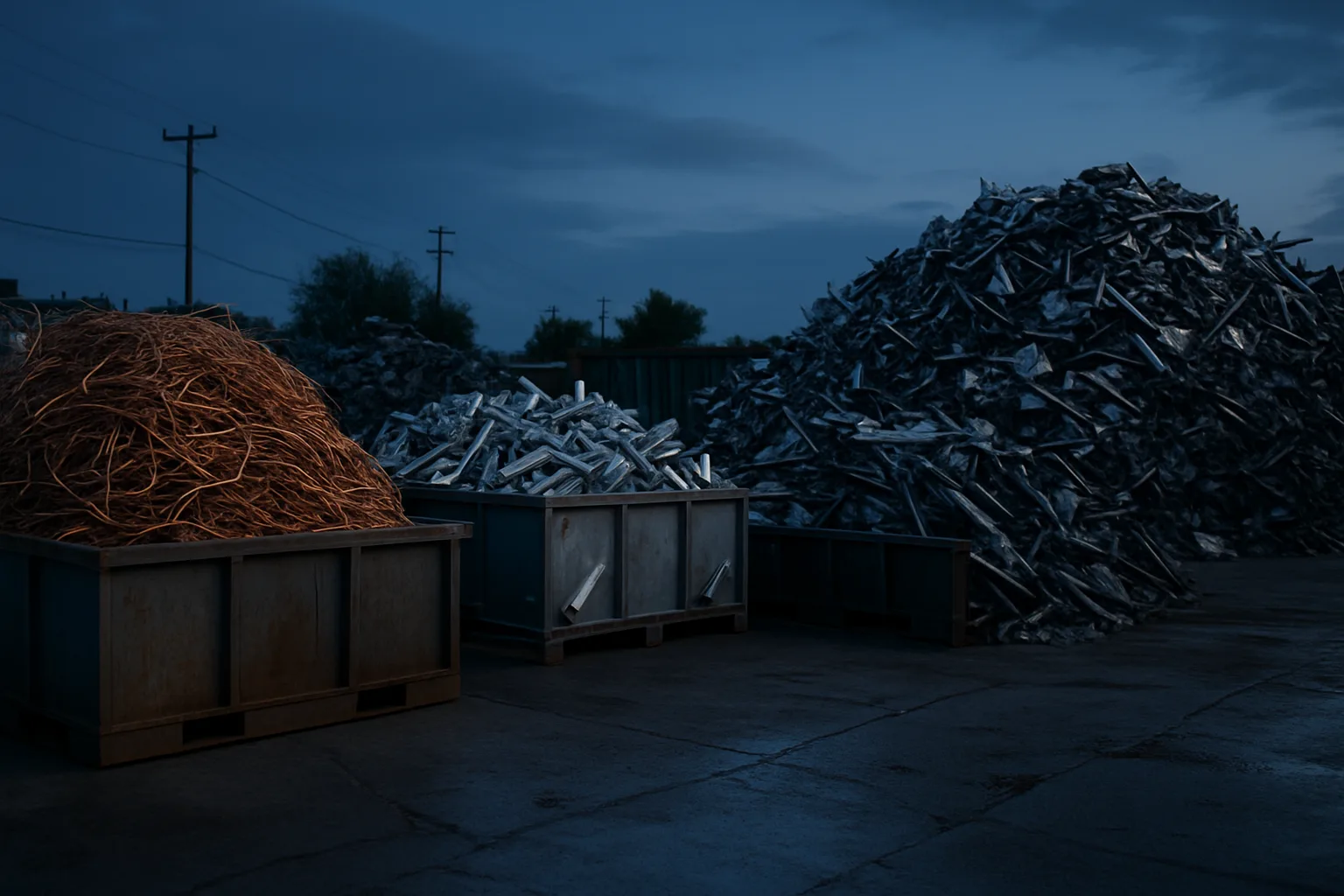
Most Scrap Yards in Phoenix Are Paying You Less Than They Should
Here's the uncomfortable truth: the first yard you call probably isn't giving you the best price. Scrap metal prices today shift daily based on commodity markets, regional demand, and how many buyers are actively competing for your load. If you're calling one yard, getting one number, and loading up the truck — you're leaving money on the table. Every time.
Phoenix has no shortage of scrap yards. But more options doesn't automatically mean better prices. It means you need a smarter approach to finding the right buyer for your copper, aluminum, steel, or catalytic converters. This guide breaks down exactly how to do that — and why the old phone-around method keeps costing sellers.
Why Scrap Metal Prices Today Vary More Than You Think
Copper scrap price, aluminum scrap price, steel scrap price — none of these are fixed numbers. They move with global commodity markets, local supply and demand, and each yard's current inventory situation. A buyer who's flush with HMS steel this week may lowball your load to slow intake. That same yard might aggressively bid next week when they need to fill a container.
You don't always know which situation you're walking into. That's why single-buyer selling is structurally broken. You're negotiating blind against someone with full market information. Here's what actually drives price variation in a market like Arizona:
- LME and COMEX spot prices — global benchmarks that shift daily for copper, aluminum, and other non-ferrous metals
- Local buyer competition — how many active buyers are bidding for your specific material
- Load documentation — properly documented inventory with photos, weights, and serial tracking consistently commands better offers
- Material grade and sort — #1 copper bare bright vs. #2 copper wire is a real price difference, not a rounding error
- Timing — end of month, container cycles, and seasonal demand all move the needle
Before you call a single yard, check today's scrap metal prices so you walk into any conversation with a baseline. Walking in cold is how yards set the price for you instead of with you.
How to Find the Best Buyer for Scrap Metal Near Me — A Practical Comparison
Not all buyer-finding strategies are equal. Here's a direct comparison of the most common approaches sellers in Phoenix actually use — and what each one costs you in time, money, or both.
1. Calling Local Yards One by One
This is the default move. You look up a few scrap yards, call around, get a couple of quotes, and pick the highest one. It works — barely. The problem is that phone quotes are informal, often conditional, and change by the time you show up. You're also limited by who picks up the phone. Most yards aren't going to tell you their competitor's price is better.
2. Driving Load to Walk-In Yards
Some sellers skip the call and just show up. You might get a fair price, especially for small loads of common materials like light iron or mixed aluminum. But for higher-value loads — non-ferrous, read the latest scrap metal market updates on cats and cores — walking in without a competing bid is a negotiating disadvantage. The yard controls the conversation.
3. Online Price Checkers and Aggregators
Sites that list regional scrap metal prices today are a solid starting point. They give you a reference range for copper scrap price, aluminum scrap price, and steel scrap price in your area. But listed prices aren't always what you'll actually get paid. Use them to calibrate your expectations, not as a guaranteed payout.
4. B2B Auction Platforms Like SMASH
This is where the approach changes fundamentally. Instead of you chasing buyers, buyers compete for your load. North America's B2B scrap metal auction platform, SMASH connects vetted buyers across the continent with sellers who've properly documented their inventory. More competition means better price discovery. It's not a phone call — it's a structured auction where your material goes to the highest qualified bid.
For larger loads — think a pallet of cats, a container of non-ferrous, or a run of mixed cores — the difference in outcome between one buyer and a competitive auction can be significant. Phoenix scrap metal services through platforms like SMASH bring that competitive pressure to bear on every load, regardless of whether you're downtown or out in the Valley.
What Actually Makes a Scrap Buyer "The Best" Buyer
Price matters most — but it's not the only variable. The best buyer for your load checks several boxes, and knowing what to look for saves you from deals that look good on paper and fall apart at the scale.
Here's what separates a strong buyer from a mediocre one:
- Pays on time, every time — net terms that actually get honored, not stretched 60 days without explanation
- Handles documentation — BOLs, packing lists, settlement sheets that match what you loaded
- Doesn't rebate arbitrarily — deductions for moisture, contamination, or grade should be disclosed upfront, not invented at settlement
- Buys your full load — a buyer who cherrypicks the high-value material and low-balls the rest isn't saving you anything
- Has consistent demand — a buyer who actively needs your material category pays more than one who's doing you a favor
In a city like Phoenix, there's real buyer depth across non-ferrous categories. Arizona's recycling infrastructure supports active trade in copper, aluminum, and catalytic converter cores. The issue isn't that good buyers don't exist — it's that most sellers never reach them because they stop at the first yard that answers the phone.
Selling Catalytic Converters and High-Value Cores in Arizona
If you're holding cats, this section matters. Catalytic converter prices are among the most volatile in the scrap space. PGM content — platinum, palladium, rhodium — drives value, and that content varies dramatically by vehicle make, model, year, and even production run. A blind phone quote on cats is almost always low. Yards that can't or won't assay aren't priced to pay fair market.
The catalytic converter auction model exists precisely because of this problem. When multiple vetted buyers bid on your documented load — with photos, VIN-referenced units, and accurate counts — the price reflects actual PGM market value, not a yard's best guess or worst-case buffer. SMASH's VIN lookup and serial tracking tools are built for exactly this use case. You document the load properly, it goes to auction, and buyers who actually process cats compete on it.
For sellers in Phoenix and across Arizona sitting on a run of cats, this is the difference between getting a floor price and getting a market price. Find current scrap metal prices near you and pair that data with a competitive auction process — that's the full picture.
How to Prep Your Load Before You Sell — Non-Negotiable Steps
The best buyer in Phoenix won't overpay for a disorganized, undocumented load. Prep matters. Here's what separates loads that get strong bids from loads that get discounted:
- Sort by grade and material — don't mix #1 copper with #2 wire, don't mix stainless grades, don't bury cats in iron
- Photograph everything — multiple angles, clear shots of serial numbers or VINs on high-value units
- Count and weigh accurately — estimated weights get adjusted at the buyer's discretion; accurate weights give you leverage
- Document the load — a basic packing list with material type, estimated weight, and grade eliminates ambiguity
- Know your material — if you don't know what grade your copper or aluminum is, look it up before you call anyone
Well-documented inventory gives buyers more confidence. That confidence shows up in bids. It's not complicated — it's just the work most sellers skip.
No Subscription Fees. No Guessing. Just Competition.
The old way of selling scrap — one buyer, one call, one number with no context — made sense when your options were physically limited. Today, buyers across North America compete for loads they can evaluate remotely. You don't need to haul to three yards to get three quotes. You need your load documented and in front of multiple buyers at once.
SMASH runs on a simple model: no subscription fees, and we only win when you win. You list your load with proper documentation, vetted buyers bid, and the best offer wins. Auto-invoicing and settlement documentation handle the paperwork. You don't need to chase anyone.
If you're selling scrap metal in Phoenix, Arizona, or anywhere else in North America, the first step is knowing where the market actually sits. Then make sure more than one buyer sees your load. Scrap metal prices today are strong enough in several categories that the difference between one bid and five bids is worth the extra ten minutes of prep. Check today's scrap metal prices at scrap-metal-prices.com — then put your load where the competition is.
Frequently Asked Questions
Q: How do I find the best scrap metal prices today near Phoenix?
Start by checking a current pricing reference like scrap-metal-prices.com to get a baseline for copper, aluminum, and steel in your region. Then put your load in front of multiple buyers rather than accepting a single quote. Platforms like SMASH create competitive bidding so the market — not one yard — sets your price.
Q: What scrap metals pay the most in Arizona right now?
Non-ferrous metals — especially copper and catalytic converters — consistently yield the highest returns per pound. Aluminum scrap price varies by grade, with cast and extrusion grades paying more than sheet or mixed aluminum. Steel scrap price is lower per pound but can add up quickly on volume loads like light iron or HMS.
Q: Is it worth sorting my scrap before selling?
Yes — every time. Mixed loads get priced at the lowest common denominator. Sorted loads by grade and material type get priced accurately for what they actually contain. The time you spend sorting almost always pays back more than the effort cost, especially on non-ferrous materials.
Q: How does a catalytic converter auction work?
You document your cats — photos, counts, VIN or serial references where available — and submit the load to auction. Vetted buyers who actively process catalytic converters bid competitively based on the documented PGM content and market conditions. The highest qualified bid wins. It removes the guesswork from a category where price variation is unusually high.
Q: Do scrap metal prices today differ between Phoenix yards and online buyers?
They can — often significantly on high-value materials like non-ferrous and catalytic converters. Local walk-in yards price for convenience and quick intake. Online buyers and auction platforms compete for your specific load based on current market rates. For larger or higher-value loads, the comparison is worth making before you commit to a single buyer.
Follow SMASH on LinkedIn for ongoing scrap metal market insights, pricing updates, and industry news across North America.