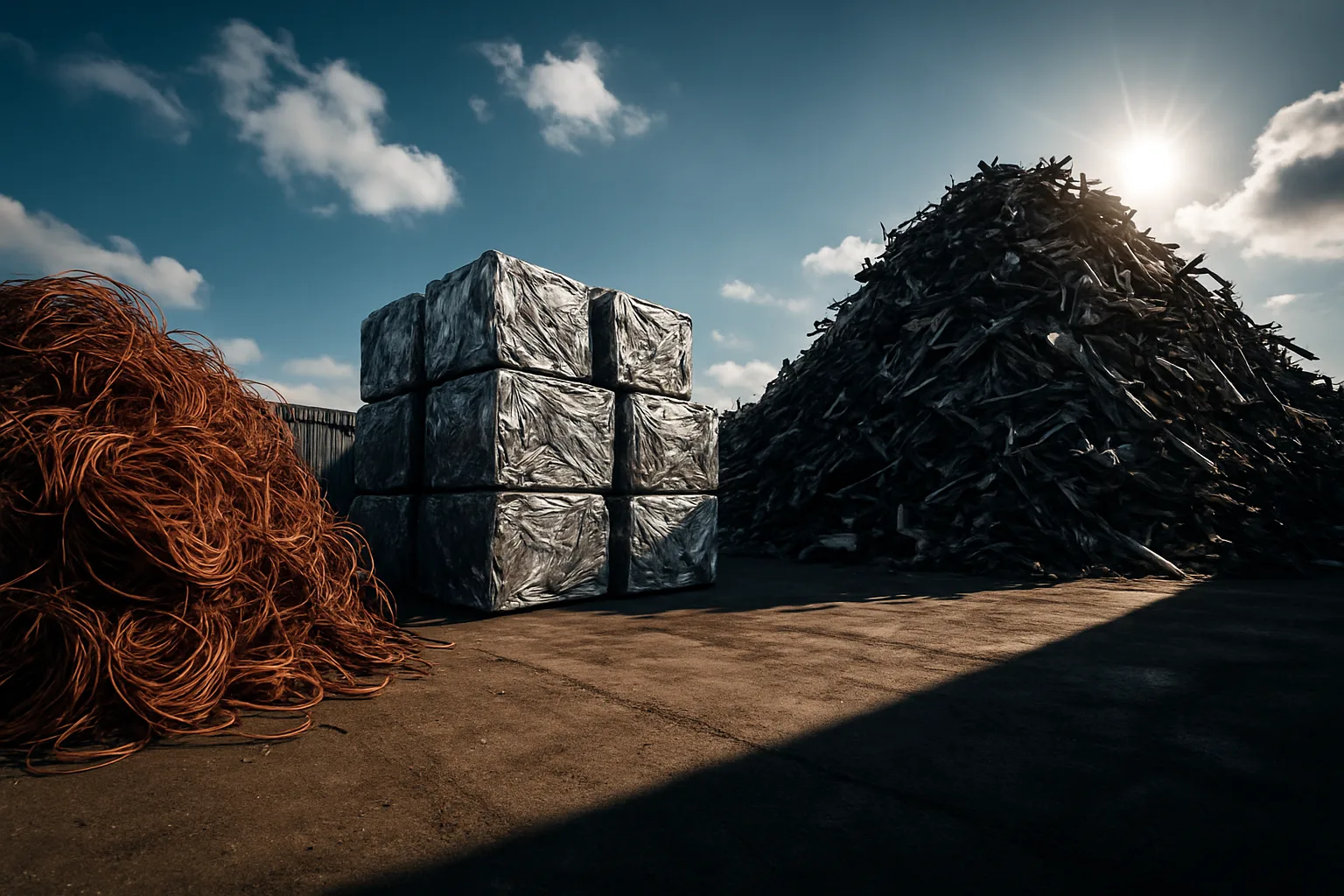
Why Your Aluminum Grade Determines Everything at the Scale
Most sellers leave money on the table before they ever pull into the yard. Not because the market is bad — because they don't know what they're hauling. Aluminum scrap has more grades than most people realize, and the spread between the lowest and highest pays out very differently. If you're doing scrap metal recycling in Houston, understanding those grades isn't optional. It's the difference between a decent payout and a frustrating one.
The good news: aluminum is one of the most recyclable metals on the planet, and demand for clean, sorted material stays strong. Mills and smelters want consistent grades they can process efficiently. Bring them that, and you're in a much stronger position to negotiate. Bring them a mixed, contaminated load, and you'll get sorted-out pricing — which rarely goes in your favor.
The Main Aluminum Scrap Grades You Need to Know
The Institute of Scrap Recycling Industries (ISRI) publishes standardized grade definitions, and most U.S. yards reference them. Here's a breakdown of the grades you're most likely to encounter if you're running loads in Houston or anywhere else in Texas:
- Zorba — Shredded mixed non-ferrous metals, mostly aluminum. This is the output from auto shredders. It's not pure, so pricing reflects that. Zorba is a starting point, not a finish line.
- Twitch — The aluminum fraction separated out of Zorba. Cleaner than Zorba, better price. Used cars and appliances are common sources.
- Taint/Tabor (Painted Siding) — Mixed low-copper aluminum sheet, including painted siding. Common in demolition and construction debris. Moderate value.
- Painted Aluminum (Mixed Old Sheet) — Similar to taint/tabor but often includes a wider mix. Value depends on cleanliness and copper content.
- 6061 or 6063 Extrusions — Clean, unpainted aluminum extrusions. These are the type you pull off window frames and storefront systems. Higher value than sheet grades.
- Cast Aluminum — Engine blocks, manifolds, transmission housings. Heavier and denser than sheet. Strong demand from secondary smelters. Common in Houston's heavy industrial and automotive recycling stream.
- MLC (Mixed Low Copper Aluminum) — Specifically limited copper content. Buyers pay more when they know copper is low because it simplifies their melt.
- Breakage (Dirty Aluminum) — Contaminated, mixed, or heavily corroded aluminum with plastics, steel, or other attachments. Lowest tier. Clean it before you haul it if you can.
- Old Sheet (Clean) — Roof flashing, gutters, sheet metal with no paint or contamination. Cleaner than painted grades, priced higher.
- EC Wire (Electrical Conductor) — High-purity aluminum wire pulled from electrical applications. Treated separately from other grades due to conductivity purity requirements.
Knowing which bucket your material falls into before you hit the yard gives you a baseline. If a buyer quotes you "mixed aluminum" pricing on material that qualifies as clean extrusion, that's not a deal — that's a downgrade. Check today's scrap metal prices to understand what each grade should fetch before you negotiate.
How to Maximize Payout — Sort, Clean, and Document
The single best thing you can do to improve your aluminum payout is sort before you haul. Yards that receive mixed loads have to account for processing costs, contamination risk, and downgrading in their quote. They're not trying to rip you off — they're pricing in their uncertainty. Remove that uncertainty and the pricing shifts in your favor.
Here's what actually moves the needle:
- Separate by grade. Don't mix cast with extrusion, or sheet with wire. Each grade has its own market. Keep them in separate bins or bags on your truck.
- Remove attachments. Steel bolts, plastic brackets, rubber gaskets — strip them off. Contamination drops you to a lower grade automatically in most yards.
- Clean the surface where you can. Oil, grease, and coolant-soaked aluminum gets downgraded fast. A basic clean on cast pieces can move you up a tier.
- Know your weight. Weigh your loads at a certified scale before arrival if possible. Walking in with your own weight documentation puts you in a better position to verify the yard's scale and pushes back on underweighting.
- Photograph your loads. Especially for larger hauls. Timestamped photos of sorted, clean material give you documentation if there's a dispute about grade assignment. Platforms like SMASH Scrap — where verified buyers bid on your metal make photo documentation part of the process, which creates transparency on both sides.
These steps aren't complicated, but most sellers skip them. The ones who don't skip them consistently get better payouts. In a market like Texas, where industrial scrap volume is high and competition among yards is real, showing up as a prepared seller matters.
What's Driving Aluminum Scrap Prices in Mid-2026
As of July 2026, aluminum pricing reflects a few overlapping pressures. Primary aluminum production remains energy-intensive, which keeps secondary (recycled) aluminum in strong demand from North American mills looking to reduce both cost and carbon exposure. Automotive lightweighting continues to drive secondary aluminum use in casting alloys. And infrastructure spending — ongoing across Texas and the Gulf Coast — generates demolition material that feeds the sheet and extrusion stream.
That said, prices fluctuate. LME aluminum benchmarks shift with energy costs, freight, and global supply-demand dynamics. What your local Houston yard pays is also shaped by regional demand, transportation logistics, and what's moving at the port. Don't assume the price you got three months ago is still the price today. Read the latest scrap metal market updates to stay current on what's moving and why.
Regulatory shifts also matter. Expanded producer responsibility frameworks and evolving EPA guidelines on secondary smelter emissions have pushed some processors to tighten grade specifications. If your aluminum doesn't meet tighter contamination thresholds, expect more aggressive downgrading in 2026 compared to a few years back. Cleanliness isn't just about getting a better price — it's about staying competitive as standards tighten.
Selling Aluminum Online vs. Walk-In: Which Gets You More?
Walk-in yards are convenient. You know where they are, you've got a relationship, and you can settle the transaction the same day. But convenience comes at a cost. Single-buyer transactions mean you accept whatever that yard is paying that day — no competition, no price discovery, no leverage.
Online platforms have changed how serious sellers approach this. If you're moving volume — full loads of cast, sorted extrusion, or clean sheet — putting that material in front of multiple vetted buyers changes the dynamic entirely. More buyers mean better price discovery. That's not a slogan, it's basic economics.
SMASH is built specifically for this. Sellers list their loads with photos, weights, and grade documentation. Verified buyers bid. The seller sees real market demand in real time instead of guessing whether the local yard's posted price is fair. For Houston-area sellers moving significant aluminum volume, this approach Houston scrap metal services can reveal whether you've been underpriced for years.
When you sell scrap metal online through a competitive auction format, you're not just getting a price — you're getting a market. That's a different thing entirely. Find current scrap metal prices near you and use that data as your baseline before you list or negotiate anything.
Common Mistakes That Kill Your Aluminum Payout
Even experienced sellers make these errors. Knowing them in advance means you don't have to learn them the expensive way.
- Letting buyers assign grades without questioning. If you don't know your grades, the yard has full discretion. That's not always bad, but it's not always in your favor either. Do your homework.
- Hauling small loads too frequently. Fuel, time, and per-load minimums eat into your margin. Consolidate where you can. Larger, sorted loads negotiate better and cost less per pound to move.
- Ignoring copper content specs. Some aluminum grades have hard copper content limits (0.10% or below). If your material tests above that threshold, it can get reclassified on the spot. Know your material's source.
- Not tracking market timing. Aluminum prices shift with LME moves and seasonal demand. Holding a clean load for even a week or two during an upswing can meaningfully improve your return. Not always possible, but worth tracking.
- Skipping documentation on larger loads. For loads over a few thousand pounds, proper packing lists and BOLs protect you. If something goes wrong in transit or at the receiving yard, documentation is what resolves disputes.
Disclaimer: Aluminum scrap prices fluctuate based on market conditions, grade, location, and buyer demand. Always verify current rates before hauling or listing material.
Frequently Asked Questions
Q: What aluminum scrap grades pay the most at Houston yards?
Clean, uncontaminated extrusions (6061/6063) and electrical conductor (EC) wire typically command the highest aluminum prices. Cast aluminum from engines and transmissions also pays well due to density and demand from secondary smelters active in the Texas market. The key is cleanliness and grade separation.
Q: How do I know if a Houston scrap yard is giving me a fair price on aluminum?
Compare against current LME aluminum benchmarks and regional posted prices before you haul. Tools like scrap-metal-prices.com show you what the market looks like in real time. If a yard's offer is significantly below market for a clean, sorted grade, that's a conversation worth having — or a reason to put the load in front of more buyers through a platform like SMASH.
Q: Can I sell scrap aluminum online if I'm based in Houston?
Yes. SMASH connects sellers with vetted buyers across North America, and the process is straightforward — document your load with photos and weights, list it, and let competitive bids do the work. It's especially effective for larger, well-sorted loads where competitive pricing matters most.
Q: Does sorting aluminum before selling actually make a difference?
Absolutely. Mixed or contaminated loads get priced at the lowest-grade material in the mix. Sorting allows each grade to price at its actual market value. For loads with any significant volume, the sorting effort almost always pays back more than the time it takes.
Q: What's the best time of year to sell aluminum scrap in Texas?
Aluminum demand from automotive and construction sectors tends to support pricing through mid-year as production activity peaks. That said, market conditions in 2026 are driven as much by energy costs and LME movements as by seasonality. Track current rates rather than assuming any single season is always better.
Ready to stop guessing and start getting paid what your material is worth? Check today's scrap metal prices — get current rates at scrap-metal-prices.com and go into your next transaction with real data behind you.
Stay sharp on market moves and industry updates by following SMASH on LinkedIn — regular insights on scrap metal pricing, buyer demand, and what's shifting in the market across North America.