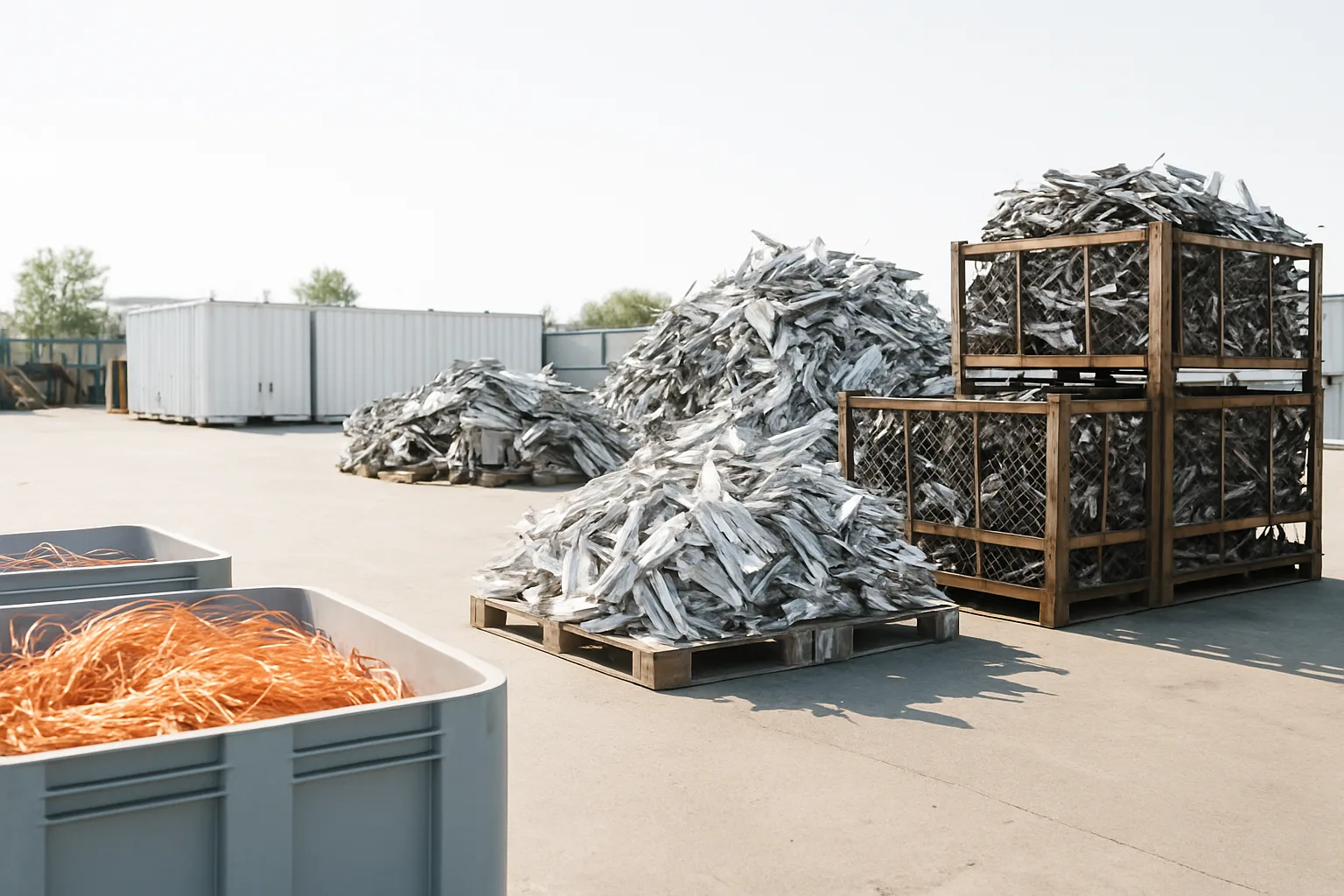
Copper Scrap Grading Explained — And Why It Matters at the Auction
Most sellers leave money on the table before they even make a phone call. They haul in mixed copper, take whatever the yard offers, and drive home thinking they got a fair deal. They probably didn't. Copper grading is one of the most misunderstood parts of the scrap business — and getting it wrong costs you real money every single time you sell.
If you're selling copper in Sacramento or anywhere across California, knowing how your material is graded isn't just useful — it's essential. The difference between a #1 copper price and a #2 or insulated wire price can be significant per pound. Multiply that across a full load and you're looking at a very different check.
This guide breaks down how copper is graded, what's driving copper scrap price trends in 2026, and how a scrap metal auction format gives sellers better price discovery than the old one-call, one-offer approach.
How Copper Scrap Is Graded: The Basics Every Seller Needs to Know
Copper grading follows industry-standard categories that buyers and yards use across North America. The cleaner and purer your copper, the higher the grade — and the higher the price. It sounds simple. But in practice, sellers frequently misidentify their material and end up selling premium copper at a lower grade than it deserves.
Here's a straightforward breakdown of the main copper grades:
- #1 Bare Bright Copper: The highest grade. Clean, uncoated, unalloyed copper wire, at least 16 gauge or thicker. No insulation, no solder, no paint, no corrosion. This is your top-dollar material.
- #1 Copper (Heavy Copper): Clean copper pipe, bus bars, and commutator segments. May include some light oxidation. No paint, no fittings, no solder joints that exceed a minor threshold.
- #2 Copper: Copper with minor amounts of solder, paint, coatings, or small fittings. This includes plumbing pipe with solder, slightly corroded material, or copper that doesn't meet the cleanliness standard of #1.
- Insulated Copper Wire (ICW): Copper wire still inside its insulation jacket. Priced based on the estimated copper recovery percentage — which varies significantly depending on wire gauge and insulation type.
- Copper Breakage / Mixed Copper: Motors, transformers, dirty radiators, and contaminated material. Lowest copper grade pricing, often processed in bulk.
Understanding where your material lands in this hierarchy is the first step. The second step is making sure you can document it — because documented, graded inventory gets more competitive bids at auction than a vague description over the phone ever will.
Copper Scrap Price Trends in 2026 — What's Moving the Market
Copper is one of the most globally traded industrial metals, and its price reflects demand signals from manufacturing, construction, energy infrastructure, and electronics. In 2026, a few major forces are shaping where copper scrap price levels sit.
Electrification continues to be a major demand driver. EV manufacturing, grid upgrades, and renewable energy installations all consume significant volumes of copper. That structural demand hasn't softened — it's pushed fabricators and mills to stay competitive for clean copper scrap, which tightens available supply and supports pricing for higher-grade material.
At the same time, global economic conditions, currency fluctuations, and shifts in Chinese manufacturing activity still push copper prices around in the short term. Sellers who track these signals — even loosely — tend to time their loads better than those who just call their one buyer whenever they hit a trailer full.
A few practical points on copper pricing right now:
- Bare bright and #1 copper command the strongest premiums — the gap between #1 and #2 remains meaningful per pound.
- Insulated copper wire recovery percentages are being scrutinized more closely by buyers. Better documentation of wire gauge and type leads to better offers.
- Scrap copper pricing is denominated in USD per pound for domestic North American transactions — check today's scrap metal prices for current reference rates before you sell.
One thing that doesn't change: a single buyer giving you a phone quote has no reason to offer you the best price. That changes when you put your load in front of multiple vetted buyers at once.
Why a Scrap Metal Auction Changes the Game for Copper Sellers
The old model is familiar: you call your guy, he gives you a number, you take it or leave it. Most sellers take it — because they don't have time to shop around, and they're not sure if the price they're hearing is even close to market.
A scrap metal auction flips that dynamic entirely. Instead of one buyer with one number, you get multiple vetted buyers competing for your load. Competition can help reveal the market. More buyers means better price discovery. That's not a slogan — it's basic economics applied to the scrap yard.
SMASH is built specifically for this. On SMASH, you list your copper inventory with grades, weights, photos, and documentation. Vetted buyers across North America see exactly what you have. They bid. You see the competition in real time. No subscription fees — SMASH only wins when the seller wins.
For Sacramento-area yards selling copper loads — whether it's a load of bare bright from a demolition job or a trailer of insulated wire — this kind of transparent, competitive process is a significant upgrade from the one-call approach. You can find the best price for your scrap on SMASH without locked-in contracts or upfront costs.
How to Prep and Document Copper for Better Bids
Documentation is where most sellers shortchange themselves. Buyers on a platform like SMASH are bidding without physically touching the material. The more confidence you give them, the more competitive their bids will be. Documented inventory gives buyers more confidence — and that confidence shows up in their numbers.
Here's how to prepare a copper load the right way:
- Sort by grade before you list. Don't mix bare bright with #2 or insulated wire. Keep grades separate and weigh them individually. Mixed loads get priced at the lowest common denominator.
- Photograph your material clearly. Multiple angles. Show the surface condition, the fittings (or lack thereof), and the wire gauge where applicable. SMASH supports photo documentation — use it.
- Be accurate with your weights. Estimated weights that turn out to be wrong erode buyer trust. Weigh on a certified scale and note it in your listing.
- Describe the source where it helps. Demolition copper, HVAC copper, telecom wire, and electrical copper all signal different things to buyers. A little context goes a long way.
- Note any contamination honestly. Solder, paint, fittings — disclose it. Buyers factor it in. Surprises on delivery kill relationships.
Sacramento yards dealing in construction and HVAC copper have a solid pipeline of material. The issue isn't access to copper — it's maximizing return per load. Preparation and documentation are the leverage points that most sellers ignore. Don't be most sellers.
To stay current on what buyers are paying across grades, read the latest scrap metal market updates before you list — knowing the market makes you a sharper negotiator even in an auction format.
Steel Scrap Price Today and Mixed-Metal Loads: Know What You Have
Copper rarely travels alone. Most yards and sellers are moving mixed loads — copper alongside steel, aluminum, and other non-ferrous material. Understanding steel scrap price today and how it interacts with your overall load value is part of selling smart.
Steel is priced very differently from copper. It's sold in gross tons, it responds to different market signals (construction output, mill activity, tariff policy), and it's much more sensitive to freight costs due to its weight-to-value ratio. If you're mixing a copper and steel load, separating them for individual bids almost always beats bundling.
On SMASH, you can list individual commodity lines within a load — which means buyers who specialize in copper compete on the copper, and buyers who work in ferrous compete on the steel. That specialization tends to produce stronger overall returns than a generalist buyer pricing your whole trailer at a discount.
California yards moving mixed non-ferrous and ferrous loads can take advantage of SMASH's inventory tools to itemize by metal type, weight, and grade — giving each commodity line its best shot at competitive bidding. Sacramento scrap metal services are increasingly moving toward this kind of itemized, documented approach because the market rewards it.
If you want to find current scrap metal prices near you before you decide what to move and when, that data should always be part of your pre-sale process.
Frequently Asked Questions
Q: What's the difference between #1 and #2 copper scrap?
#1 copper is clean, uncoated, unalloyed material — pipe, wire, or tubing with no solder, paint, or significant fittings. #2 copper includes material with minor coatings, solder, or small fittings that reduce its purity. The price difference per pound between #1 and #2 can be meaningful, especially on larger loads. Sorting and presenting your copper correctly at listing time helps you capture that premium.
Q: How does a scrap metal auction work for copper loads?
On a platform like SMASH, you list your copper inventory with weights, grades, and photos. Vetted buyers across North America review your listing and submit competitive bids. You see the bids in real time and choose the best offer. There are no subscription fees — SMASH takes a cut only when a deal closes, so your interests are aligned with the platform's.
Q: Where can I get the best scrap metal prices in Sacramento?
Prices vary by yard and by day. The most reliable way to benchmark is to check current rates at scrap-metal-prices.com and then put your load in front of multiple buyers through a competitive auction format. Selling to a single buyer without knowing the market is the fastest way to leave money on the table in Sacramento or anywhere else in California.
Q: Does copper scrap price fluctuate a lot?
Yes — copper is one of the more volatile industrial metals because it's sensitive to global demand, energy costs, and currency markets. Prices can shift week to week based on manufacturing data from major economies. Checking current rates before you sell — rather than assuming last month's price is still accurate — is a basic habit that pays off over time.
Q: Can I sell insulated copper wire through a scrap metal auction?
Yes. Insulated copper wire is a separate grade from bare copper and is priced based on estimated copper recovery percentage. On SMASH, you document the wire type, gauge, and quantity — giving buyers the information they need to price it accurately. More detail means more confident bids, which means better price discovery for you.
Copper grading and market timing aren't complicated — but they do require attention. Sort your material, document it properly, and put it in front of more than one buyer. If you're selling copper loads out of Sacramento or anywhere across California, the difference between the old way and the SMASH way shows up directly on your settlement sheet. Check today's scrap metal prices and get current rates at scrap-metal-prices.com before your next load goes out the door.
Follow SMASH on LinkedIn for ongoing scrap metal market insights, pricing trends, and industry updates — straight from the platform built for yards and buyers across North America.
Disclaimer: Scrap metal prices fluctuate based on market conditions. All pricing references in this article are for general guidance only. Always verify current rates before buying or selling.