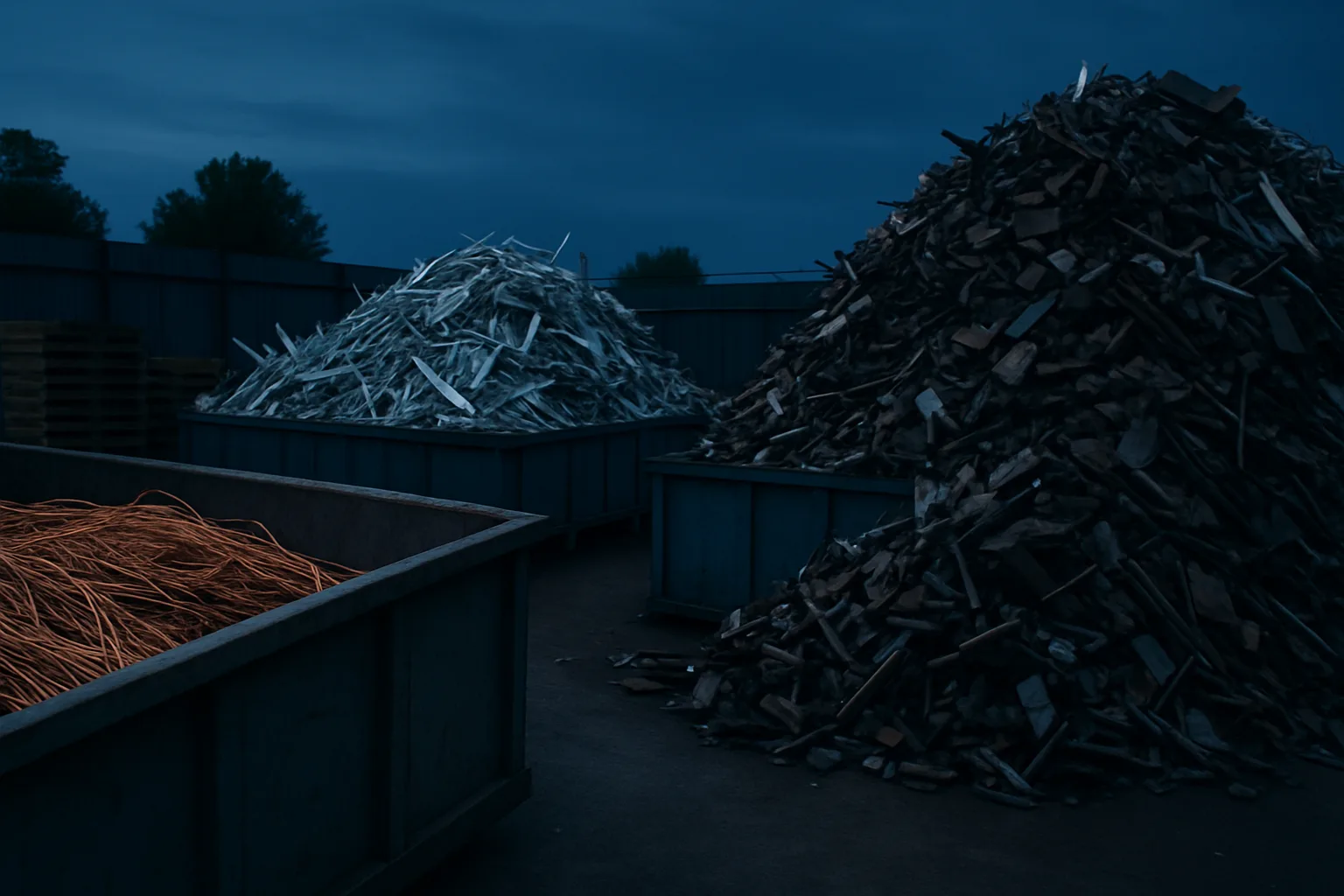
Most sellers leave money on the table before they ever hand over a load. Not because the yard is dishonest — but because they don't understand how the grading and weighing process actually works. If you're trying to sell scrap metal in Fort Worth, knowing what happens on the scale and at the sorting table is the difference between a fair payout and a frustrating one.
This isn't theory. It's the practical reality of how recycling yards operate — and what you can do to come in prepared.
How Recycling Yards Weigh Your Scrap Metal
Every yard uses a certified scale — usually a drive-on truck scale for larger loads, or a platform scale for smaller quantities. You pull in, get weighed loaded, drop your material, then get weighed empty. The difference is your net weight. Simple in concept, but the details matter.
Moisture is a real factor. Scrap that's been sitting outside — aluminum siding, steel pipe, shredded material — absorbs water. Some yards apply a moisture deduction to wet loads. If your material is soaking wet, that deduction hits your payout directly. Dry your scrap when you can. It sounds basic, but it moves the number.
- Drive-on scales handle full truckloads and large containers.
- Platform or floor scales are used for smaller, hand-carried loads.
- Certified calibration is required by state law — yards must maintain accuracy.
- Moisture deductions vary by yard and material type.
- Tare weight (your empty vehicle) is recorded before or after — ask the yard which method they use.
One thing most sellers don't think about: containers, pallets, and wire bundles all have tare weight. If you're hauling copper wire in a heavy steel drum, that drum weight comes off. Use lighter containers when possible. Every pound of dead weight is a pound you're not getting paid for.
Grading: Where the Real Price Gets Set
Weight gets you in the door. Grade determines what you actually walk out with. This is where sellers get surprised — and sometimes frustrated. A load of "copper" isn't just copper. Yards sort it into distinct grades, each with its own copper scrap price point.
Here's how common metals break down at the grading table:
Copper Grades
- #1 Copper (Bare Bright): Clean, uncoated, unalloyed copper wire — 16 gauge or larger. No solder, no insulation. Top of the market.
- #2 Copper: Copper pipe, bus bar, and fittings with minimal oxidation. Slight coatings acceptable.
- Insulated Copper Wire: Priced based on estimated copper content after stripping. Yield percentage drives the price.
- Copper Turnings / Dirty Copper: Copper mixed with oils, attached fittings, or other metals. Lower grade, lower price.
Aluminum Grades
- Cast Aluminum: Engine blocks, transmission housings, wheels. Dense, heavy, moderate aluminum scrap price today.
- Sheet Aluminum: Siding, gutters, flashing. Lighter but clean if free of paint and fasteners.
- Extruded Aluminum: Window frames, door frames, structural extrusions.
- Aluminum Cans: Lowest per-pound aluminum rate, but consistent demand.
- Aluminum Radiators: Graded based on whether they're clean or have copper/brass fittings attached.
Steel and Ferrous Metals
- Heavy Melting Steel (HMS): Structural steel, plate, beams.
- Light Iron / Sheet Iron: Appliances, thin-gauge metal.
- Shredder Feed: Mixed ferrous material — cars, mixed scrap.
Every category has a different steel scrap price. Mixing grades together — or not separating materials before you arrive — means the yard grades your whole load at the lowest applicable rate. Pre-sorting is the single biggest move most sellers can make.
What Yards Actually Look for When They Grade Your Load
Graders aren't just categorizing metal. They're evaluating risk. Contamination, mixed alloys, attached hardware, coatings, and non-metallic materials all reduce yield and increase processing cost. That cost comes back to you in the form of a lower grade.
Common contamination issues yards flag in Texas yards and elsewhere:
- Steel hardware (bolts, fittings) attached to copper or aluminum
- Plastic, rubber, or insulation still on wire or pipe
- Oils or fluids on aluminum turnings or castings
- Mixed non-ferrous metals in the same bin
- Paint or coatings on sheet metal
- Welded-on dissimilar metals
The more work the yard has to do to process your material, the lower your effective price. If you want top scrap metal prices today, arrive with clean, sorted, separated loads. It's not glamorous advice, but it's the honest truth.
Fort Worth yards deal with a high volume of construction and demolition scrap given the region's active building sector. That means graders there see a lot of mixed loads. Standing out with a clean, pre-sorted delivery gets you noticed — and paid accordingly. To understand what the market is paying right now, check today's scrap metal prices before you pull onto the scale.
How Pricing Flows from Grade to Payout
Once graded and weighed, the math is straightforward: weight × price per pound = gross payout. But the price per pound isn't fixed — it moves daily, sometimes multiple times a day on active trading days. Yards set their buying prices based on the commodity market, their current inventory, and buyer demand.
This is where sellers in Fort Worth — and across Texas — can give themselves an edge. Knowing the current market rate before you sell lets you evaluate whether a yard's offer is reasonable. It also gives you standing to ask questions. Yards expect informed sellers. Walking in blind puts you at a disadvantage.
Platforms like SMASH exist precisely for this reason. Rather than calling one buyer and accepting whatever they quote you, SMASH puts your load in front of vetted buyers who compete. Competition reveals the real market. That's not hype — that's basic economics applied to scrap. Find current scrap metal prices near you and walk in knowing your baseline.
Key factors that influence your payout:
- Commodity index price — LME copper, aluminum futures, and domestic steel indices move your per-pound rate daily.
- Grade assigned — One step down in grade can mean a meaningful per-pound difference, especially on copper.
- Net weight after deductions — Moisture, tare, and contamination adjustments all reduce net weight.
- Yard's current inventory — A yard sitting heavy on aluminum may offer less for aluminum that day.
- Volume — Larger loads often get better per-pound rates than small, one-off deliveries.
Documentation: Why It Matters More Than Ever in 2026
Scrap metal regulations have tightened across multiple states over the past several years. Texas has maintained strict seller identification and transaction logging requirements for years, and compliance expectations for yards continue to evolve in 2026. Every transaction is logged. Photo documentation, seller ID, and material descriptions are standard at most licensed yards in the Fort Worth area.
For sellers, this isn't a burden — it's protection. A transaction record means you have proof of what you delivered, how it was graded, and what you were paid. Disputes happen. Documentation settles them.
SMASH handles this on the platform side through photo documentation, serial tracking on eligible materials, and auto-invoicing. For yards selling through SMASH, the paper trail is built in. If you're a seller wondering how professional buyers evaluate your material remotely, photos and detailed inventory descriptions are the answer. It builds buyer confidence — and confident buyers bid higher. To stay current on how documentation standards and market dynamics are evolving, read the latest scrap metal market updates.
How to Maximize Your Payout Before You Arrive
Grading happens at the yard, but the prep work happens at your shop, your jobsite, or your vehicle. Here's a practical checklist for sellers who want to walk out with the best possible number:
- Separate ferrous from non-ferrous. Use a magnet. Steel and iron go in one pile, copper and aluminum in another. This is non-negotiable if you want non-ferrous pricing on non-ferrous material.
- Strip wire if the math works. Bare copper pays significantly more than insulated wire. If you have enough volume and time, stripping is worth it.
- Remove steel attachments from copper and aluminum. Pipe fittings, bolts, brackets — pull them off before you haul in.
- Keep material dry. Don't let scrap sit in water or wet conditions before transport if you can avoid it.
- Photograph your load. If grading results in an unexpected downgrade, photos of your clean, separated material give you a basis for conversation.
- Know current prices. Current scrap prices are available online before you leave for the yard. Use them.
None of this is complicated. It's just preparation — the kind that separates sellers who get consistent good payouts from those who wonder why the number always seems low.
Whether you're a regular seller in Fort Worth or just clearing out material from a renovation or demo job, the process rewards people who show up informed. As you head toward the scale, remember: preparation done at home is money earned at the yard. When you're ready to move your load, Fort Worth scrap metal services are accessible — and knowing your prices in advance puts you in control.
Before your next run, take two minutes to find current scrap metal prices near you at scrap-metal-prices.com — so you know exactly what the market looks like before you pull onto the scale.
Frequently Asked Questions
Q: How do I know if a Fort Worth scrap yard is weighing my metal accurately?
Licensed yards in Texas are required to use certified, calibrated scales maintained to state standards. You have the right to watch the weigh-in process. If something seems off, ask for a reweigh — most reputable yards will accommodate the request without issue.
Q: Why did the yard downgrade my copper?
Common reasons include attached fittings, light oxidation, solder joints, or insulation remnants. Each of these reduces yield and increases processing cost for the buyer, which pulls your material down a grade. Clean, stripped, unattached copper commands the top rate.
Q: What's the difference between sell scrap metal Fort Worth prices and what I see online?
Online commodity prices reflect global trading markets — they're a benchmark, not a retail quote. Local yards buy below the commodity index because they have processing, transport, and overhead costs. The gap between online prices and local yard prices varies by metal and yard. Knowing the benchmark still helps you evaluate whether a local quote is reasonable.
Q: Does the aluminum scrap price today change from morning to afternoon?
It can. Yards update their buying prices based on the commodity market, which moves throughout the trading day. Prices posted online are typically updated daily but may not reflect intraday moves. High-volume sellers sometimes call ahead to lock in a price before hauling.
Q: Is it worth separating my scrap before going to the yard?
Yes — almost always. Mixed loads get graded at the lowest applicable rate or require the yard to sort before grading, which often comes with a labor deduction. Pre-sorted, clean material commands better rates and faster processing. The time spent sorting before you go is directly reflected in your payout.
Scrap metal prices fluctuate daily based on global commodity markets, local supply and demand, and yard-specific conditions. Always verify current rates before selling. The prices referenced in this article are for general educational purposes only.
Follow SMASH on LinkedIn for ongoing scrap metal market insights, pricing updates, and industry news delivered straight to your feed.