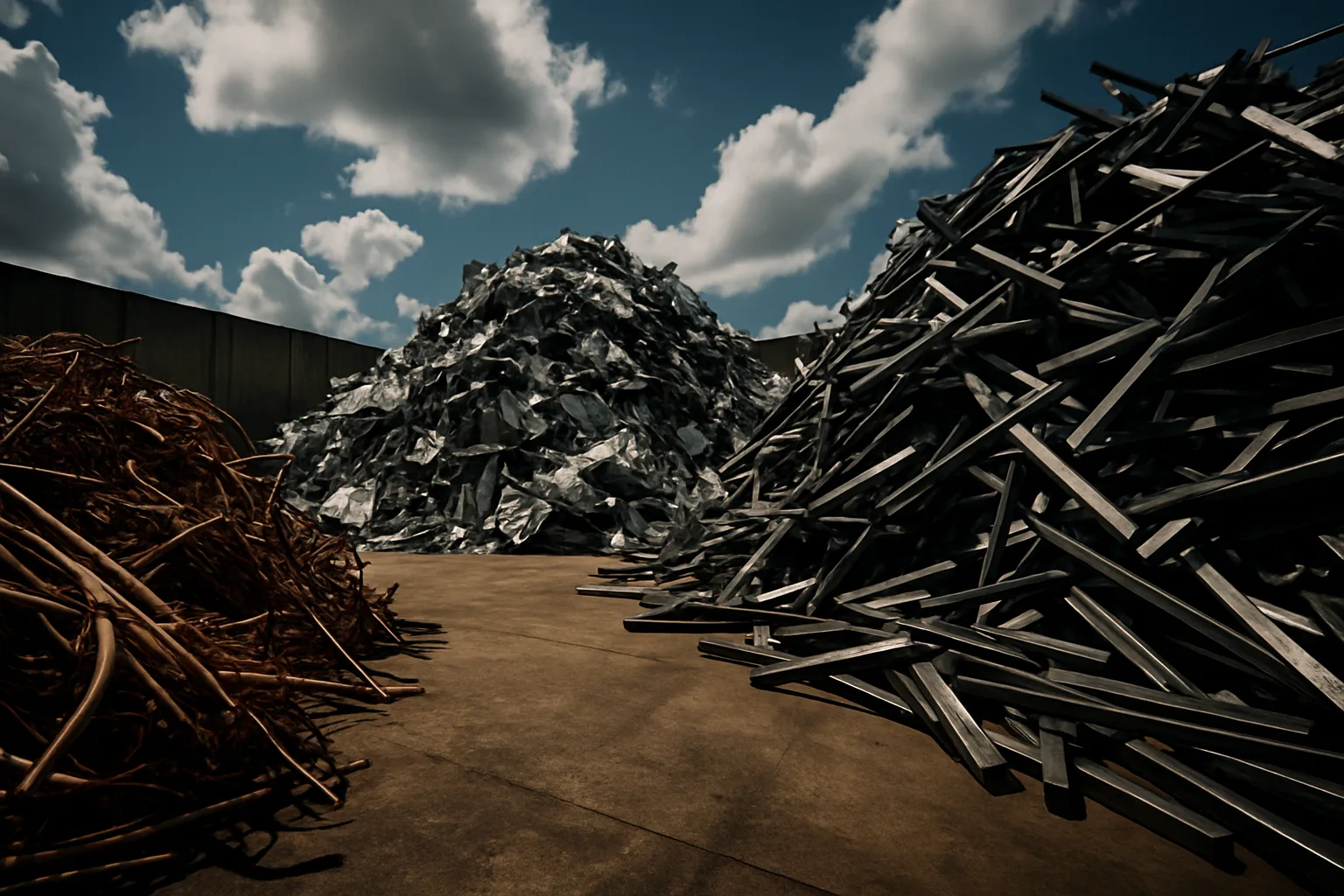
Not all stainless steel is created equal — and if you're hauling loads to a yard without knowing the grade, you're almost certainly leaving money on the table. The steel scrap price today varies significantly depending on which grade of stainless you're selling, and that gap can be dramatic. We're talking about the difference between pennies per pound and serious per-pound premiums, all from material that looks nearly identical to the untrained eye.
Stainless steel is one of the more nuanced categories in the scrap yard. Unlike copper or aluminum, where the visual difference between grades is often obvious, stainless grades can look identical on the surface. That's where sellers get burned. Knowing your 304 from your 316 — or your 201 from your 430 — is the kind of insider knowledge that directly affects your payout.
Whether you're a recycling yard operator in Virginia Beach sorting through mixed commercial loads or a collector pulling stainless appliances and restaurant equipment, this breakdown will help you get the pricing clarity you deserve.
Why Stainless Steel Grade Matters for Scrap Metal Prices Today
Stainless steel isn't a single metal — it's a family of alloys. What separates the grades is the alloy composition, specifically the percentages of nickel, chromium, and molybdenum. Those elements are what drive the scrap metal prices today. Higher nickel content means higher value. It's that simple, and it's why grade identification is non-negotiable before you price or sell a load.
Here's the core reason grades matter at the trading level: nickel and molybdenum are priced commodities. When nickel markets move — and they move often — the spread between a high-nickel grade like 316 and a low-nickel grade like 430 widens or narrows. Selling a mixed load of stainless without separating grades means the buyer prices the entire load at the lowest common denominator. That's money you never recover.
- 200 Series: Low nickel, manganese-substituted. Lower value grades.
- 300 Series: Austenitic, higher nickel content. The most traded grades globally.
- 400 Series: Ferritic or martensitic, little to no nickel. Lower scrap value but still in demand.
The Most Common Stainless Steel Scrap Grades — Compared and Priced
Let's break down the grades you'll encounter most often in commercial and industrial scrap streams. These show up in restaurant kitchens, medical facilities, manufacturing floors, and residential teardowns across Virginia and the broader mid-Atlantic region.
304 Stainless Steel
This is the workhorse grade. It accounts for the majority of stainless scrap volume in most yards. You'll find it in food-grade equipment, sinks, pots, automotive trim, and industrial tubing. It contains roughly 18% chromium and 8% nickel. Because it's so common and consistently in demand, 304 tends to trade at a stable, well-established scrap value. Buyers know it, yards stock it, and it moves. If you're sorting a mixed stainless load, pull the 304 out and keep it clean — contamination kills the price.
316 Stainless Steel
This is the premium grade in most scrap streams. The addition of 2–3% molybdenum gives 316 superior corrosion resistance, which is why it's used in marine environments, pharmaceutical equipment, and chemical processing. That molybdenum content means it commands a meaningful premium over 304. If you're pulling scrap in coastal areas like Virginia Beach — where marine-grade materials are common — you'll encounter 316 more than inland yards do. Know what you have before you load a truck.
430 Stainless Steel
This is a ferritic grade with no nickel, which is the first thing buyers look for when pricing it. Expect a significantly lower per-pound rate than 304 or 316. It's magnetic, which is one way yards test for it on the floor. You'll find 430 in appliance panels, automotive trim, and decorative applications. It still has value — don't throw it in with carbon steel — but separate it and declare it accurately.
201 Stainless Steel
A lower-cost 300-series alternative that substitutes manganese for some of the nickel. It's increasingly common in imported consumer goods. Scrap buyers often treat it at a discount to 304 because the nickel content is lower and inconsistent. If you're sourcing stainless from retail or wholesale teardowns, you may be picking up more 201 than you realize. Get it tested.
309 and 310 Stainless Steel
High-temperature grades with elevated chromium and nickel. These show up in furnace components, heat exchangers, and industrial kilns. They're less common in general scrap streams but command strong pricing when identified correctly. If you're pulling from manufacturing or industrial teardowns, it pays to have a handheld XRF analyzer — or work with a buyer who uses one.
How to Identify Stainless Steel Grades in the Yard
Visual inspection alone won't cut it. Experienced yard operators use a combination of tools and physical tests to sort stainless accurately. Here's the practical workflow most serious yards run:
- Magnet test: 300-series stainless is non-magnetic (or weakly magnetic when work-hardened). 400-series is strongly magnetic. This is your first sort, not your final answer.
- XRF analyzer (X-ray fluorescence): The gold standard. A handheld XRF gun reads elemental composition in seconds. Nickel, chromium, molybdenum percentages — it tells you exactly what grade you're holding. Worth the investment for any yard moving meaningful stainless volume.
- Mill certifications and markings: Commercial and industrial stainless often comes with paperwork or heat stamps. If you're buying loads from factories or processors, ask for documentation. Documented inventory gives buyers more confidence — and that confidence shows up in bids.
- Spark test: Less reliable but useful as a quick check. Carbon steel throws long, bright sparks. Stainless throws shorter, dimmer ones. It won't tell you the grade, but it'll help you sort stainless from carbon quickly on a busy floor.
For yards in Virginia Beach handling mixed commercial teardowns — restaurants, hotels, food processing — having an XRF gun pays for itself fast. Misidentifying 316 as 304, or 304 as 430, on even a moderate-volume load represents real money left behind. Platforms like the SMASH scrap metal auction marketplace give buyers access to documented, photo-verified inventory — which is exactly why proper identification up front matters so much for sellers.
Steel Scrap Price Today: What Drives Stainless Premiums and Discounts
The steel scrap price today for stainless is influenced by more than just grade. Understanding these drivers helps you time your sales and negotiate with buyers instead of just accepting a floor price.
- Nickel spot price: This is the biggest lever. When LME nickel moves up, 304 and 316 scrap prices follow. Watch nickel like you watch copper.
- Load cleanliness: Contamination drops your price fast. Mixed metals, plastic fittings, rubber gaskets — buyers discount heavily for loads that require sorting on their end.
- Volume: Larger, consistent loads attract better bids. Buyers pay more per pound when they don't have to aggregate from multiple small sellers.
- Documentation: XRF results, packing lists, and photo documentation reduce buyer risk. Less risk means more competitive bids. This is one of the core arguments for proper scrap metal inventory management before you go to market.
- Market timing: Stainless demand from mills and re-melters fluctuates with production cycles. A load sold into a tight market gets better numbers than one sold when buyers are sitting on inventory.
If you want to understand how current market conditions are affecting your per-pound rates, check today's scrap metal prices before you pick up the phone to call a single buyer. One call gives you one number. The market might be offering you more.
Why Single-Buyer Deals Undervalue Your Stainless Scrap
Here's the reality most sellers in Virginia accept without questioning it: they call one buyer, get one price, and take it. That's not a market — that's a guess dressed up as a quote. The buyer knows what stainless is trading at. You might not. That information gap is where your margin disappears.
Competition changes that dynamic. When multiple vetted buyers bid on your documented load — knowing the grade, the weight, the photos, the packing list — they're competing on real information. That's how price discovery actually works. More buyers means better price discovery. And when your load is properly identified as 316 instead of generic stainless, the premium shows up in the bids.
This is the problem that the SMASH scrap metal auction marketplace is built to solve. The SMASH scrap metal auction format puts your documented inventory in front of vetted buyers who compete for it. No subscription fees. SMASH wins when you win. If you're moving meaningful stainless volume — whether you're running a yard in Virginia Beach, a recycling operation, or an industrial dismantler — auction-format selling with proper documentation changes the math.
To stay ahead of market moves, read the latest scrap metal market updates and find current scrap metal prices near you before you commit to any deal.
Practical Tips for Maximizing Stainless Scrap Value
Whether you're a first-time seller or a yard operator who's been in the business for years, these habits separate the sellers who capture full value from the ones who leave money behind consistently.
- Sort by grade before selling. Never mix 304, 316, and 430 in the same load unless you're prepared to accept the lowest grade's price on all of it.
- Document everything. Photos, weights, XRF results, and packing lists. The more data buyers have, the more confidently they bid.
- Time your sales around nickel moves. Stainless scrap prices track nickel. When nickel spikes, sell your 316. When it drops, it may be worth holding if your storage costs allow it.
- Clean your loads. Remove non-metallic attachments. Clean stainless fetches better pricing than dirty, contaminated material.
- Get multiple bids. One buyer, one price. Three buyers, competition. Ten vetted buyers, a market.
Frequently Asked Questions
Q: What is the steel scrap price today for 304 stainless in Virginia Beach?
Stainless steel scrap prices change daily based on nickel market movements, local demand, and load quality. We don't publish a fixed rate because a number from yesterday isn't useful today. Check current rates at scrap-metal-prices.com for the most accurate pricing in your area, and always get multiple buyer quotes before committing to a sale.
Q: How do I know if my stainless scrap is 304 or 316?
The magnet test is a starting point — both 304 and 316 are weakly magnetic at best — but the only reliable method is XRF analysis, which reads the elemental composition directly. Many yards in Virginia offer XRF testing on-site, or you can have material tested before you bring a load in. If you're selling documented loads through a platform, provide the grade data upfront.
Q: Why is 430 stainless worth less than 304?
The price difference comes down to nickel content. Grade 430 contains little to no nickel, which is the primary value driver in austenitic stainless grades. Nickel is a traded commodity, and its absence in 430 drops the alloy's intrinsic metal value. It still has scrap value — more than carbon steel — but it won't compete with 304 or 316 pricing.
Q: Does sorting stainless grades actually make a difference on my payout?
Yes — significantly. When you sell mixed unsorted stainless, buyers price the entire load at the lowest identifiable grade to protect their margin. Sorting your load and presenting it with accurate grade documentation gives buyers the confidence to bid at the actual value of each material. The difference per pound between 316 and 430 can be substantial, especially on large loads.
Q: What is the best way to sell stainless scrap in Virginia?
Sort by grade, document your inventory with weights and photos, and don't settle for a single phone quote. Competitive auction formats — like those offered through SMASH — put your documented load in front of multiple vetted buyers who bid against each other. No subscription required. You can also check scrap-metal-prices.com to benchmark rates before you sell.
Stainless steel scrap is one of the higher-value categories in the recycling yard — but only if you know what you have and how to sell it properly. Grade identification, clean loads, documented inventory, and competitive selling aren't complicated. They're habits. Build them now and every stainless load you move will perform better than the last. When you're ready to check current rates, check today's scrap metal prices — get current rates at scrap-metal-prices.com.
Prices fluctuate daily based on market conditions, load quality, and regional demand. Always verify current rates before selling.
Follow SMASH on LinkedIn for industry updates, scrap metal market insights, and tips to help you sell smarter.