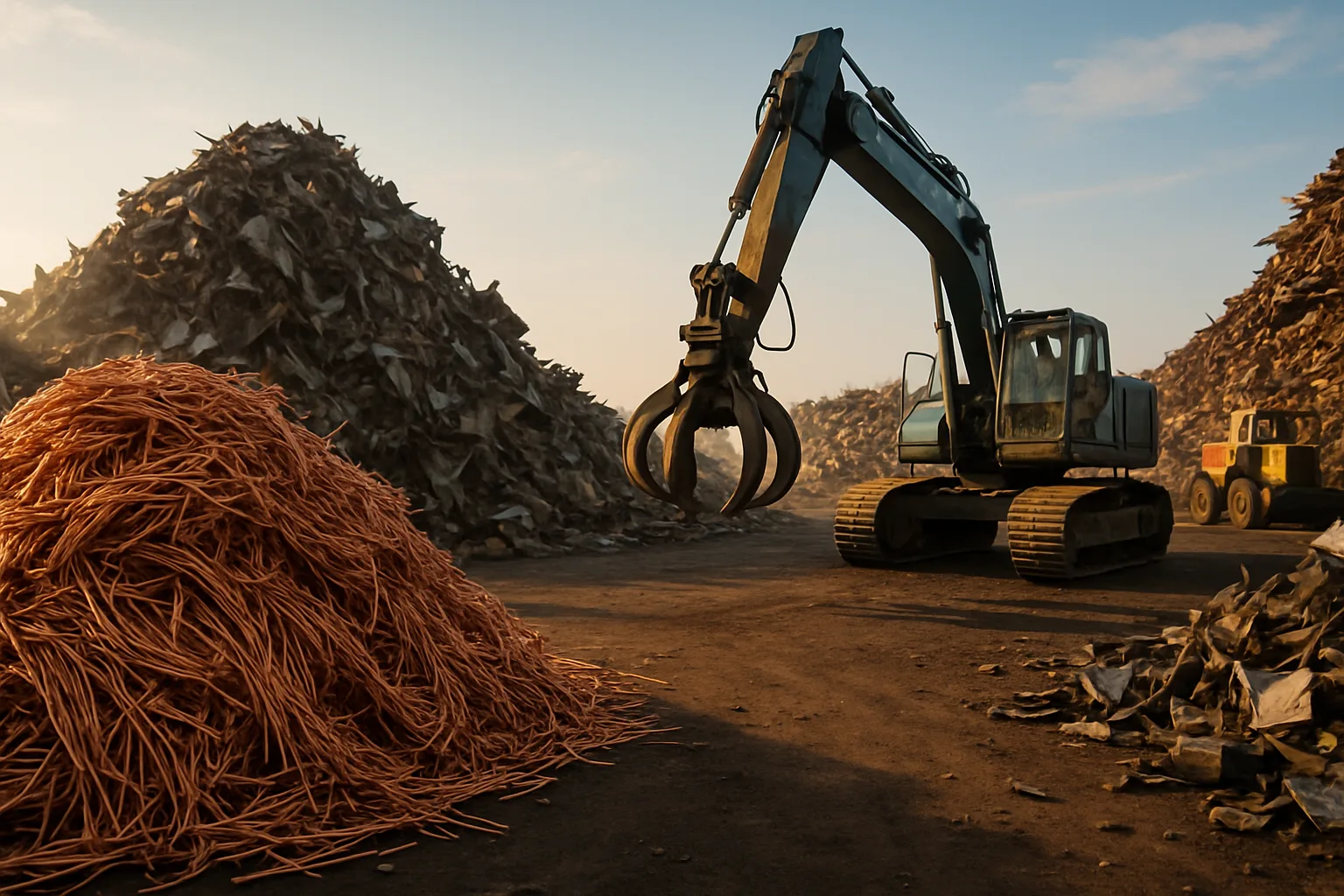
Why Sorted Scrap Always Pays More Than Mixed Loads
Most sellers leave money on the table before they ever reach the scale. Not because they have bad metal — because they have unsorted metal. A mixed load of copper, aluminum, and steel gets priced at the lowest common denominator. Sort it right, and you're quoting copper scrap price today instead of blended bulk rates. That gap can be significant.
This isn't complicated work. It's methodical work. Yards in Warren, Michigan and across the country reward sellers who show up prepared. Buyers reward documentation. Auctions reward clarity. If you're hauling scrap regularly, what you do in your yard before you load the truck matters as much as where you sell it.
Here's how to sort and prepare scrap metal to get the most out of every load — whether you're selling to a local yard or listing through a platform like SMASH, where you can get competitive bids for your scrap metal from vetted buyers.
Step 1: Know What You Have — Identifying Metal Types
You can't sort what you can't identify. The first step is learning to read the metal. Color, weight, magnetic pull, and surface finish all tell you something. This isn't guesswork — it's pattern recognition you build fast with practice.
Here's a quick field reference:
- Copper: Reddish-orange when clean, green or dark when oxidized. Dense. Non-magnetic. Includes wire, pipe, bus bar, and roofing sheet. Copper consistently commands the highest price per pound among common non-ferrous metals — knowing the copper scrap price today before you load is essential.
- Aluminum: Silver-grey, lightweight, non-magnetic. Found in extrusions, cast parts, sheet, cans, and wheels. Grades vary significantly — cast aluminum and aluminum extrusion are priced differently.
- Brass: Yellow-gold tone. Heavy. Often found in fittings, valves, plumbing fixtures, and keys. Usually priced close to copper but treated as its own grade.
- Stainless Steel: Shiny silver finish. Non-magnetic (most grades). Found in appliances, industrial equipment, and tubing.
- Steel / Iron: Grey, heavy, magnetic. The most common ferrous metal. Lowest price per pound, but often your largest volume.
- Lead: Very dense, dull grey, soft. Found in batteries, wheel weights, and old pipe. Handle with proper precautions.
Use a magnet. If it sticks, it's ferrous — steel or iron. If it doesn't stick, you're likely dealing with copper, aluminum, brass, or stainless. From there, weight and color close the loop. Take the time to separate these before loading. Every grade that travels in its own bin or pallet is a grade you can price individually.
Step 2: Grade Your Copper — This Is Where Scrap Metal Prices Today Diverge Fast
Copper isn't just copper. The grade you assign determines which price column you're quoting. Most yards and buyers recognize several distinct copper grades, and the spread between top and bottom can be meaningful — especially when you're moving volume.
Common copper grades you need to know:
- #1 Bare Bright Copper: Clean, uncoated, unalloyed copper wire — minimum 16 gauge. No insulation, no solder, no corrosion. Highest price tier. If you're stripping wire to get here, make sure the math works first.
- #1 Copper: Clean copper pipe and bus bar. No paint, no solder, minimal fittings. One step below bare bright.
- #2 Copper: Copper with light oxidation, minimal solder, painted pipe, or thin insulation. Most salvage copper lands here.
- #3 Copper / Light Copper: Heavily corroded, alloyed, or contaminated copper. Lowest copper grade.
- Insulated Copper Wire (ICW): Priced by copper recovery percentage. High-percentage recovery wire (thick gauge, heavy insulation) prices differently than thin-gauge telephone wire.
The move here is simple: clean what you can, sort what you can't clean. A bin of mixed copper wire and clean pipe dragged to the yard together is a missed opportunity. Keep bare bright separate. Keep insulated wire grouped by gauge. Don't let a handful of dirty pipe drag down your clean stock.
Before you haul, check today's scrap metal prices so you know what each grade should command in your market.
Step 3: Prepare Your Aluminum, Steel, and Other Non-Ferrous Metals
Copper gets the headlines, but aluminum and steel are usually your volume plays. Getting these right is just as important for total payout.
Aluminum prep tips:
- Separate aluminum extrusion from cast aluminum — they price differently.
- Remove steel bolts, brackets, and inserts from aluminum parts. Mixed aluminum with steel attachments downgrades the load.
- Clean aluminum wheels separately from sheet aluminum or cast parts.
- Aluminum cans are a separate grade — don't mix with structural aluminum.
- Keep radiators (copper-brass or aluminum) separated and intact where possible.
Steel and iron prep tips:
- Separate heavy melt steel from light iron (thin gauge sheet, clips).
- Remove non-metallic attachments — rubber, plastic, wood, wiring.
- Cut or flatten oversized pieces if your yard has a size requirement (most do — typically under 5 feet).
- Cast iron (engine blocks, machine parts) is a separate grade from structural steel.
For sellers in Warren moving industrial or automotive scrap — and Warren, Michigan's auto-adjacent economy generates a lot of both — keeping your ferrous and non-ferrous loads on separate pallets or in separate containers saves time at the scale and eliminates the question of what's in the pile.
Step 4: Document Everything Before It Leaves Your Yard
This step separates casual sellers from serious ones. Documentation protects you, speeds up transactions, and — when you're selling through an auction platform — gives buyers confidence that increases their bids.
What to document:
- Photos: Shoot each grade separately. Close-ups of wire gauge, pipe condition, and any markings. Top-down shots of full bins or pallets.
- Weights: Use a certified scale if you have one. Even estimated weights help buyers bid with confidence.
- Grade labels: Clearly mark each container with the grade and approximate weight. Don't make buyers guess.
- Serial numbers and VINs: For automotive cores, catalytic converters, or any equipment with traceable IDs — document them. Platforms like SMASH support VIN lookup and serial tracking for exactly this reason.
- Bill of Lading (BOL): For larger loads moving by freight, your BOL and packing list need to match what's actually in the shipment.
This isn't bureaucracy. It's price discovery. A buyer who can see exactly what they're bidding on bids more aggressively than one who has to factor in uncertainty. That dynamic is at the core of why auction-based selling on a platform like SMASH outperforms the single-phone-call approach for documented loads.
If you're trying to figure out how to sell scrap metal near me for cash, documentation is the single biggest upgrade you can make to your process before you dial a number or post a listing.
Step 5: Time Your Sale Around Scrap Metal Prices Today
Preparation gets you the right grade. Timing gets you the right market. Scrap metal prices today — especially copper — move with commodity markets, tariff announcements, industrial demand cycles, and seasonal shifts. Selling without checking current rates is like filling up your gas tank without looking at the pump price.
A few practical timing principles:
- Check copper and aluminum prices weekly at minimum if you're accumulating inventory.
- Watch for market signals — construction activity, auto production rates, and infrastructure spending all drive non-ferrous demand.
- Don't hold forever trying to time the top — storage costs, space constraints, and market unpredictability all cut into theoretical gains.
- Use competitive auctions instead of a single buyer call — more buyers means better price discovery, regardless of where the market sits that day.
Sellers in Warren and across Michigan who read the latest scrap metal market updates regularly make better decisions about when to move material versus when to hold. That's not speculation — that's just having current information.
No subscription fees on SMASH. You only pay when your load sells. So there's no cost to listing, no cost to testing the market, and no reason to default to one buyer when vetted competition is available.
What a Prepared Load Looks Like vs. What Most Sellers Show Up With
Let's be direct. Most loads that hit a yard scale are mixed, unlabeled, and undocumented. That's not a criticism — it's just the reality of how most people haul scrap. But it leaves room for improvement, and improvement here translates directly to payout.
Unprepared load:
- Mixed copper grades in one bin
- Aluminum with steel bolts still attached
- No photos, no weights, no documentation
- Seller asks one buyer, takes the number offered
Prepared load:
- Bare bright, #1, and #2 copper separated
- Insulated wire sorted by gauge and recovery percentage
- Aluminum clean and sorted by grade
- Steel on its own pallet, oversized pieces cut
- Photos of every container, weights estimated or certified
- Load listed with multiple vetted buyers competing
The second approach isn't dramatically more work. It's organized work. And it changes the conversation from "what will you give me for this pile?" to "here's what I have — what's your best number?" That's a different negotiation entirely. Find current scrap metal prices near you and start that conversation knowing where the market sits.
Frequently Asked Questions
Q: What is the copper scrap price today in Warren, Michigan?
Copper scrap prices fluctuate daily based on commodity markets, so there's no fixed number we can print here. The grade matters as much as the date — bare bright copper commands a higher price than #2 copper or insulated wire. Check current scrap metal prices before you load your truck to know what to expect at the scale.
Q: Does sorting my scrap really make a difference in what I get paid?
Yes — significantly. A mixed load gets priced at the lowest grade in the bin. Separating your copper grades, cleaning aluminum, and removing ferrous from non-ferrous materials means each grade gets priced on its own merits. For high-value metals like copper and brass, this separation can make a real difference in total payout.
Q: How do I find scrap metal recycling in Warren, Michigan?
Search for scrap yards accepting the grades you have, confirm their current pricing before you haul, and consider listing larger loads through a platform like SMASH to get multiple buyers competing for your material. For real-time rates, scrap-metal-prices.com tracks current market pricing across metal types.
Q: What's the difference between #1 and #2 copper scrap?
#1 copper is clean, uncoated copper pipe or wire with no solder, paint, or significant oxidation. #2 copper has light oxidation, some paint, or minor solder contamination. The price gap between them is real — clean your #1 material carefully and keep it separated from anything that downgrades to #2.
Q: Is it worth stripping copper wire to get bare bright pricing?
It depends on the wire gauge and how much you have. Thick-gauge wire with simple insulation often makes stripping worthwhile. Thin telephone wire or multi-strand low-gauge wire usually doesn't — the labor cost outweighs the price bump. Run the numbers on your specific material before you strip. Check the copper scrap price today for both bare bright and insulated wire to calculate whether the margin justifies the work.
Knowing what you have, preparing it properly, and selling into a competitive market — that's the whole game. Before your next haul, take a few minutes to check today's scrap metal prices at scrap-metal-prices.com and get current rates for every grade you're moving. Prepared sellers get better numbers. That's just how it works.
Follow SMASH on LinkedIn for ongoing scrap metal market updates, pricing trends, and industry insights delivered straight to your feed.
Disclaimer: Scrap metal prices fluctuate daily based on market conditions. All prices referenced are general in nature. Always verify current rates with your local yard or through a live pricing platform before selling.