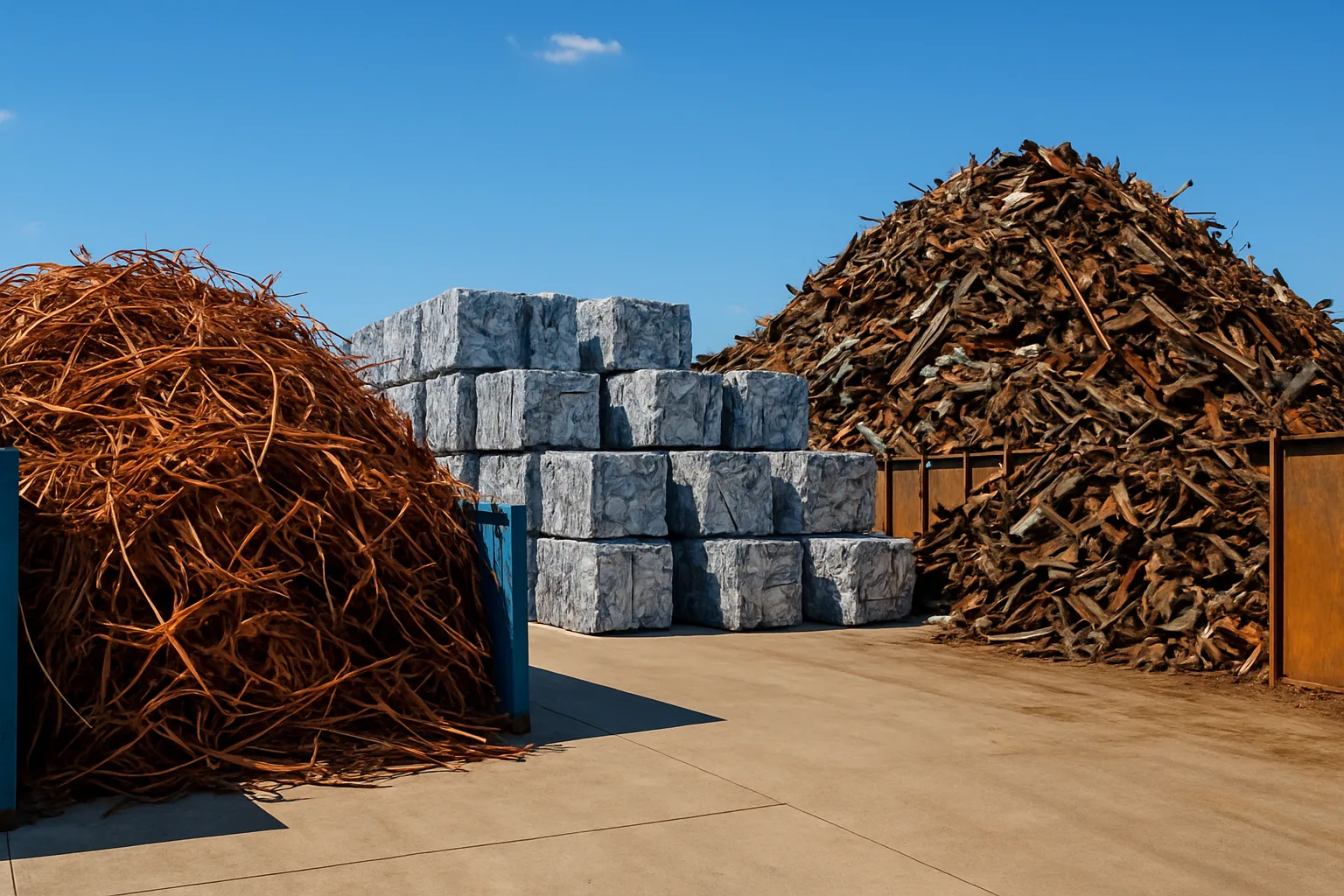
Most scrap sellers treat steel and iron like they're the same thing. They're not — and that gap in understanding is quietly costing yards and sellers real money every time a load goes out the door.
If you're trying to make sense of copper scrap prices Madison and general scrap metal pricing in your area, understanding the steel vs. iron distinction is a foundational piece of the puzzle. These two metals move differently in the market, price differently at the scale, and attract different buyers for different reasons. Getting them confused means leaving money on the table — or worse, getting paid the wrong rate entirely.
This article breaks down the real differences between steel and iron scrap, why the prices diverge, and how sellers across Wisconsin and beyond can use that knowledge to get better outcomes on every load.
Steel and Iron Are Not Interchangeable — Here's Why It Matters for Scrap Metal Prices
Steel is an alloy. Iron is a base metal. That distinction sounds technical, but it has direct pricing consequences at every scrap yard in the country, including throughout the Madison, Wisconsin market.
Cast iron — the heavy, brittle stuff you find in engine blocks, cookware, and old radiators — is bought and sold as its own category. It melts differently, it's denser, and foundries use it for specific applications. Steel, whether it's structural, sheet, or stainless, gets processed and resold into different end markets. The demand cycles aren't always in sync, which means the prices don't always move in the same direction at the same time.
- Cast iron typically prices lower per pound than many steel grades because it's more abundant and serves a narrower reuse market.
- Structural steel (beams, rebar, plate) has strong demand tied to construction cycles.
- Stainless steel contains nickel and chromium — that alloy content pushes pricing significantly higher than carbon steel.
- Shredded steel is the commodity benchmark many yards use for general ferrous loads.
If you're handing a mixed ferrous load to a single buyer without knowing what's in it, you're almost certainly getting priced on the lowest common denominator. That's the old way — and it's a losing approach.
How Scrap Metal Prices Today Reflect Steel and Iron Market Forces
Scrap metal prices today are shaped by a handful of converging pressures: global steel demand, energy costs at electric arc furnace mills, export demand (particularly out of Asia), and domestic construction activity. Steel and iron respond to these forces differently, and in 2026, that divergence is more pronounced than it was a few years ago.
Mill demand for scrap steel has remained active, driven by EAF (electric arc furnace) production that relies almost entirely on recycled feedstock. Cast iron demand, by contrast, is more foundry-dependent and less tied to the housing and infrastructure spending cycles that boost structural steel prices. When construction is strong — and in many parts of the Midwest, including Wisconsin, infrastructure investment has been ongoing — steel scrap tends to follow that upward pressure. Cast iron doesn't always get the same lift.
A few market forces worth tracking in 2026:
- Domestic mill capacity utilization — when mills run hot, they buy more scrap steel. Prices firm up.
- Export demand — overseas buyers competing for U.S. ferrous scrap pushes prices up domestically.
- Energy cost volatility — EAF mills are energy-intensive. Cost spikes can squeeze mill margins and cool buying appetite.
- Tariff and trade policy — ongoing trade policy adjustments in 2026 continue to affect how much ferrous scrap moves across borders and at what price.
To stay current on where these prices actually land, check today's scrap metal prices before you commit to any sale or negotiate with a buyer. The market moves fast. Last week's number is already stale.
Copper Scrap Prices Madison and the Non-Ferrous vs. Ferrous Divide
Here's where sellers sometimes get tripped up: they're focused on copper scrap prices Madison because non-ferrous metals like copper, aluminum, and brass command significantly higher prices per pound. That's true. But the ferrous metals — your steel and iron — typically represent a much larger volume of material moving through any given yard.
In Madison and across the Wisconsin market, a well-run recycling operation doesn't ignore the ferrous side just because the per-pound number looks less exciting. Volume matters. A load of heavy steel at a competitive price can move as much gross revenue as a small copper lot at a premium price. Smart sellers track both sides of the market.
Non-ferrous pricing — copper, aluminum, stainless — tends to be more volatile and more sensitive to global commodity markets. Copper in particular follows global demand for electrical infrastructure, EV production, and construction. Steel and iron are more domestically driven, tied to U.S. mill activity and construction cycles. Understanding which bucket your material falls into helps you time sales and target the right buyers.
Want to see how non-ferrous and ferrous prices compare right now? Find current scrap metal prices near you and get a clear picture of where both markets sit today.
Why Single-Buyer Deals Hurt Your Steel and Iron Returns
The typical scrap seller in Madison calls one buyer, gets one number, and takes the deal. That process has been standard for decades. It's also the reason most sellers never know if they got a fair price — because they never had anything to compare it to.
This is the core problem a B2B scrap metal marketplace like SMASH is built to solve. When you put your load in front of multiple vetted buyers simultaneously, the competitive dynamic does the work for you. Buyers who know they're competing sharpen their offers. You see multiple prices side by side. The market reveals itself.
For steel and iron specifically, this matters because grade misidentification is common. A buyer who thinks your load is mixed ferrous might offer a lower rate than a buyer who recognizes you have a significant heavy steel component. More eyes on your load, with proper documentation, means fewer assumptions working against you.
SMASH gives sellers tools to document loads properly before they go to auction — photo documentation, weight records, material descriptions — so buyers are bidding on what's actually there, not a rough guess. That documentation confidence helps drive better price discovery across every material type, ferrous and non-ferrous alike.
For the latest context on what's moving in the market, read the latest scrap metal market updates to stay ahead of pricing shifts before your next sale.
How to Recycle Scrap Metal Smarter — Sorting, Grading, and Selling
Knowing the difference between steel and iron is step one. Sorting and presenting your material correctly is step two. Most sellers skip step two entirely, and that's where they lose money.
Yards — and buyers on platforms like SMASH — pay more for clean, sorted, properly identified loads. A load of segregated heavy steel will price better than the same tonnage mixed with cast iron and light gauge material. The sorting work pays for itself, often many times over.
Here's a practical sorting framework for ferrous loads:
- Heavy melt steel (HMS 1 and 2) — structural steel, plate, thick-walled pipe. Keep this separate from light gauge.
- Cast iron — engine blocks, manifolds, old radiators, cookware. Pull this out as its own category.
- Stainless steel — use a magnet test to separate (stainless may have weaker or no magnetic response depending on grade). Price significantly higher than carbon steel.
- Light gauge / tin — appliances, sheet metal, thin-walled material. Lowest ferrous price tier.
- Turnings and borings — machine shop material. Often priced separately and discounted for moisture/oil content.
Knowing how to recycle scrap metal at a professional level isn't about working harder — it's about working smarter with what you already have. A sorted, documented load moves faster and prices better than a mystery pile, every time.
If you're in the Madison area and managing regular ferrous volumes, building a consistent sorting process upstream is one of the highest-return operational improvements you can make. Wisconsin scrap sellers who document and sort properly consistently see more competitive buyer interest than those moving mixed loads with minimal information.
Using Market Data and Competitive Auctions to Benchmark Your Ferrous Prices
Price benchmarking is something most small and mid-size sellers never do formally. They take the call, hear the number, and decide. But without a reference point, that number means nothing.
Platforms like SMASH provide a natural benchmark — when your load goes to a vetted buyer pool, the spread of offers tells you something real about where the market sits. You're not guessing against one buyer's margin. You're seeing actual competitive bids from buyers who want your material.
Pair that with external price tracking — checking published indices, following market updates, understanding the HMS 1 benchmark or the AMM monthly ferrous settlement — and you become a much harder negotiator. Buyers know when sellers are informed. It changes the dynamic.
The goal isn't to become a commodity trader. It's to know enough to recognize a low-ball offer and have the tools to do better. For sellers in Madison and across the wider Wisconsin scrap market, combining price awareness with competitive access is the modern approach to selling ferrous material — steel, iron, or otherwise.
Frequently Asked Questions
Q: What is the price difference between steel and iron scrap in Madison?
Steel and iron scrap prices vary by grade, condition, and current market demand. Generally, cast iron prices lower than structural steel on a per-pound basis, while stainless steel commands significantly more due to its alloy content. To get accurate current rates in the Madison, Wisconsin market, check today's scrap metal prices for up-to-date benchmarks.
Q: How do copper scrap prices in Madison compare to ferrous metals?
Copper scrap prices in Madison — and everywhere else — run significantly higher per pound than ferrous metals like steel and iron. That said, ferrous metals typically move in much larger volumes, so the gross revenue from a steel load can still be substantial. Tracking both markets helps sellers make smarter decisions about timing and buyer selection.
Q: What is the best way to sell scrap metal in Madison, Wisconsin?
Sorting your material by type, documenting it properly, and putting it in front of multiple vetted buyers is the most effective approach. A B2B scrap metal marketplace like SMASH lets you auction your loads competitively rather than accepting the first offer from a single buyer. Competition helps reveal the real market price for your material.
Q: Do scrap metal prices differ between Madison and other cities?
Yes — local yard competition, freight costs, and regional mill demand all affect local pricing. Sellers in Madison may see slightly different rates than sellers in Milwaukee or Chicago, even for the same material grade. Checking a price aggregator and comparing multiple buyer offers gives you the clearest local picture.
Q: How often do steel and iron scrap prices change?
Ferrous scrap prices can shift monthly based on mill buying cycles, and sometimes move week to week in response to export demand or major policy changes. In 2026, trade policy adjustments have added additional volatility. Staying current with market data before selling is always worth the five minutes it takes.
Steel and iron are different metals, different grades, and different price points — and treating them as one category is a costly habit. If you're selling ferrous scrap in Madison or anywhere across Wisconsin, understanding what you have and getting it in front of the right buyers is the difference between a fair sale and a missed opportunity. Sell your scrap metal on the SMASH marketplace and see what competitive bidding actually does for your load. And before your next sale, take two minutes to check today's scrap metal prices at scrap-metal-prices.com — knowing the market before you negotiate is the smartest move you can make.
Follow SMASH on LinkedIn for industry updates, scrap metal market insights, and news from the recycling sector.