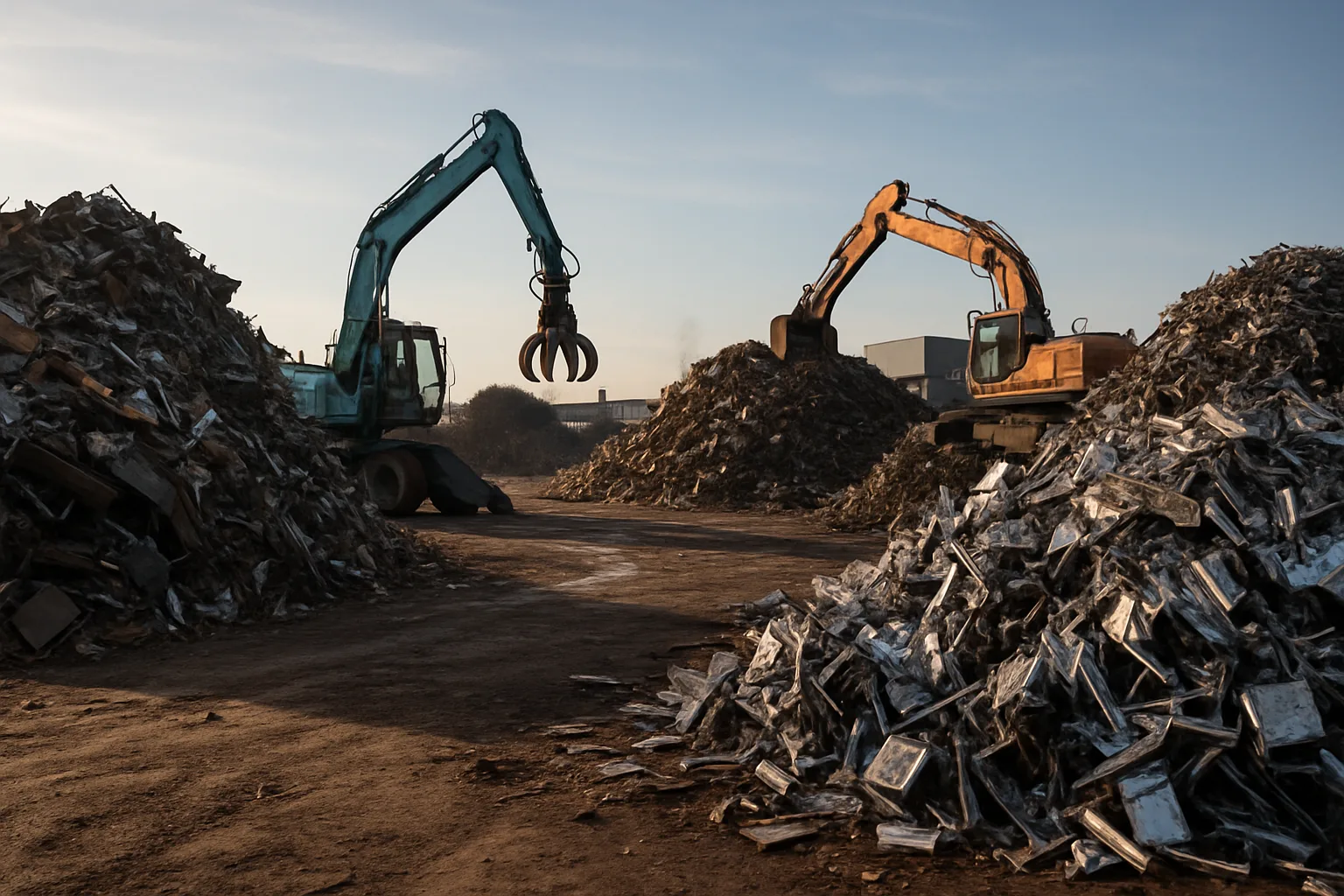
Which Scrap Metals Actually Pay — And Which Ones Waste Your Time
Most people hauling scrap to the yard are leaving money on the table. Not because they're doing it wrong — but because they don't know which metals are worth chasing and which ones barely cover the gas. Scrap metal prices today vary wildly by material, and if you're not sorting before you sell, you're blending your high-value metal into a low-value pile someone else profits from.
This guide breaks down the most profitable metals to collect, what drives their value, and how to make sure you're getting a fair price when you sell. Whether you're a hobbyist, a part-time scrapper, or running a small recycling operation in Toledo scrap metal services, this is the information that actually moves the needle.
Copper Scrap Price: Why Copper Is the King of the Yard
If you only remember one thing from this article, make it this: copper pays more per pound than almost anything else you'll find in the field. Bare bright copper — the clean, uncoated wire or tubing you pull from HVAC systems, plumbing, or electrical panels — consistently sits near the top of the price board at any yard in Ohio. The copper scrap price fluctuates with global commodity markets, but it rarely falls below meaningful value.
Not all copper is equal, though. Yards sort it into grades:
- Bare bright copper — stripped, uncoated, clean wire. Top dollar.
- #1 copper — clean tubing, bus bars, clippings with no solder or fittings.
- #2 copper — dirty pipe, light coated wire, fittings attached. Lower price.
- Copper mixed / irony copper — attached to other metals. Treated as a downgrade.
The difference between bare bright and #2 copper can be significant per pound. That gap adds up fast on a loaded truck. Strip your wire. Clean your fittings. The extra 20 minutes pays off. To see where copper is trading right now, check today's scrap metal prices before you load the truck.
Aluminum Scrap Price: High Volume, Real Returns
Aluminum doesn't command the same per-pound rate as copper, but it's everywhere — and that volume adds up. The aluminum scrap price you'll see at Toledo-area yards depends heavily on the form of the material. Cast aluminum from engine blocks, extruded aluminum from window frames, and clean aluminum sheet all price differently.
Here's a quick breakdown of aluminum grades most scrappers encounter:
- Clean aluminum sheet — siding, gutters, flashing. One of the cleaner grades.
- Cast aluminum — engine blocks, transmission housings, wheels. Good weight, solid return.
- Aluminum extrusion — window frames, door thresholds. Usually priced between sheet and cast.
- Aluminum cans (UBC) — Used Beverage Containers. Low price per pound but adds up with volume.
- Aluminum wire — stripped electrical wire. Priced differently from copper wire, don't mix them.
One note on the aluminium scrap value per kg conversation you'll see online — if you're in the U.S., you're pricing in pounds, not kilograms. Toledo yards and Ohio scrap facilities quote in USD per pound. Don't get confused by international pricing guides when you're selling domestically.
Aluminum rims from junked vehicles are a particular bright spot. Clean alloy wheels from cars bring a better rate than cast aluminum in many cases. If you're pulling parts from old vehicles, separate those rims before anything else.
Steel and Iron Scrap: The Foundation of Volume Scrapping
Steel and iron won't make you rich per pound — the steel scrap price sits far below copper and aluminum. But ferrous metal is the backbone of volume scrapping. You can accumulate it fast, and large loads of clean steel have real value when you get enough weight together.
For context on what moves the needle with steel:
- Light iron / #1 heavy melt — Clean steel plate, structural pieces. Best ferrous pricing.
- Shredder feed — Appliances, car bodies (drained and titled). Accepted at most Ohio facilities.
- Cast iron — Old radiators, pipes, machine parts. Slightly different rate from steel.
- Stainless steel — Separate category entirely. Nickel content drives value. Never mix with regular steel.
Stainless steel deserves a special mention. It's often overlooked because it looks similar to regular steel, but the nickel and chromium content make it worth significantly more. Restaurant equipment, food processing gear, and certain automotive exhaust components are worth sorting out. Use a magnet — stainless is typically non-magnetic (though some grades react weakly). When in doubt, ask your yard to test it.
Catalytic Converters: The Most Volatile Category in the Yard
Few materials in the scrap world create more conversation — or more price uncertainty — than catalytic converters. Cats contain platinum group metals (PGMs): platinum, palladium, and rhodium. These rare metals drive prices that can swing dramatically based on global demand and refinery processing. The current scrap prices on cats depend on the specific converter, the vehicle it came from, and the refinery rate at the moment of sale.
This is where selling smart matters most. A single phone call to one buyer is not a pricing strategy for catalytic converters. The spread between what one buyer offers and what another pays can be substantial on the same part. Competitive bidding is how you find out what your cats are actually worth.
That's exactly what SMASH is built for. A find the best price for your scrap on SMASH listing puts your cats in front of vetted buyers competing for your material — not one buyer with every incentive to offer less. If you're accumulating cats in the Toledo area or anywhere in Ohio, that auction format is the difference between guessing and knowing.
For yards and collectors holding a meaningful volume of converters, a catalytic converter auction through SMASH replaces the old model: cold calls, back-and-forth negotiation, and hoping you got a fair number. Competition reveals the market. That's the whole idea.
Non-Ferrous Metals Worth Hunting: Brass, Stainless, and Electronics Scrap
Beyond copper and aluminum, a handful of non-ferrous metals punch above their weight when you know what to look for.
Brass is one of the most underrated finds in the field. Yellow brass — valves, fittings, musical instruments, door hardware — prices well. Red brass (higher copper content, found in old plumbing fixtures) prices even better. Separate them. Mixing yellow and red brass leaves money behind.
Lead shows up in wheel weights, old pipe, batteries, and roofing flashing. Lead pricing is lower per pound than copper or brass but the weight density means even small pieces add up fast. Battery lead (from car batteries) is often quoted separately — don't mix lead batteries with wheel weights.
Electronics scrap (e-scrap) is a different beast. Circuit boards, CPUs, and certain components contain gold, silver, and palladium — but refining fees typically apply, and not every yard takes it. If you're accumulating e-scrap, find a specialty processor, not a general metal yard.
For any of these materials, knowing where prices are on a given day matters. Read the latest scrap metal market updates to stay ahead of price swings before you make a trip to the yard.
How to Maximize What You Earn — Regardless of Metal Type
Knowing which metals pay is step one. Getting the best price for those metals is step two. Here's what experienced scrappers and Toledo-area yard operators already know:
- Sort everything before you arrive. Mixed loads get downgraded. Yards price to the lowest-value material in the mix if it's unsorted. Ten minutes of sorting at home beats a downgraded load at the scale.
- Know the grade before you quote it. Calling your copper "#1" when it's really "#2" wastes everyone's time. Learn the grades so you describe your material accurately.
- Check prices before you haul. Scrap metal prices today aren't the same as last Tuesday. Metal markets move. Find current scrap metal prices near you before you load the trailer.
- Use competition to your advantage. For high-value loads — cats, non-ferrous, large volumes of copper — one buyer is never enough. SMASH puts vetted buyers in competition for your material so you're not guessing.
- Document everything on significant loads. Photos, weights, serial numbers on cats — documentation builds buyer confidence and supports better pricing. SMASH's platform includes photo documentation and VIN lookup for exactly this reason.
- Separate ferrous from non-ferrous. This is scrapping 101, but it's still the most common mistake at the scale. Use a magnet. Keep them apart.
Toledo is a solid market for scrap recycling. Ohio has a strong industrial base, which means steady supply of ferrous and non-ferrous material across the region. Knowing your local yard's pricing structure — and having a platform like SMASH for high-value loads — puts you in a far stronger position than calling one buyer and hoping for the best.
Before your next haul, take two minutes to check today's scrap metal prices at scrap-metal-prices.com. Current data changes how you sort, when you sell, and how much you walk away with.
Frequently Asked Questions
Q: What are scrap metal prices today for copper in Toledo, Ohio?
Copper prices fluctuate daily based on commodity markets. Bare bright copper typically commands the highest rate, followed by #1 and #2 copper. Check current rates at scrap-metal-prices.com before you haul, since prices can shift meaningfully week to week. Toledo-area yards generally follow regional market rates closely.
Q: What is the most profitable scrap metal to collect right now?
Copper consistently delivers the highest per-pound return for most scrappers. Catalytic converters can exceed copper on a per-unit basis but require selling to the right buyer — competitive platforms like SMASH help maximize that value. Non-ferrous metals like brass, stainless, and aluminum also outperform steel and iron significantly.
Q: How do I find a scrap metal buyer near me that's open now?
Most Ohio scrap yards post their hours online. For standard ferrous and aluminum loads, any nearby certified yard will work. For high-value material like cats or large non-ferrous loads, don't limit yourself to whoever is geographically closest — SMASH connects you with vetted buyers across North America competing for your load.
Q: Are catalytic converter prices worth tracking separately from other scrap metal?
Yes — catalytic converter pricing is driven by platinum group metals and fluctuates differently from copper or aluminum. The spread between buyers on the same cat can be significant. Treating cats as a separate, auction-worthy category almost always produces a better outcome than bundling them into a general scrap quote.
Q: Does sorting scrap metal before selling actually make a difference in price?
Absolutely. Mixed or unsorted loads get downgraded to the lowest-value material in the pile. Separating copper grades, keeping stainless away from steel, and pulling aluminum from ferrous material before the scale takes minutes but often adds up to meaningful dollars — especially on larger loads.
Prices listed in this article are illustrative. Scrap metal prices fluctuate based on commodity markets, regional demand, and material grade. Always check current rates before selling.
Stay current on market shifts and industry news — follow SMASH on LinkedIn for regular scrap metal market insights and platform updates.