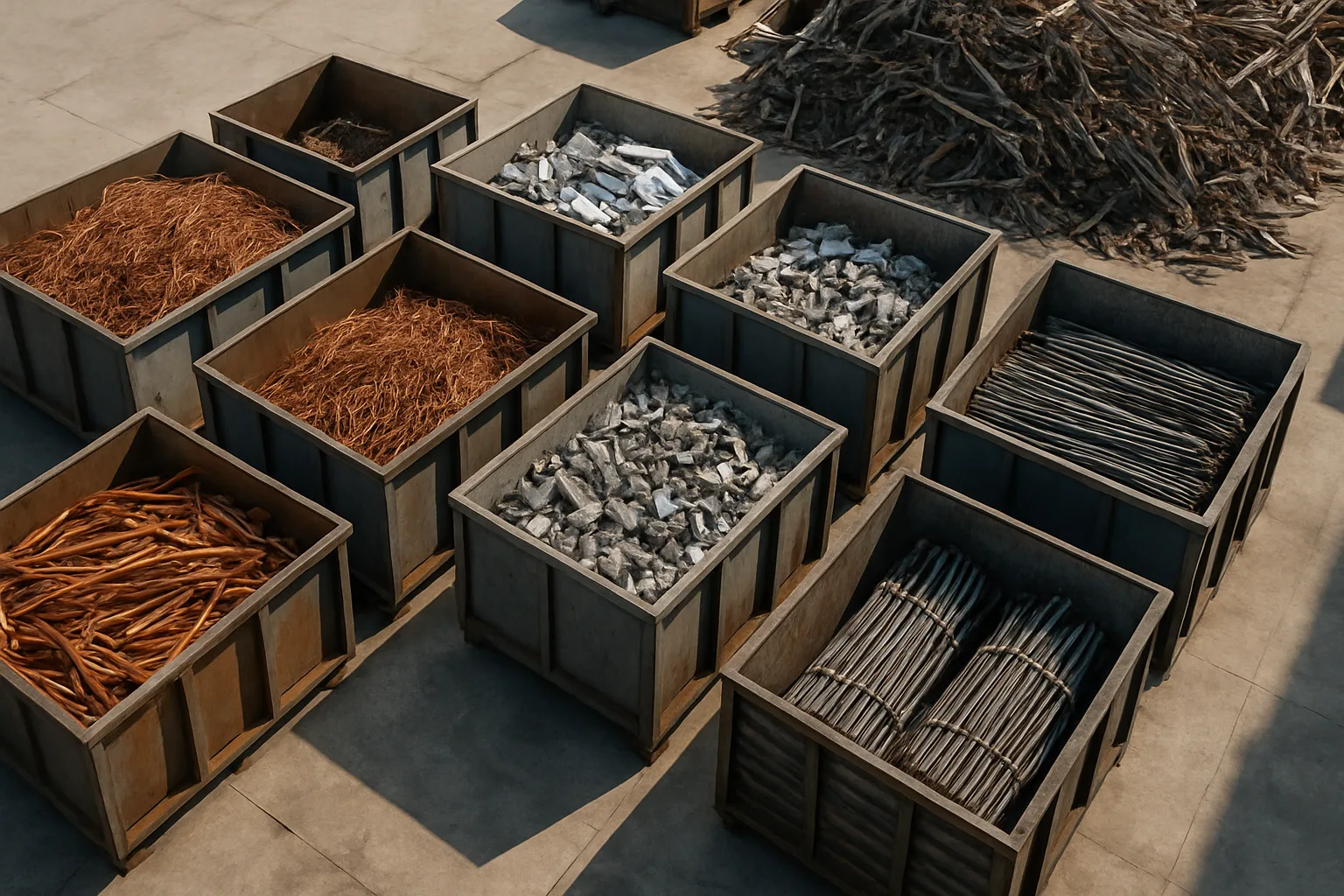
You've got a pile of scrap sitting in your yard or garage. Some of it looks like copper. Some of it might be aluminum. Some of it could be steel. Knowing the difference between those metals isn't just useful — it's money. The copper scrap price today is significantly higher than aluminum, and aluminum beats steel by a wide margin. Misidentifying your scrap means leaving real cash on the table before you even get to the scale.
This guide walks you through two of the most reliable low-tech identification methods available to any seller: visual inspection and the magnet test. Whether you're clearing out a job site in Jacksonville or sorting through a garage full of old plumbing and wire, these techniques work. No lab equipment. No guesswork.
Want to know what your metals are worth once you've sorted them? Check today's scrap metal prices before you haul anything.
---Why Accurate Metal ID Directly Affects Your Payout
Scrap yards price by metal type, grade, and condition. Show up with a mixed, unsorted load and you'll get paid the lowest rate in the pile — the yard isn't going to sort it for you and pass along the upside. When you do the work yourself, you control the conversation at the scale.
Here's the practical reality: copper can trade at multiples of what aluminum fetches per pound, and aluminum often beats steel by a wide margin. If your load contains a mix of all three and you hand it over unsorted, the yard grades the whole thing down. That's not the yard ripping you off — that's just how blended loads work. Sorting protects your payout.
For sellers in Jacksonville and across Florida, where construction demo, HVAC jobs, and marine work generate consistent scrap volume, knowing your metals before you drive to the yard is basic prep work that pays off every single time.
---The Magnet Test: Your First Line of Identification
The magnet test is fast, free, and surprisingly reliable. Grab a strong rare earth magnet — the kind you'd find in hardware stores — and run it across your scrap pile. The result splits your metals into two broad categories immediately.
Magnetic metals (ferrous):
- Steel — the magnet sticks firmly
- Iron — same strong pull
- Galvanized steel — still magnetic, even with the zinc coating
- Cast iron — pulls hard
Non-magnetic metals (non-ferrous):
- Copper — no pull at all
- Aluminum — no pull
- Brass — no pull
- Stainless steel (most grades) — weak or no pull, though some 400-series stainless does attract slightly
- Lead — no pull
- Zinc — no pull
Non-ferrous metals are where the money is. Copper, brass, and aluminum consistently command higher scrap prices than steel or iron. If your magnet doesn't stick, you're likely holding something worth sorting carefully. From there, visual inspection and a few simple physical tests narrow it down further.
One caveat: some items are bimetal — copper wire inside a steel conduit, for example. The magnet test tells you about the outer shell. Don't assume the whole piece is one metal based on the surface test alone.
---Visual Identification Guide: What Each Metal Looks Like
Once you've separated magnetic from non-magnetic, color, weight, and surface texture do the rest of the work. Here's what to look for metal by metal.
Copper
Fresh copper is unmistakable — a warm reddish-orange color that's hard to confuse with anything else. Aged copper oxidizes to a dark brown or green patina (verdigris). Copper is heavy for its size and bends without cracking. You'll find it in plumbing pipe, electrical wire, HVAC coils, and roofing flashing.
Grades matter here. Bright bare copper wire (#1 bare bright) trades at the top of the market. Insulated wire, corroded pipe, and copper mixed with solder or fittings grades lower. The copper scrap price today varies significantly by grade — know your material before you sell it.
Aluminum
Aluminum is light — noticeably lighter than copper or steel of the same size. It's a dull silver-grey color, softer than steel, and scratches easily. Aluminum doesn't rust; it oxidizes to a chalky white powder instead. You'll find it in window frames, gutters, siding, engine blocks, rims, and cans.
Common aluminum grades at the yard: clean aluminum extrusion, cast aluminum (engine parts), aluminum rims, insulated aluminum wire, and aluminum cans (though cans pay less per pound than extrusion or cast).
Brass
Brass is a yellow-gold color — brighter and more golden than copper's red-orange. It's heavier than aluminum and is commonly found in plumbing fixtures, valves, fittings, shell casings, and decorative hardware. Brass is an alloy of copper and zinc, which is why it commands a solid price at the yard. Run a file across it — brass shows a consistent golden interior with no rust or iron.
Stainless Steel
Shiny, silver, and resistant to rust — stainless looks similar to regular steel but doesn't corrode. Most grades won't stick to a magnet (or will stick weakly). You'll find it in kitchen equipment, food processing machinery, automotive exhaust, and medical equipment. Stainless pays more per pound than carbon steel, but less than copper or brass.
Lead
Lead is extremely heavy for its size — the heaviest common scrap metal per volume. It's dull grey, very soft (you can scratch it with a fingernail), and bends easily without snapping. Common sources include old roofing flashing, wheel weights, old pipe, and batteries. Handle with care — lead exposure is a health hazard, and many yards have specific handling requirements.
Steel and Iron
The magnet already told you these are ferrous. Steel is hard, grey, and rusts readily. Cast iron is darker, heavier, and more brittle — it snaps rather than bends. Structural steel, rebar, sheet metal, and I-beams are common yard loads. The price per pound for steel and iron is the lowest of the common metals, but volume loads add up fast.
---Scrap Metal Prices Today: What Each Metal Trades At
Understanding identification is only half the equation. The other half is knowing what the metal market is doing right now. Scrap metal prices today shift with global demand, energy costs, and trade flows. What copper fetched last quarter may not reflect what it fetches this week.
Current prices (in general terms, as of mid-2026) reflect a copper market supported by ongoing electrification demand — EV infrastructure, grid upgrades, and industrial construction all consume copper wire and components. Aluminum prices track automotive and aerospace demand. Steel follows construction and manufacturing cycles. None of these are static.
For sellers in Jacksonville — one of Florida's busiest markets for construction and marine scrap — staying current on pricing helps you time your loads and negotiate at the yard. Read the latest scrap metal market updates to track weekly movements before you sell.
Disclaimer: Scrap metal prices fluctuate daily based on commodity markets, regional demand, and yard-specific conditions. Always verify current rates with your local buyer before selling.
---How to Sell Scrap Copper and Other Non-Ferrous Metals for Better Returns
Knowing how to sell scrap copper properly starts with preparation — not the sale itself. Sort by grade before you arrive at any buyer. Keep #1 bare bright copper separate from insulated wire. Keep clean aluminum extrusion away from cast aluminum. Mixed loads get mixed pricing, and that pricing favors the buyer.
Here's a basic pre-sale checklist:
- Sort by metal type — ferrous separate from non-ferrous
- Sort by grade within each metal — copper grades alone can span a wide price range
- Remove non-metal attachments — plastic insulation, rubber fittings, steel bolts mixed into a copper load all drag down the grade
- Photograph your material — especially for larger loads; photo documentation builds buyer confidence
- Know the weight before you go — a bathroom scale works for smaller loads
- Compare buyers — don't assume one yard has the market rate
That last point matters more than most sellers realize. One buyer quoting you a price is just one data point. Platforms like SMASH make it easy to find the best price for your scrap by putting your load in front of multiple vetted buyers — letting competition drive the price discovery instead of a single phone call to a single yard.
If you're running regular scrap volume out of Jacksonville or anywhere in Florida, Jacksonville scrap metal services built around a competitive auction format can change what you average per load over time. One buyer sets a floor. Multiple buyers compete for the ceiling.
SMASH runs on that principle. No subscription fees. Vetted buyers. Auto-invoicing handled. You load the inventory, SMASH surfaces the competition. For copper, aluminum, or any non-ferrous load worth hauling, that structure consistently improves price discovery over the old single-call method.
---Quick Reference: Metal ID Cheat Sheet
Keep this handy for your next sort session.
- Red-orange, heavy, non-magnetic: Copper
- Silver-grey, very light, non-magnetic: Aluminum
- Gold-yellow, heavy, non-magnetic: Brass
- Shiny silver, non-magnetic or weak pull: Stainless steel
- Dull grey, extremely heavy, non-magnetic, very soft: Lead
- Grey, hard, strong magnetic pull, rusts: Steel or iron
When in doubt, a file test helps — scratch the metal and look at the exposed interior. The color and texture beneath the surface often confirms what the outside suggests. A brass fitting will show consistent gold throughout. A copper-plated steel piece will show grey steel under the copper surface — and will stick to a magnet.
Do the identification work up front. Sort properly. Then find current scrap metal prices near you so you walk into any buyer conversation knowing what your material is worth before they tell you.
---Frequently Asked Questions
Q: What is the copper scrap price today?
Copper scrap prices fluctuate daily with global commodity markets. The price also varies significantly by grade — #1 bare bright copper commands a higher rate than insulated wire or contaminated pipe. Check current rates at scrap-metal-prices.com before selling, and always confirm the buyer's posted price at the yard on the day of your sale.
Q: How do I know if my copper is #1 or #2 grade?
#1 bare bright copper is clean, uncoated, unalloyed wire or bus bar — no solder, no insulation, no corrosion, minimum 16 gauge. #2 copper includes pipe, wire with light oxidation, fittings, or material with minimal solder. Anything heavily corroded, alloyed, or mixed with other metals typically grades as #3 or lower. Sorting and cleaning before the yard visit always pays.
Q: Is scrap metal recycling in Jacksonville competitive — do yards offer different prices?
Yes. Yard pricing in Jacksonville and across Florida varies based on each buyer's overhead, current inventory, and market relationships. Getting quotes from multiple buyers is the best way to ensure you're not leaving money on the table. Competitive auction platforms like SMASH surface that variation so sellers can make informed decisions rather than guessing.
Q: Will a magnet stick to stainless steel scrap?
It depends on the grade. Most common stainless steel (200 and 300 series, including 304 and 316) is non-magnetic or shows only weak attraction. Some 400-series stainless steel is magnetic. If your magnet pulls weakly, check for rust — true stainless won't rust, but low-grade stainless may show surface discoloration. A no-rust, weak-pull silver metal is almost certainly stainless.
Q: How can I get the best price when selling scrap copper?
Sort by grade before you go — clean bare bright separate from insulated wire, separate from pipe. Remove all non-copper materials. Photograph larger loads. Then compare buyers rather than defaulting to the first yard you call. Platforms like SMASH put your load in front of multiple vetted buyers, which creates real price competition instead of accepting one yard's number as the market.
---Before your next haul, take five minutes to check today's scrap metal prices at scrap-metal-prices.com — current rates, sorted by metal, so you know what you're walking in with before you hit the scale.
Follow SMASH on LinkedIn for weekly scrap metal market insights, pricing trends, and industry updates that keep you ahead of the market.