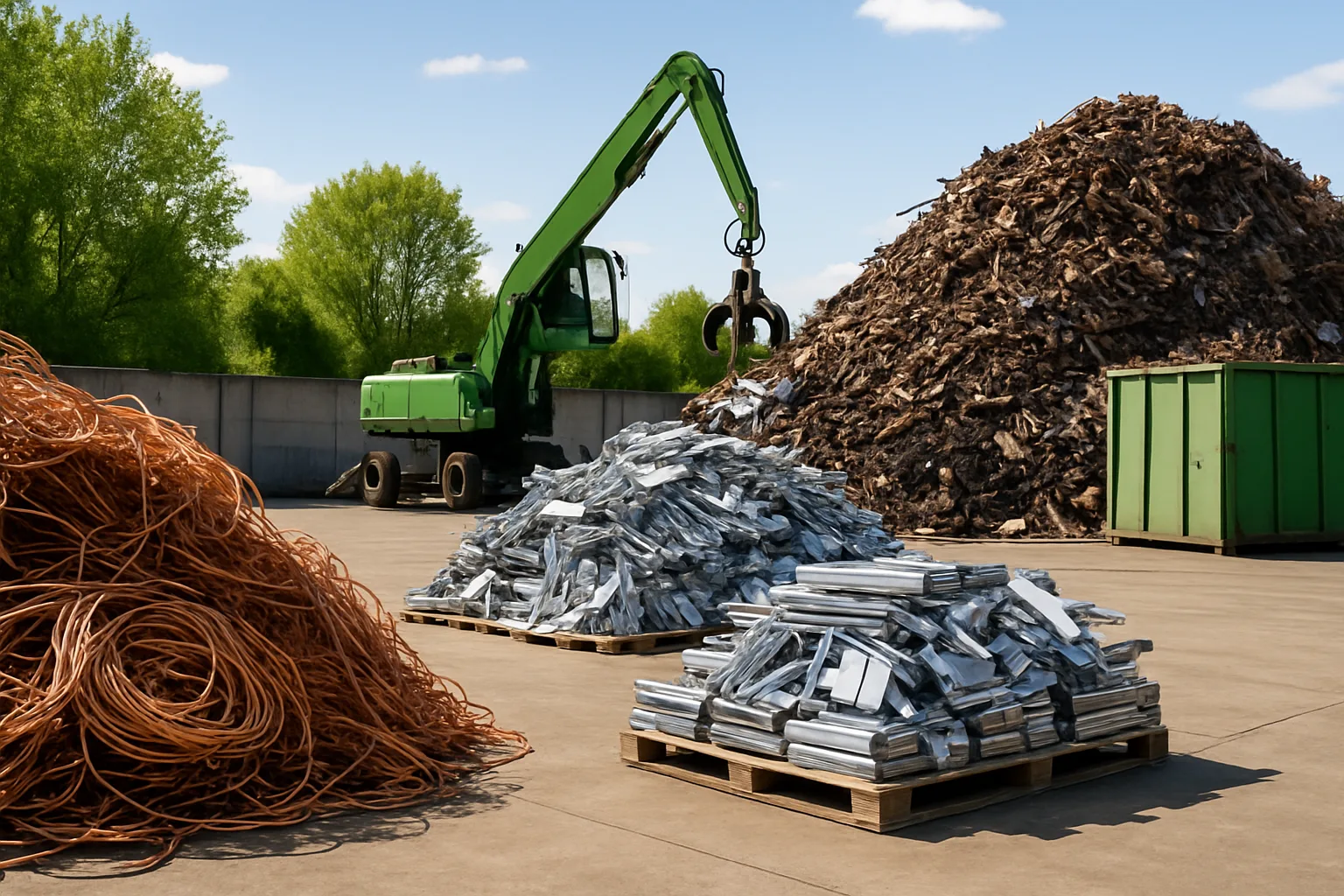
Most sellers treat steel and iron like they're the same thing. They're not — and that gap in understanding can cost you real money on every load you move.
If you're selling scrap in Las Vegas, you've probably noticed the price board at your local yard lists a dozen different line items. Shredded steel. Cast iron. Wrought iron. Plate and structural. Each one sits at a different number, and the spread between them isn't random. It reflects real differences in chemistry, demand, and what mills actually want to buy. Understanding those differences puts you in a stronger position when you're negotiating — or when you're deciding which material to sort, stage, and sell first.
This article breaks down the steel vs. iron price gap, what drives it in today's market, and how sellers across Nevada can use that knowledge to get better outcomes on every load. We'll also touch on where copper scrap prices Las Vegas fit into the bigger picture, because smart sellers don't look at metals in isolation.
Steel vs. Iron: Why They Price Differently
Steel and iron come from the same family tree, but they behave differently in a furnace — and that's what matters to buyers. Cast iron has a high carbon content, typically between 2% and 4%. That makes it brittle and harder to process in certain electric arc furnaces. Steel, by contrast, usually runs below 2% carbon, making it more versatile as a feedstock.
Mills buying ferrous scrap are running specific heats. They need predictable chemistry. When your material doesn't match what their process requires, they either discount it or turn it away. That's why cast iron often trades at a lower price per gross ton than clean shredded steel — not because it's worthless, but because the pool of buyers who want it is narrower.
- Shredded steel — typically the benchmark ferrous grade; high demand from electric arc furnaces across North America
- Cast iron — engine blocks, cookware, machine bases; lower price ceiling due to processing limitations
- Wrought iron — nearly pure iron, low carbon; less common today but still tradeable
- Plate and structural (P&S) — clean, heavy steel from beams, plates, tank steel; usually prices above shred when clean
- Turnings and borings — ferrous machine shop waste; often contaminated with coolant, priced lower
If you're moving mixed ferrous loads without sorting, you're likely being averaged down to the lowest grade in the pile. A few hours of separation on the yard can shift which line item your load gets priced against — and that matters when you're looking at per-ton differences that add up fast on larger volumes.
Current Scrap Metal Prices Las Vegas: What the Market Looks Like in July 2026
Ferrous prices across the U.S. have been navigating a tighter range in 2026, with domestic mill demand fluctuating based on construction activity and export appetite. Las Vegas sits in a region that doesn't have major integrated mills nearby, which means local yards are pricing against spot market conditions and freight-adjusted offers from mills in the Southwest and Pacific Coast corridors.
That geography matters. Scrap metal prices Las Vegas will typically carry a freight discount compared to yard prices closer to major mill clusters in the Midwest or Southeast. That's not unique to Nevada — it's physics and logistics. But it does mean sellers here need to be sharper about their grades, weights, and timing.
On the non-ferrous side, copper remains the headline metal. Copper scrap prices Las Vegas track closely to COMEX spot, but the spread between COMEX and what a Las Vegas yard actually pays depends on grade, contamination, and local competition. Bare bright copper commands the best return. Insulated wire, #2 copper, and dirty material all drop progressively. Knowing your grade before you walk in — not after — is how you avoid leaving money on the table.
Aluminum recycle value has also held steady in 2026. Depending on alloy and form, aluminum scrap can be a strong earner for sellers moving HVAC components, window frames, and automotive castings. The Las Vegas construction and renovation market generates a consistent stream of aluminum — if you're not sorting it separately, you're likely blending it into a lower-value stream.
To check today's scrap metal prices and see where ferrous and non-ferrous grades are sitting right now, use current pricing tools before you load your truck.
Scrap Metal Inventory Management: The Tool Most Sellers Ignore
Here's a pattern that plays out at yards and on the seller side constantly: someone brings in a mixed load, accepts whatever the scale house offers, and doesn't know what they actually had until it's already been processed. That's not a negotiation — it's a donation.
Good scrap metal inventory management doesn't have to be complicated. At the most basic level, it means knowing what you have, how much of it, and what grade it is before you call a buyer. On the more sophisticated end, it means photo documentation, serial tracking for regulated items like catalytic converters, and weight logs that let you compare offers against each other.
Platforms like smashscrap.com bring that structure to the selling process. SMASH gives sellers an inventory tool that lets you document your load — photos, weights, grade descriptions — before it goes to market. Vetted buyers see the same information and compete against each other in an auction format. That's price discovery working the way it should. No guessing. No single buyer setting the number in a vacuum.
For sellers in Nevada moving regular volumes of ferrous or non-ferrous material, that kind of structured approach turns every transaction into data you can use next time. Which grades got the best bids? Which loads took longest to move? What documentation made buyers more confident? Over time, that information compounds into real pricing leverage.
Copper, Aluminum, and Why Non-Ferrous Sellers Should Think About Competition
If you're chasing copper scrap prices Las Vegas, the math on competition is straightforward. One buyer makes you an offer. Two buyers compete. Three buyers compete harder. The spread between a single-buyer transaction and a competitive auction process can be meaningful — especially on high-value non-ferrous loads where the per-pound difference adds up quickly.
Copper grades to know if you're selling in the Las Vegas market:
- Bare bright (#1 copper wire) — clean, uncoated, unalloyed; highest value per pound
- #1 copper — uncoated, unalloyed copper pipe and bus bar; minimal oxidation
- #2 copper — miscellaneous copper with some coating, solder, or oxidation; discounted from #1
- Insulated copper wire — priced based on estimated copper recovery percentage
- Copper breakage — contaminated or mixed copper; lowest copper grade
Aluminum recycle value follows a similar logic. Clean extrusion aluminum, cast aluminum, and mixed aluminum all sit at different price points. Mixing them because sorting takes time is a real cost — just one that most sellers don't calculate explicitly.
SMASH handles non-ferrous loads the same way it handles ferrous: you document what you have, buyers compete, and the auto-invoicing system takes care of paperwork after the auction closes. For sellers running higher volumes or mixed-metal loads, that structure makes the whole process faster and more defensible from a record-keeping standpoint.
How to Sell Scrap Metal Near You — and Get More for It
Searching for "sell scrap metal near me" is the starting point, not the finish line. Finding a local yard is easy. Getting a competitive price on what you bring in takes a bit more intention.
A few practices that consistently improve outcomes for sellers in competitive markets like Las Vegas:
- Sort before you arrive. Mixed loads get priced at the lowest common denominator. Sorted loads let each grade stand on its own.
- Know your weights before you negotiate. If you're estimating, so is the buyer — and their estimate will favor them.
- Document high-value items. Catalytic converters, copper wire, and aluminum castings should have photos and serial numbers where applicable. This protects you and increases buyer confidence.
- Compare more than one buyer. Local yards aren't the only option. Platforms that bring multiple vetted buyers to your load change the dynamic entirely.
- Time your sales when you can. Ferrous prices move with steel mill utilization rates. Non-ferrous tracks global spot markets. If you have storage flexibility, watching the market before pulling the trigger can add meaningful value per ton.
For Las Vegas sellers, accessing Las Vegas scrap metal services that connect to a broader buyer network makes more sense than defaulting to the same phone call every time. More competition reveals more of the actual market price. That's not a theory — it's how price discovery works.
If you want to stay current between transactions, read the latest scrap metal market updates to track where ferrous and non-ferrous grades are moving week to week.
Reading the Market: What Steel, Iron, and Copper Prices Tell You Right Now
In July 2026, the ferrous market is showing the usual summer softness that comes when construction activity slows slightly and mills work through existing inventory. That's not a signal to panic — it's a normal seasonal pattern. For sellers with storage capacity, it's worth watching whether fall construction demand creates the typical Q3/Q4 uptick before committing large ferrous volumes.
Non-ferrous, particularly copper, continues to track global demand signals closely. Industrial and infrastructure buildout across North America — particularly in electrical grid modernization and data center construction — is maintaining baseline copper demand. That's a structural tailwind for sellers with quality copper grades on hand.
The steel vs. iron price gap remains an education opportunity for sellers who haven't fully separated their ferrous streams. If you're bringing cast iron and shredded steel in the same load, you're almost certainly leaving per-ton value behind. Sort it, document it, and put it in front of buyers who will compete for it.
To find current scrap metal prices near you and see how today's rates compare across grades, check live pricing before your next transaction. The market moves — your pricing information should too.
If you're ready to move a load and want real competition from vetted buyers, SMASH is the platform built for exactly that. No subscription fees. No guessing. Just documented inventory, competitive bids, and clean paperwork at the close.
Frequently Asked Questions
Q: Why are copper scrap prices in Las Vegas lower than COMEX spot prices?
COMEX represents the price for refined, exchange-grade copper. Scrap copper requires processing before it reaches that standard, so yards apply a discount that reflects refining costs, freight, and local market conditions. The closer your material is to bare bright grade, the smaller that spread tends to be. Competitive buyer platforms can help you test whether you're getting close to the best achievable local price.
Q: What's the difference between cast iron and steel scrap pricing?
Cast iron typically prices below shredded steel because its high carbon content limits which mills can use it as a direct feedstock. Steel scrap — particularly clean shredded or plate and structural grades — is in broader demand from electric arc furnace mills. Keeping your ferrous grades separated ensures each material gets priced against the right market.
Q: How do I find the best scrap metal prices in Las Vegas today?
Start by checking current price tools like scrap-metal-prices.com to see where grades are trading. Then compare offers from more than one buyer — either by calling multiple yards or by using a platform like SMASH that brings vetted buyers to your load in a competitive auction format. A single phone call to a single buyer is rarely the best price discovery method.
Q: Does aluminum recycle value change often in Nevada?
Yes. Aluminum prices move with LME spot rates and regional supply/demand balances. Alloy matters too — clean extrusion aluminum prices differently than cast aluminum or mixed clips. In the Las Vegas and Nevada market, construction and renovation activity generates significant aluminum scrap, so sorting by alloy type before selling improves your return.
Q: What documentation should I have when selling high-value scrap in Las Vegas?
For copper, aluminum, and catalytic converters, photos of the material, accurate weight estimates, and grade descriptions all increase buyer confidence and reduce the risk of post-sale disputes. Nevada has regulations around certain scrap transactions — particularly for catalytic converters — so serial tracking and proper records protect you legally as well as financially. Platforms like SMASH include documentation tools built into the selling process.
Disclaimer: Scrap metal prices fluctuate daily based on market conditions, grade, location, and buyer demand. All prices referenced in this article are general in nature. Always check today's scrap metal prices for current rates before making selling decisions.
Stay sharp on market moves — follow SMASH on LinkedIn for ongoing scrap metal market insights and industry updates.